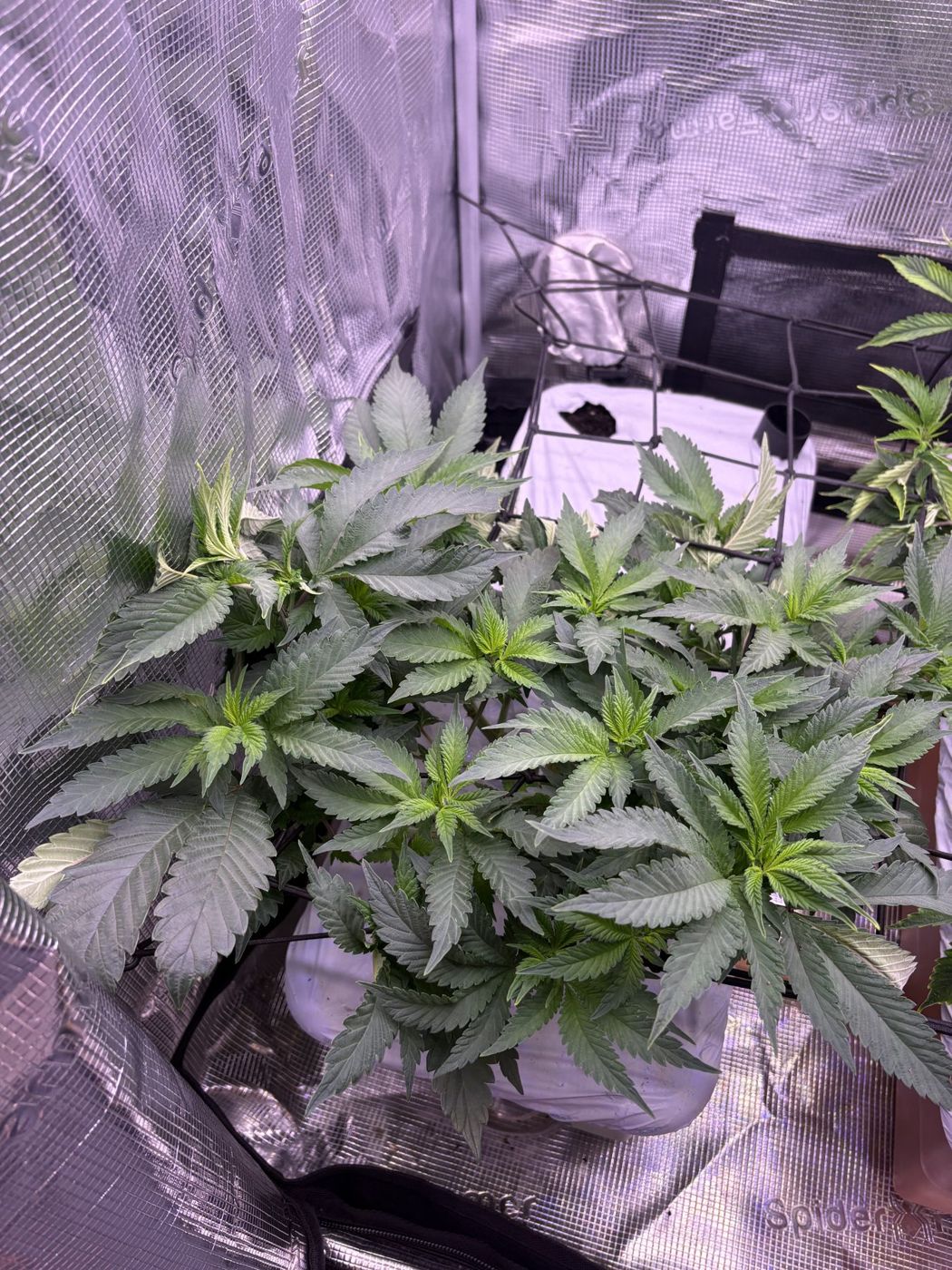
Latest: October 21, day 2 of flower. Flipped on October 19 with the net full edge to edge.
This is a running log of one small indoor grow, written as it happens instead of after the fact. It covers two clones, Headband and Rozay, in a 2.3 × 2.3 ft (70 × 70 cm) tent, grown in self-watering planters and trained flat under a trellis net. It records what was done, what the plants looked like, and what changed. It is not a recipe: one tent, one set of plants and one grower's choices.
The setup so far: Spider Farmer 70 × 70 × 160 cm tent · 240W full-spectrum LED bar light · two EarthBox Junior self-watering planters with plastic mulch covers · BuildASoil 3.0 with worm castings and dry amendments as a top-dress · trellis net · clip fan · yellow sticky traps · humidifier and exhaust fan on an AC Infinity controller · Headband and Rozay clones from a dispensary nursery · lights 18/6 in veg, 12/12 since the flip.
The conditions so far
The tent's sensors log canopy temperature, humidity and VPD around the clock. These are hourly averages for the whole grow, with the flip marked.
September 22: two plants, two starts
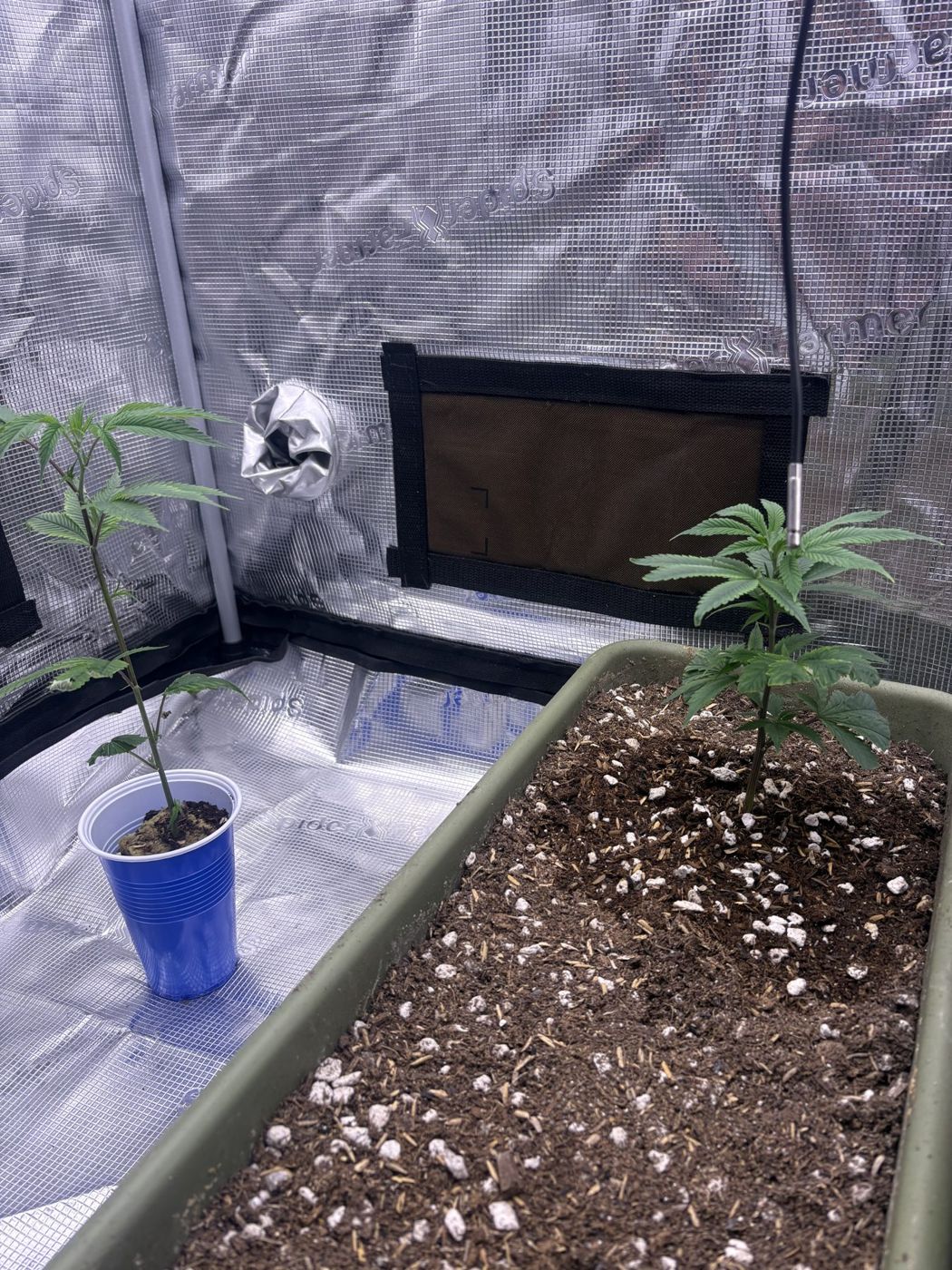
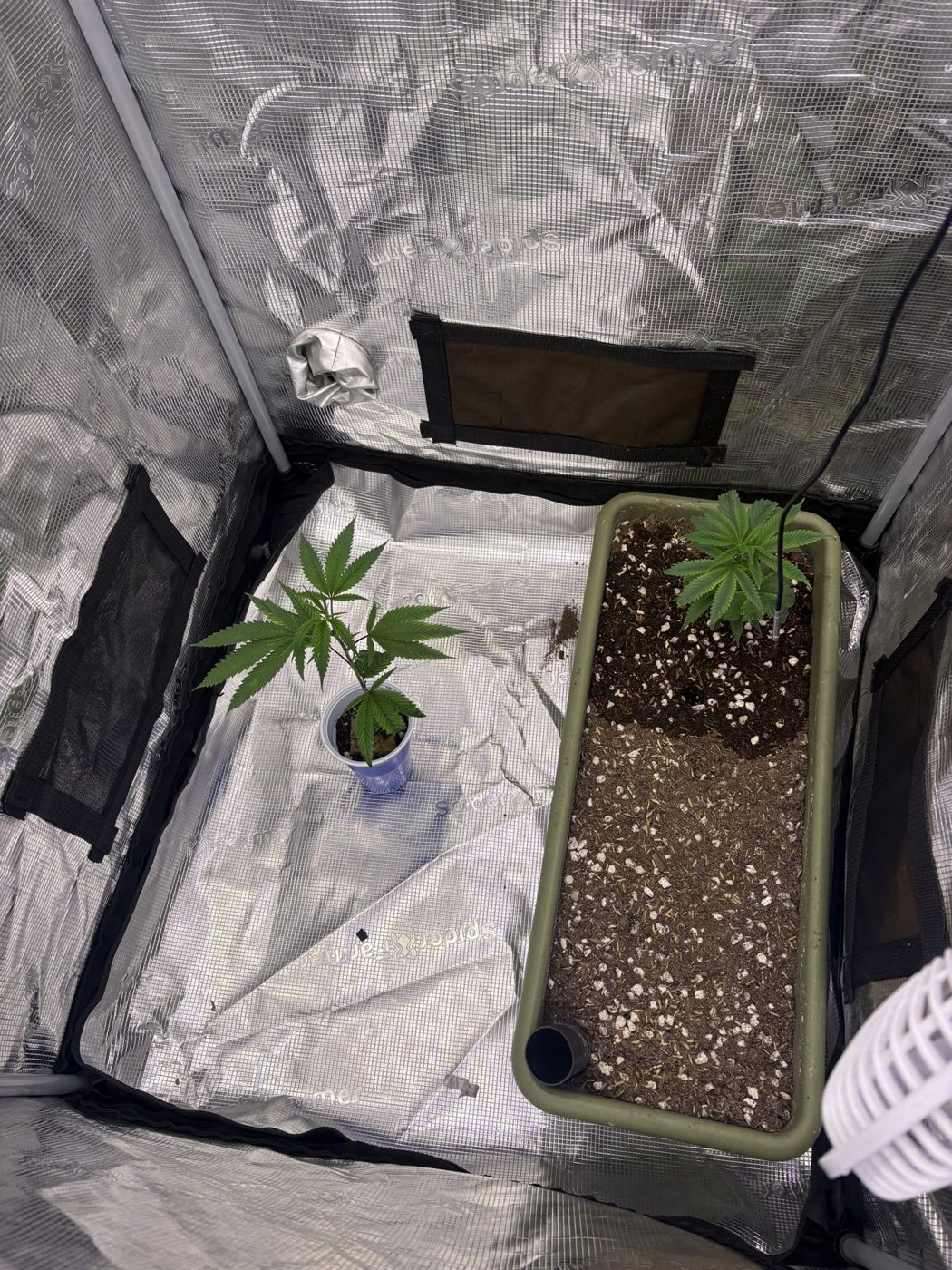
The tent started with two clones, both less than a week home from the nursery. Headband was still in its cup. Rozay had already gone into a long planter of soil topped with perlite.
September 26: both into self-watering planters
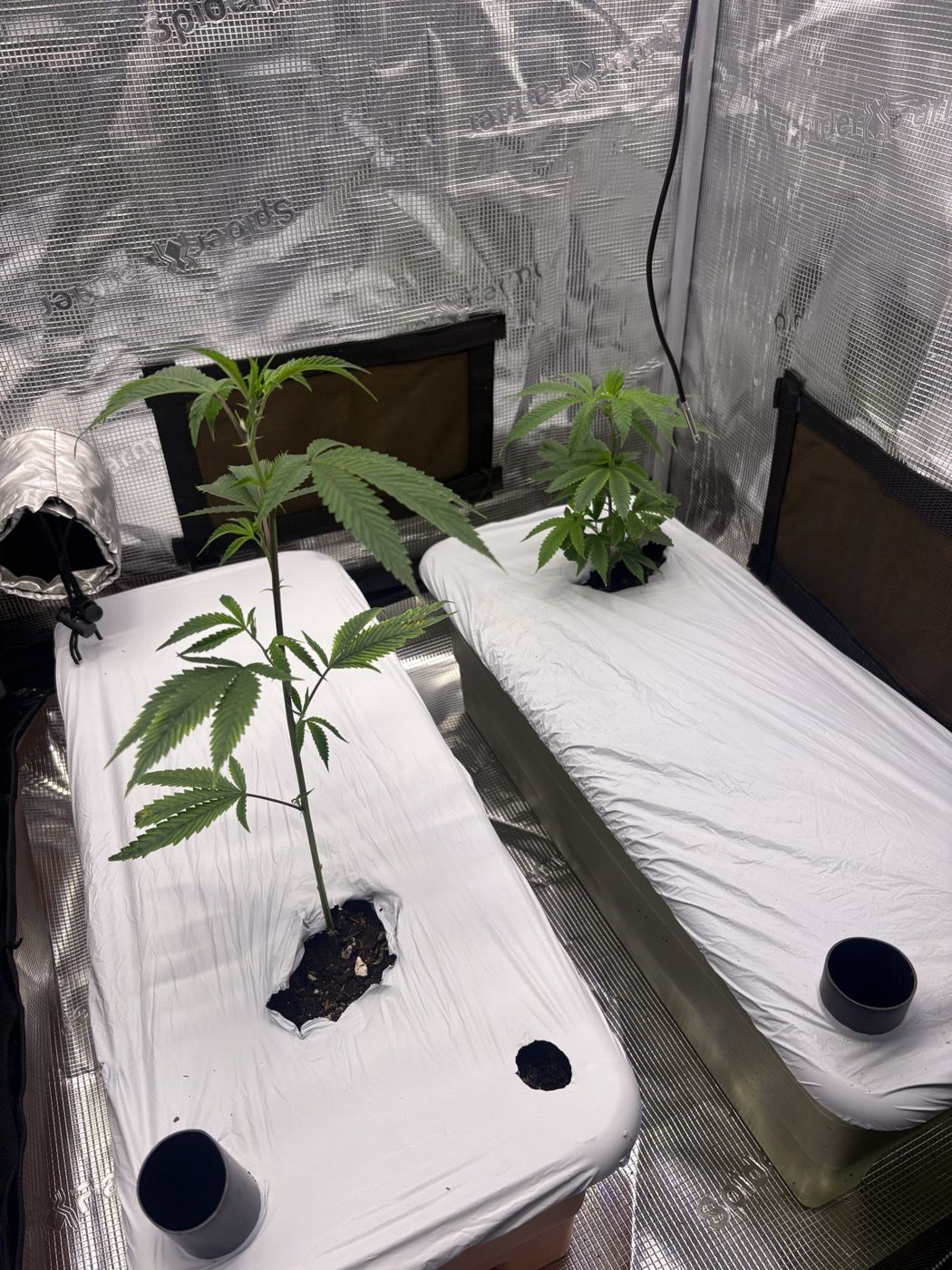
Both plants went into EarthBox Junior self-watering planters with white plastic mulch covers. Water goes in through the fill tube into a reservoir under the soil, not onto the soil itself, and the roots wick it up. The reservoirs get plain water every few days.
September 27: the net goes on
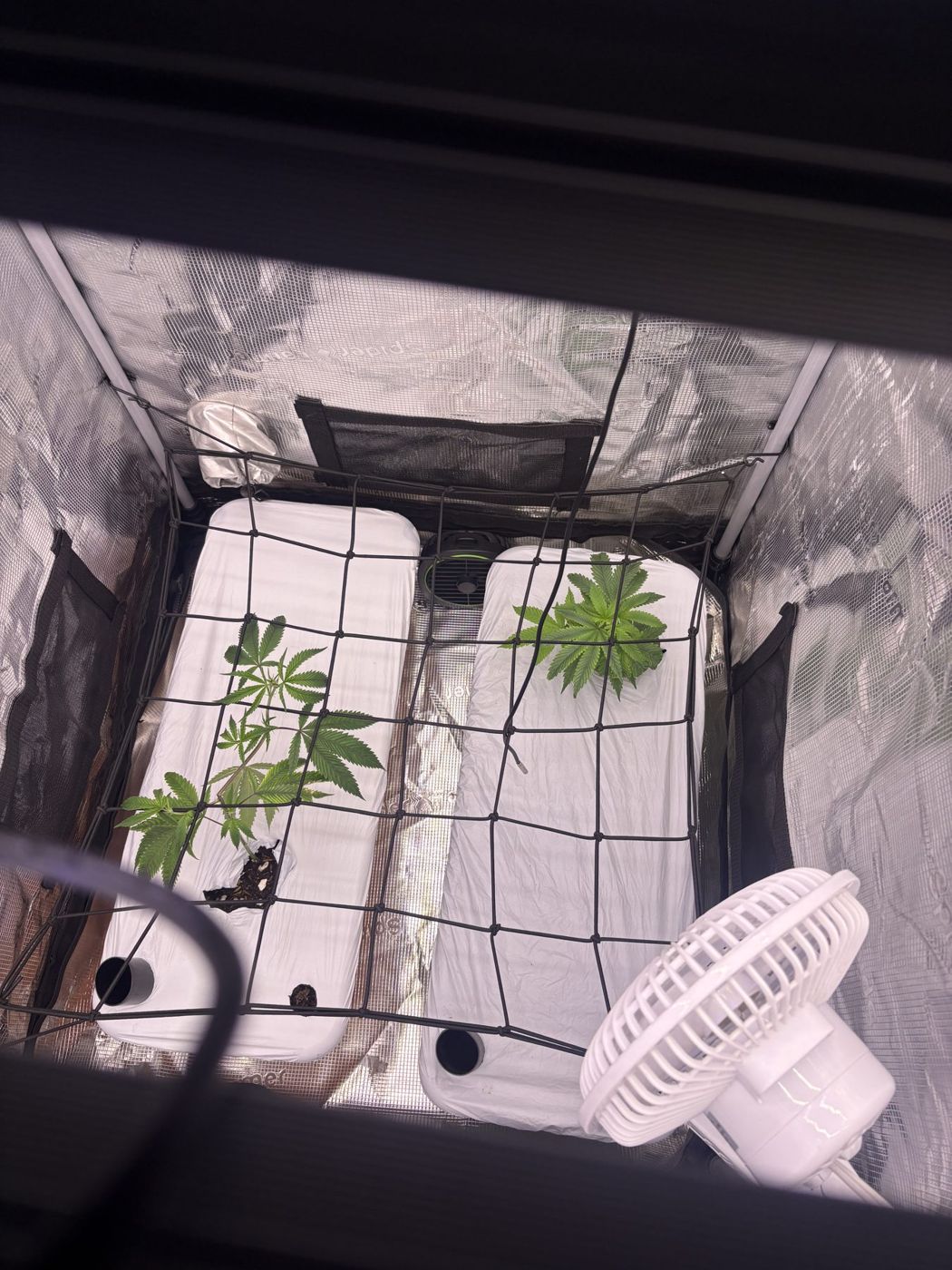
A trellis net went over both planters, with a clip fan underneath to keep air moving. In a tent this short the net decides the shape of the canopy, so it went on early, before there was much to train.
October 2: bending the main stems
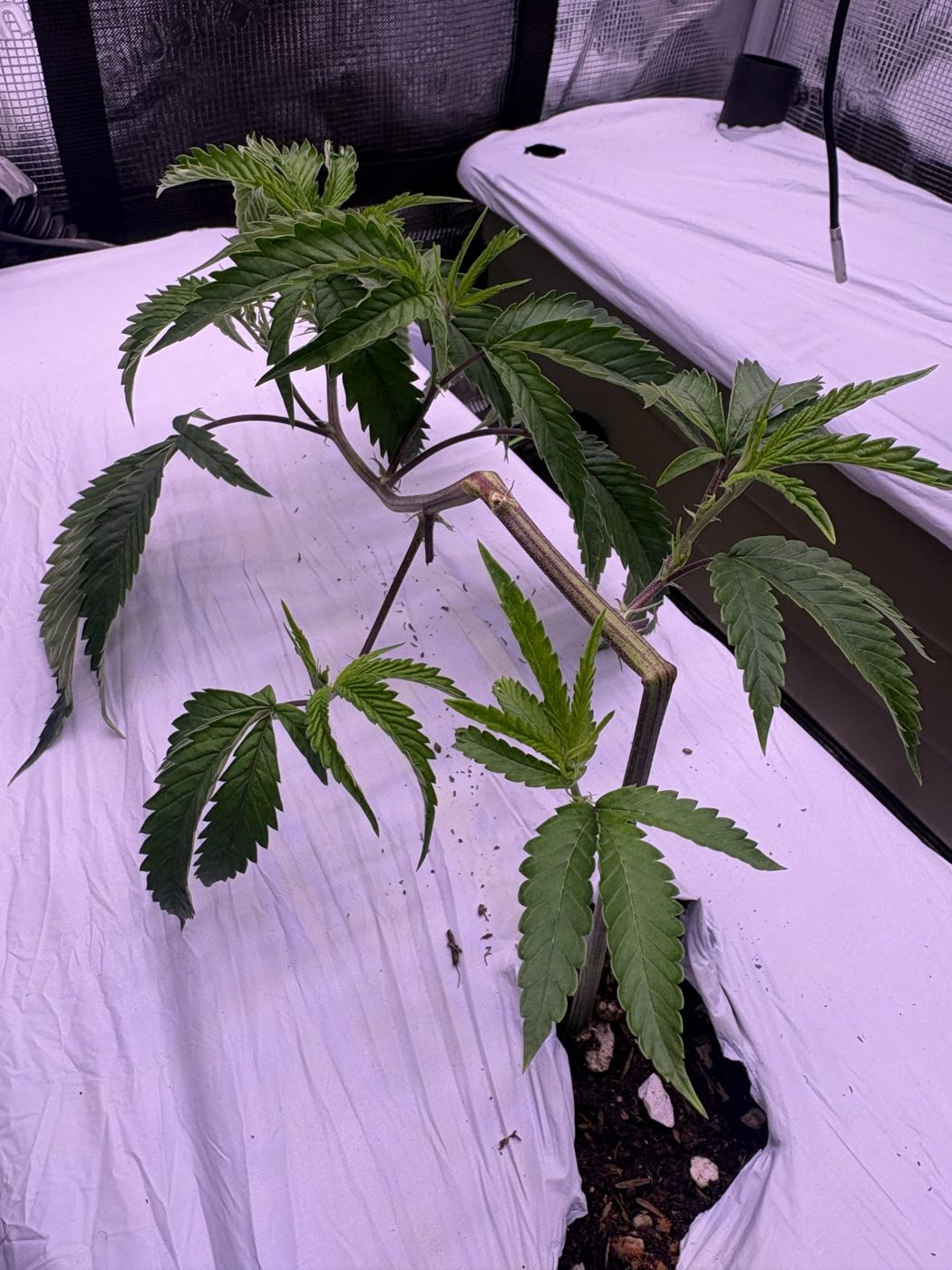
The main stems were supercropped: pinched until the inside gave, then folded over sideways. The bent section is visible in the stem, and the side shoots start turning upward toward the light.
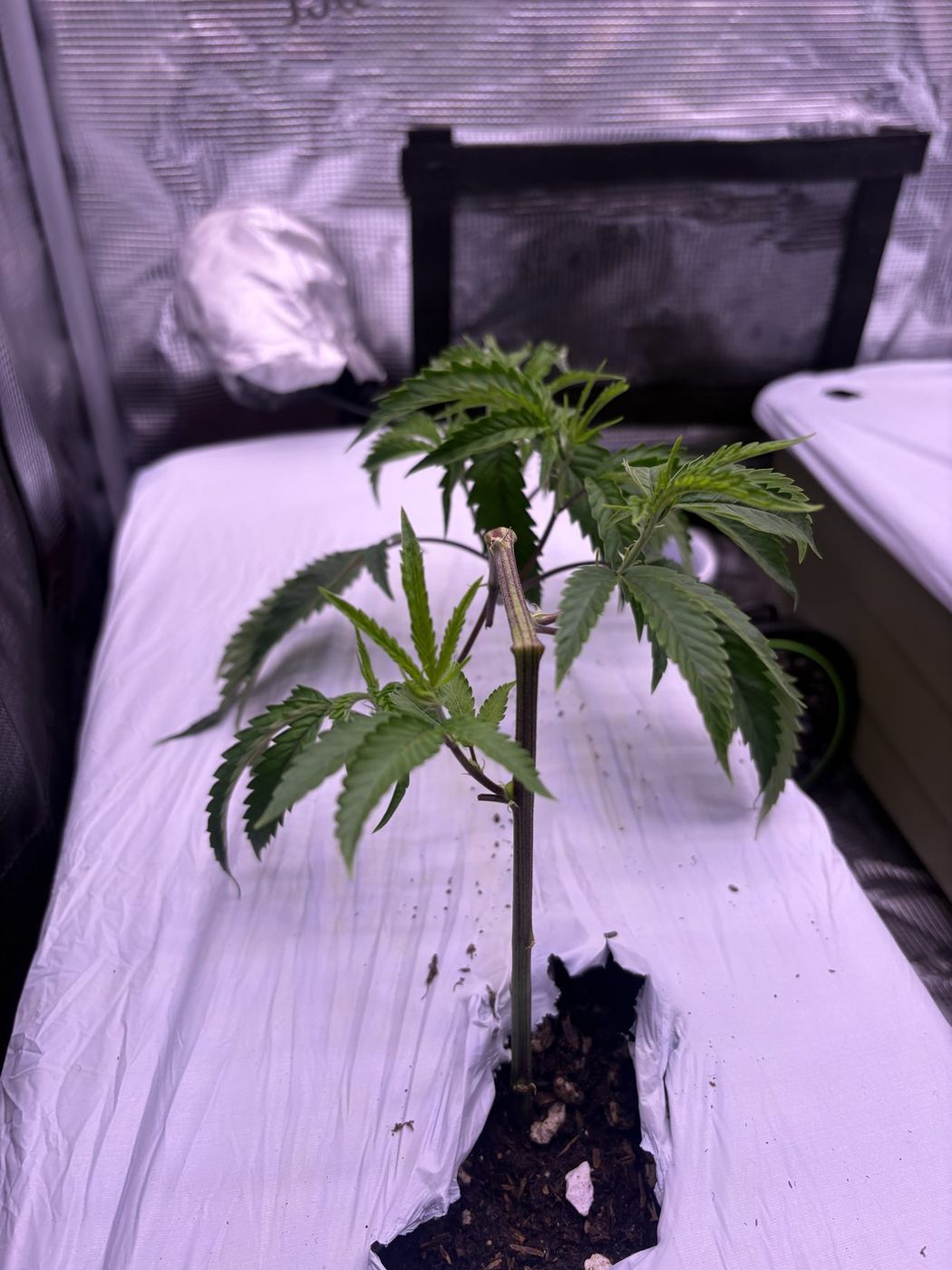
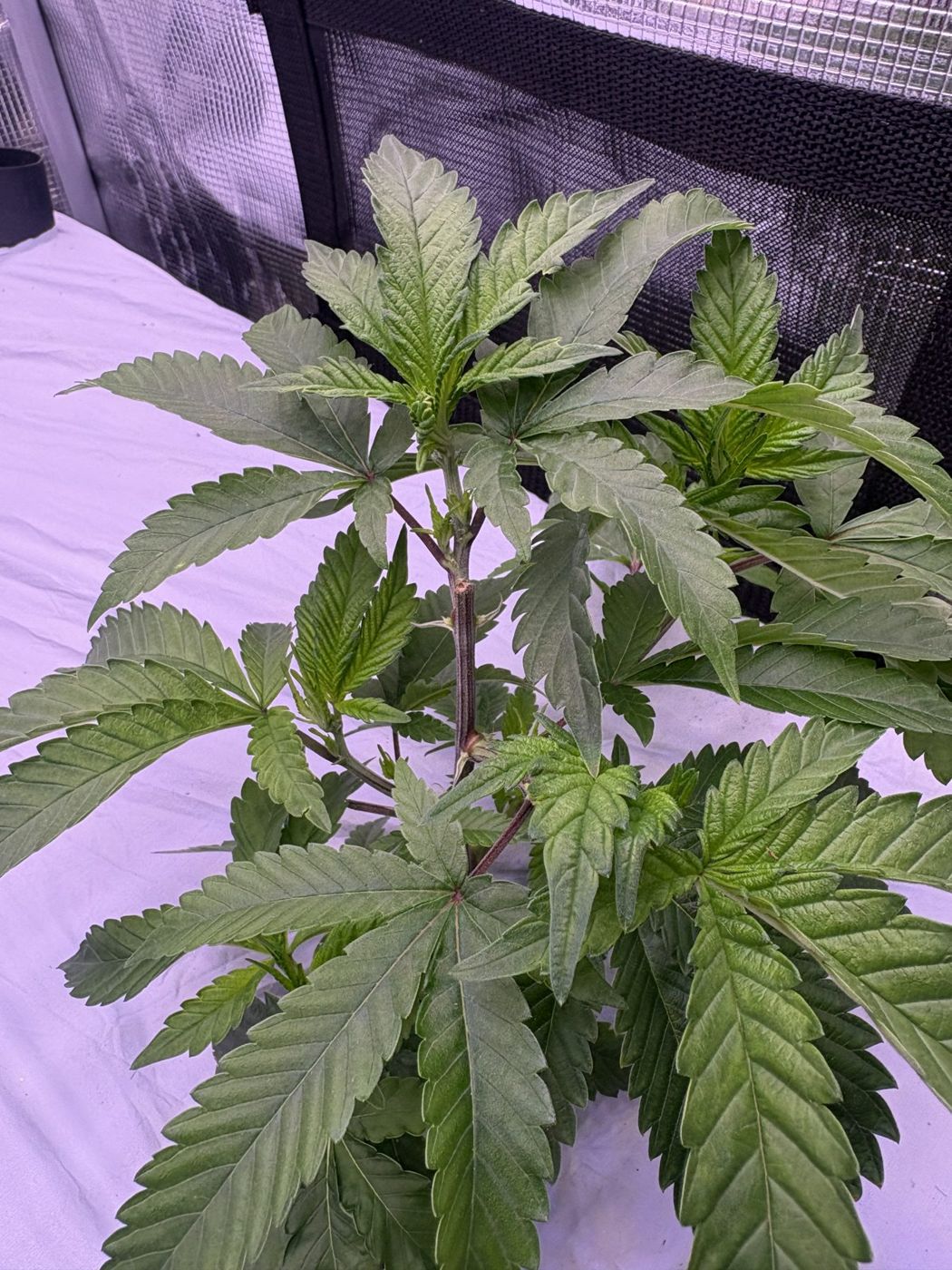
October 6: tucking under the net
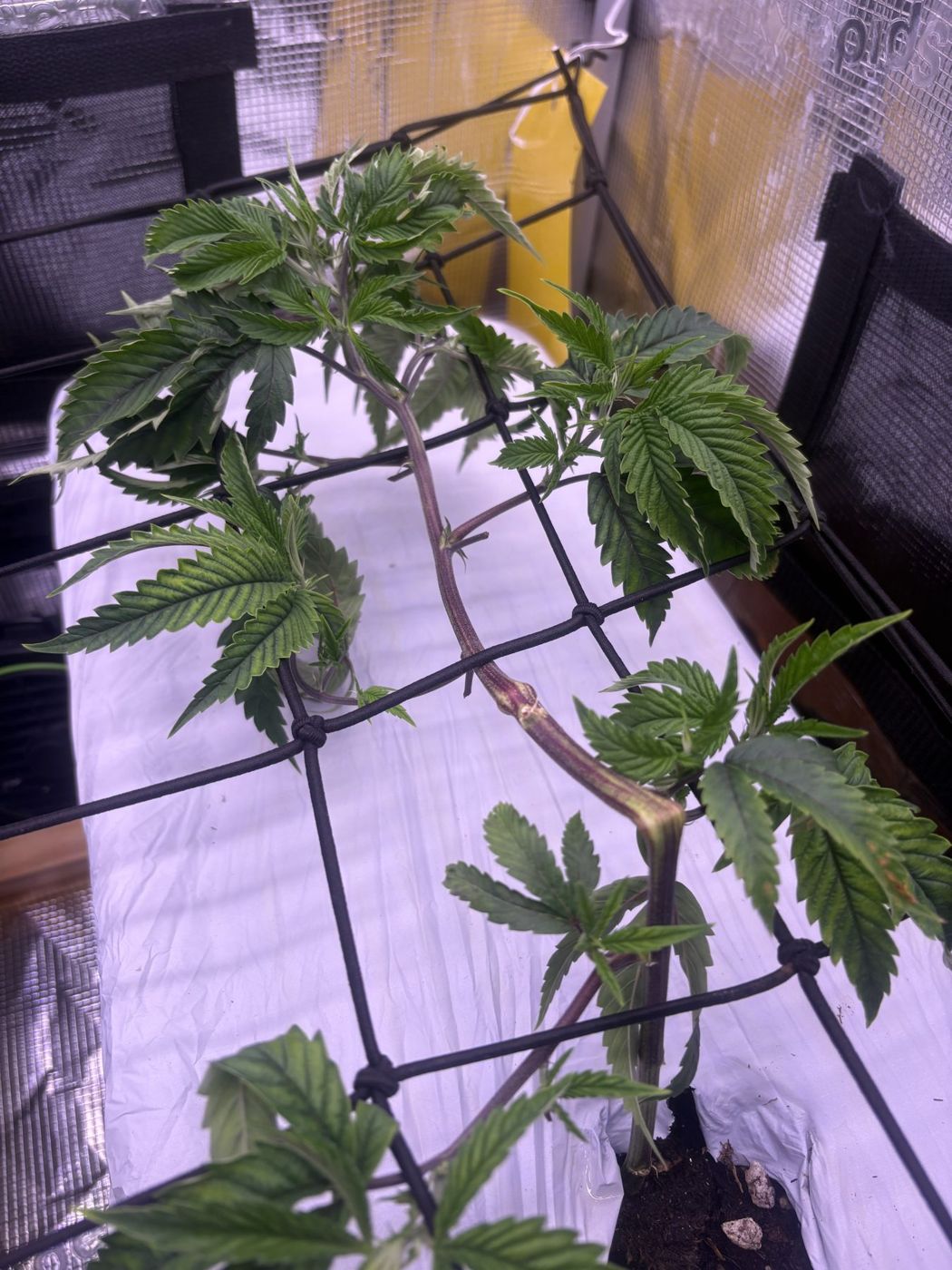
Branches are being tucked and spread under the net to make a flatter, wider canopy instead of one tall top.
The first week of October ran hot. The logs show the exhaust fan maxing out again and again from October 1 to October 7, trying to hold the temperature down.
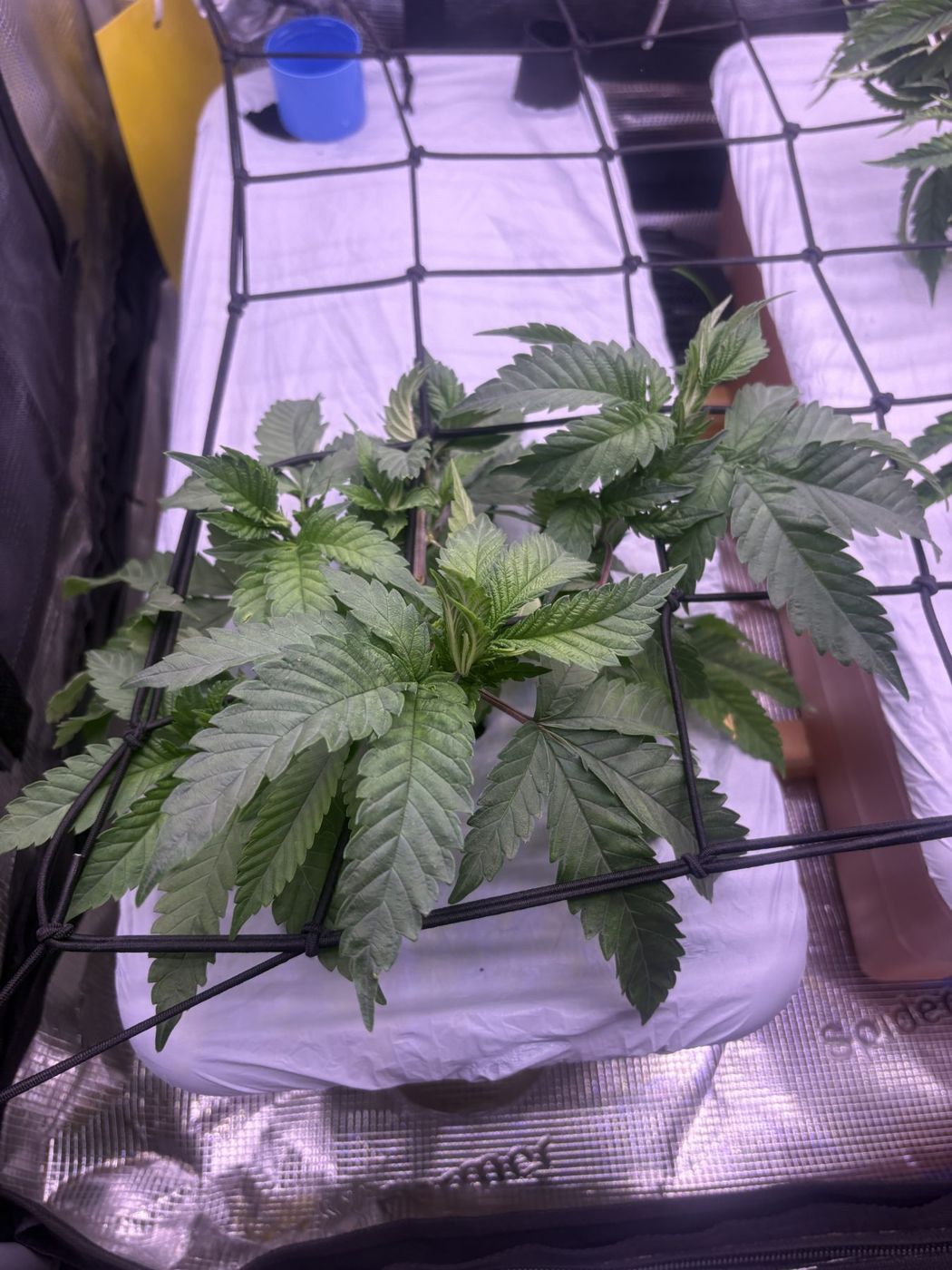
October 9: spreading out, a few marked leaves
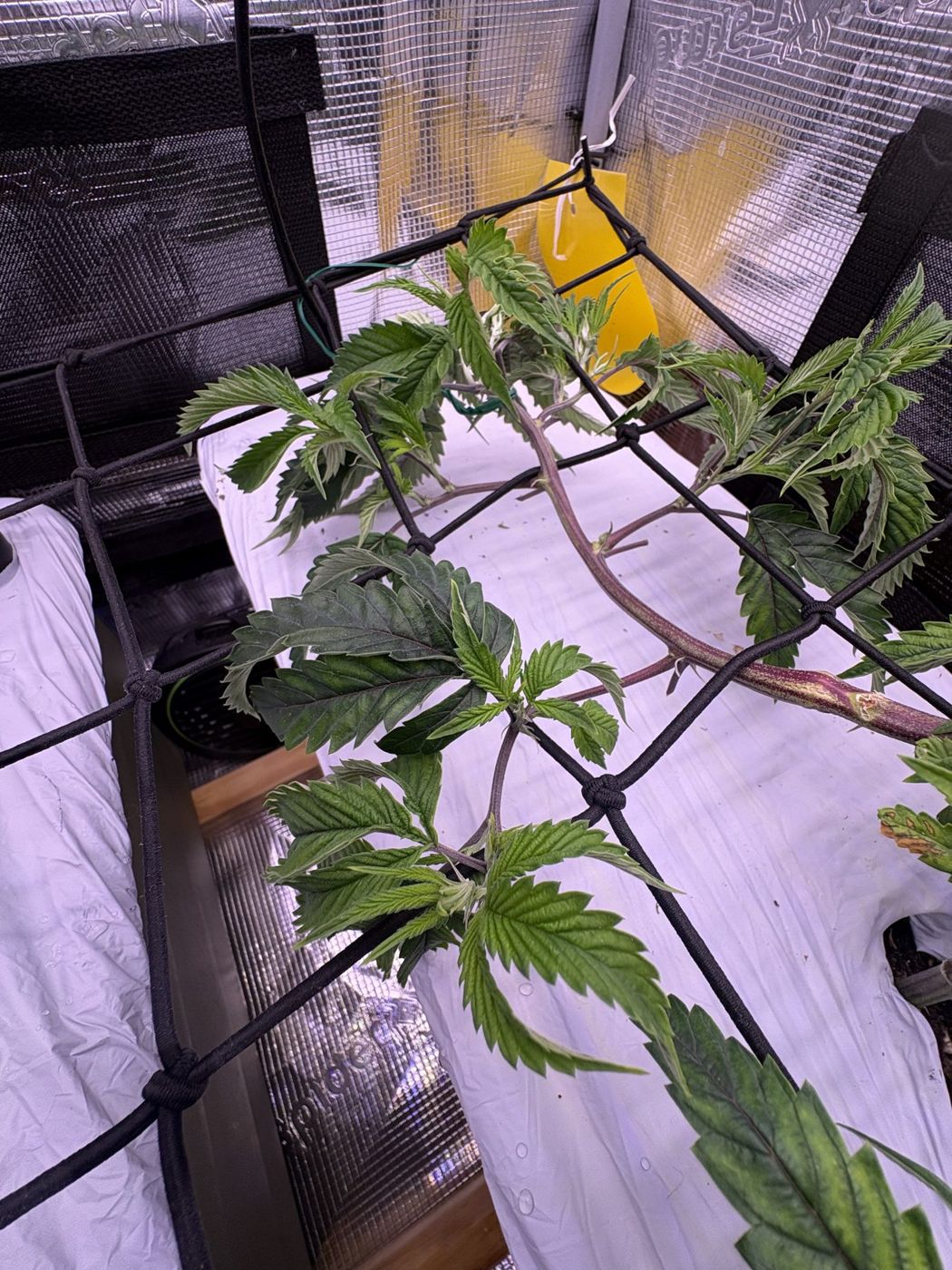
Yellow sticky traps went up. The longer plant now runs most of the net's length.
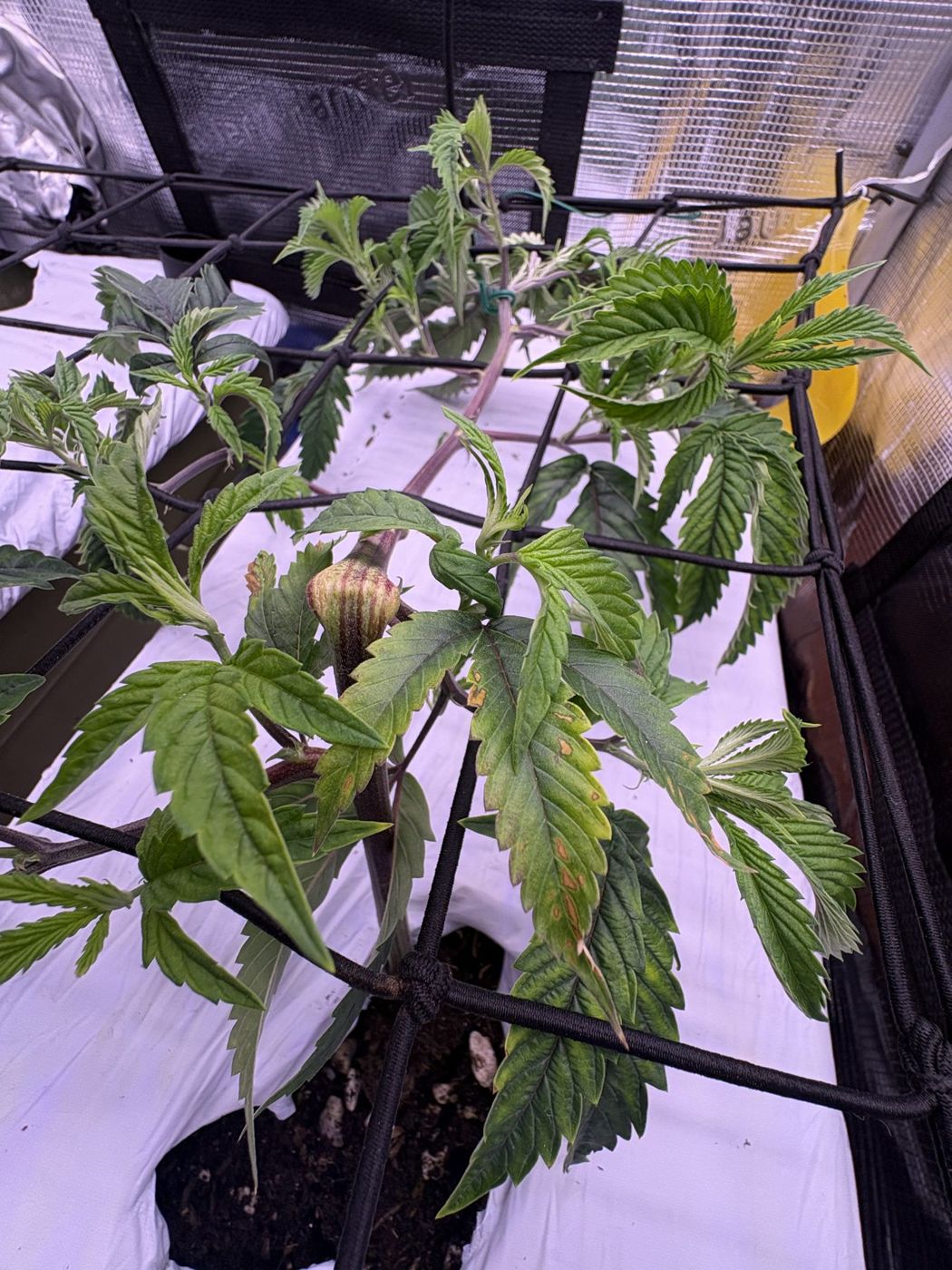
A few lower leaves show rust-colored spotting and yellowing at the edges. A dried leaf is wrapped around the bent stem section. My best guess is overwatering early on: the soil stayed too wet for a while before the roots had settled into the new planters. Newer growth above it came in clean.
October 10: from above
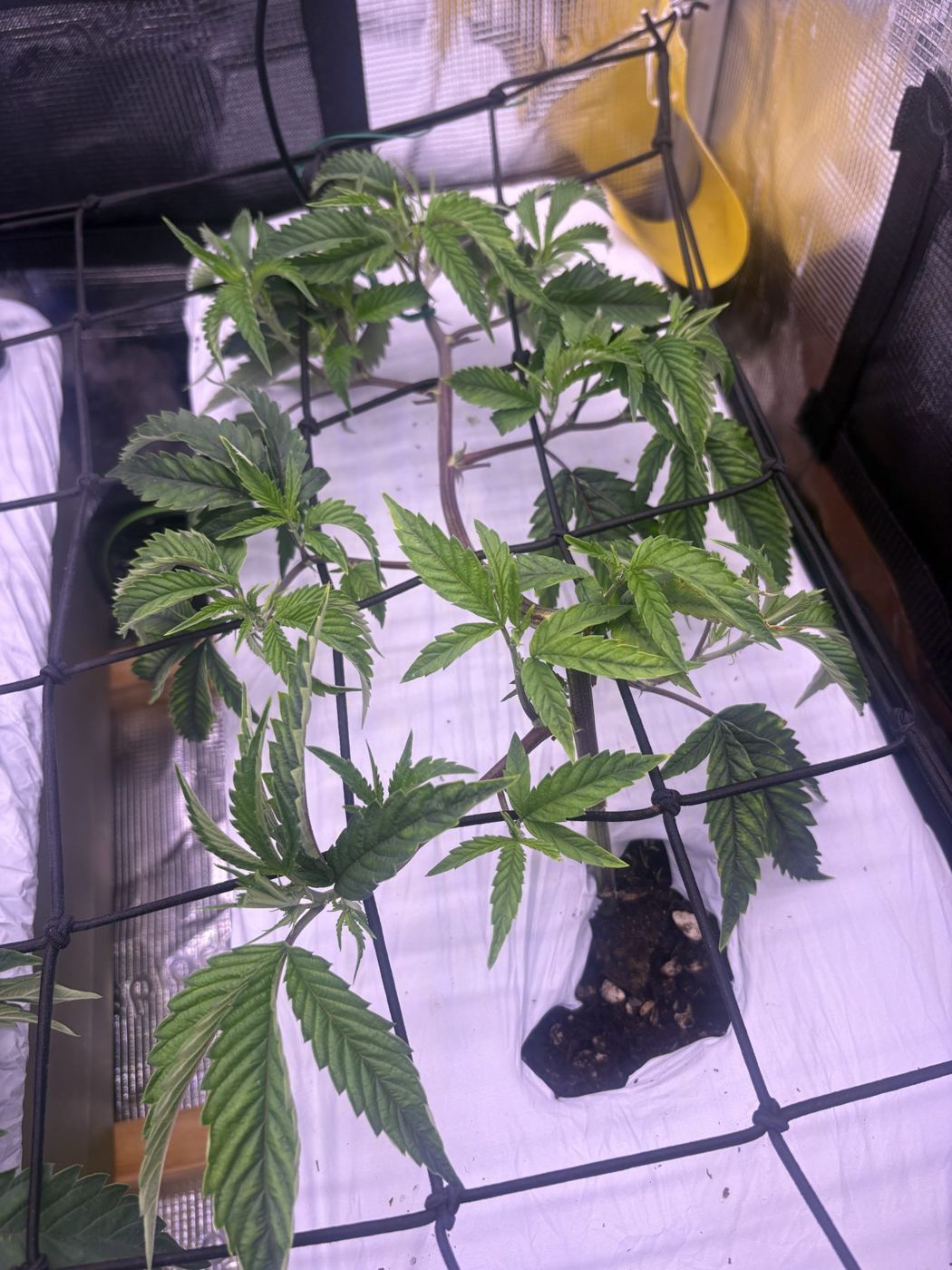
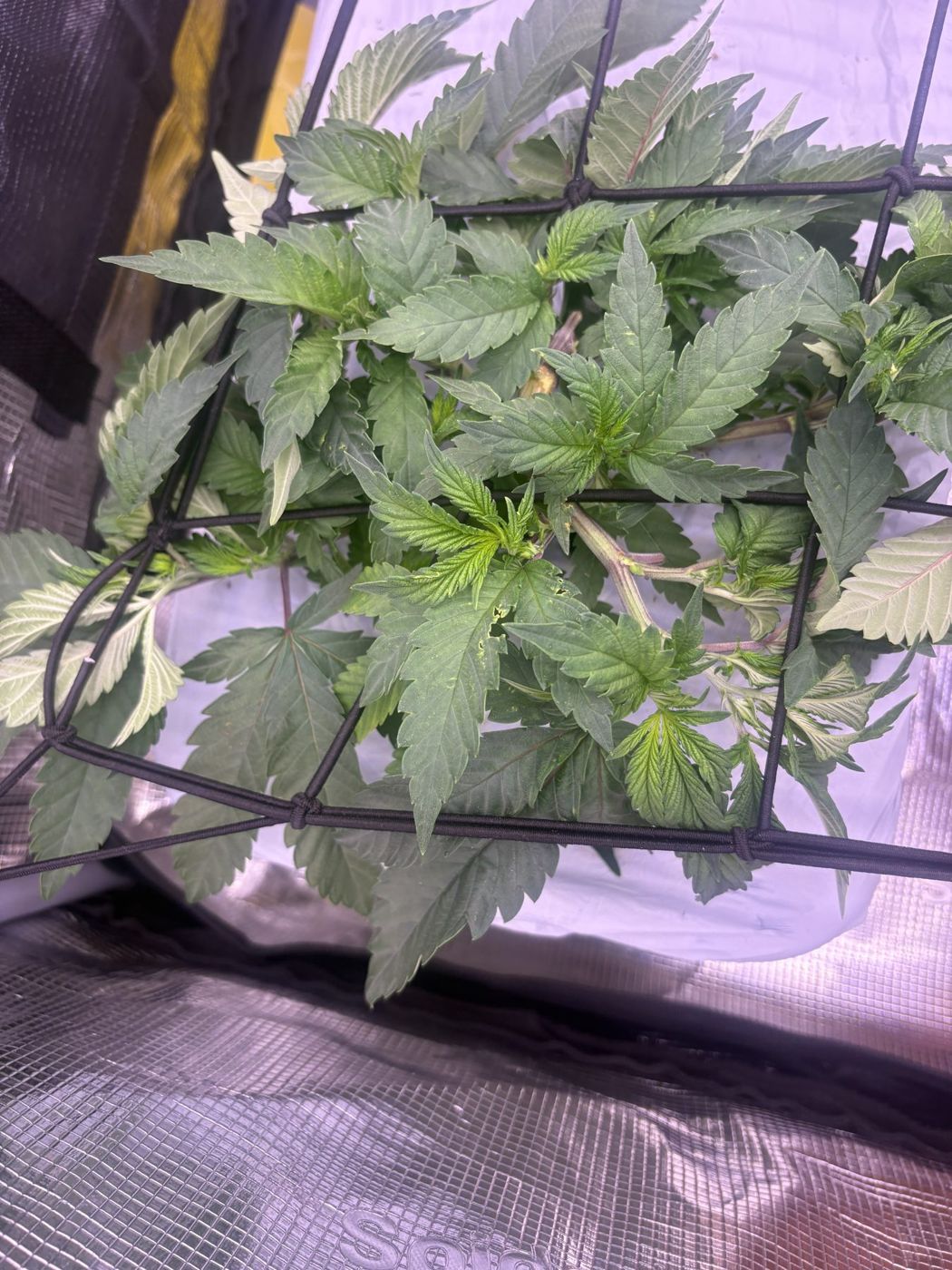
October 12: the bends have healed
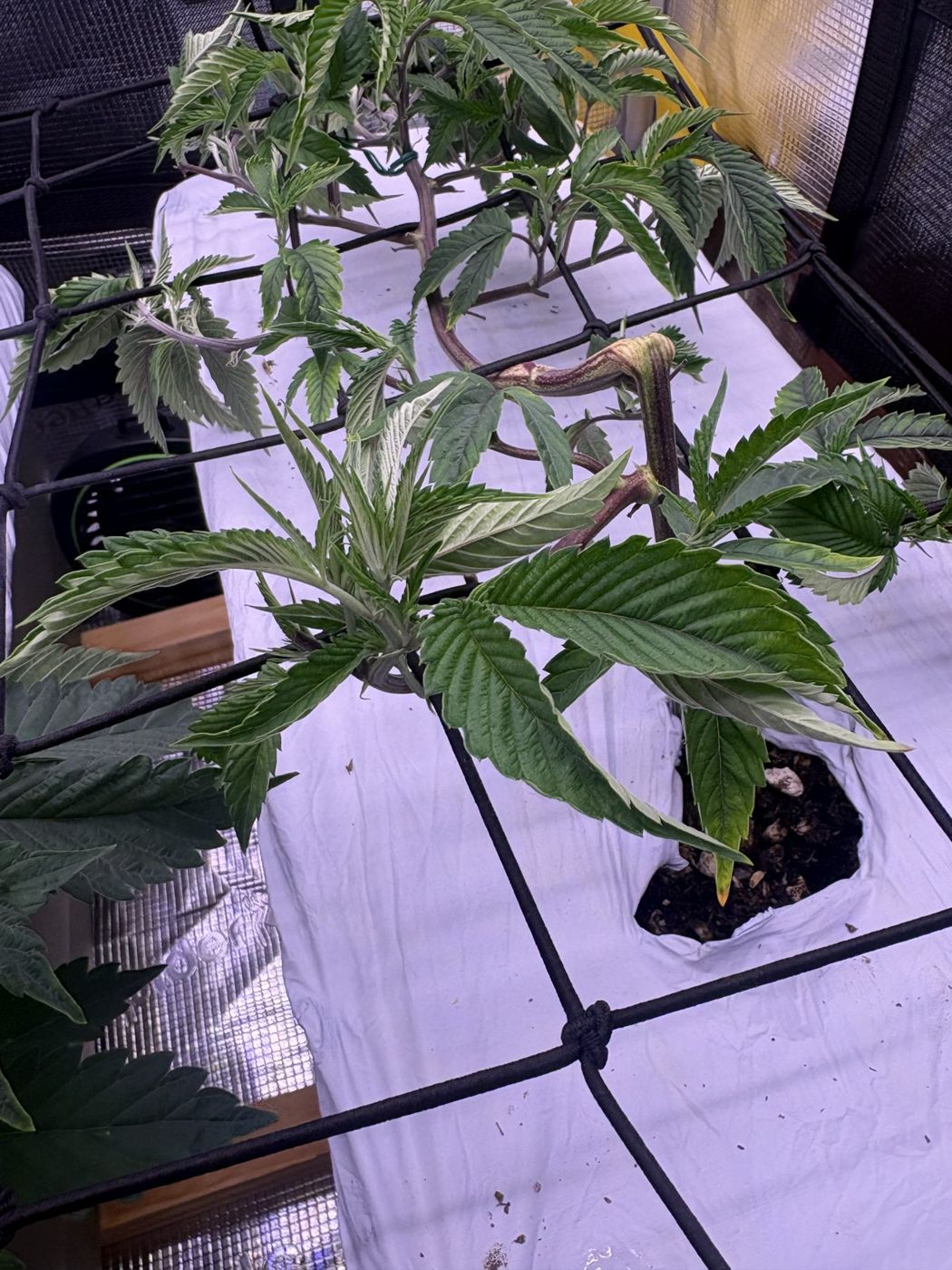
The bent sections have hardened into thick knuckles, and the shoots above them are growing straight up.
October 16: the canopy closes in
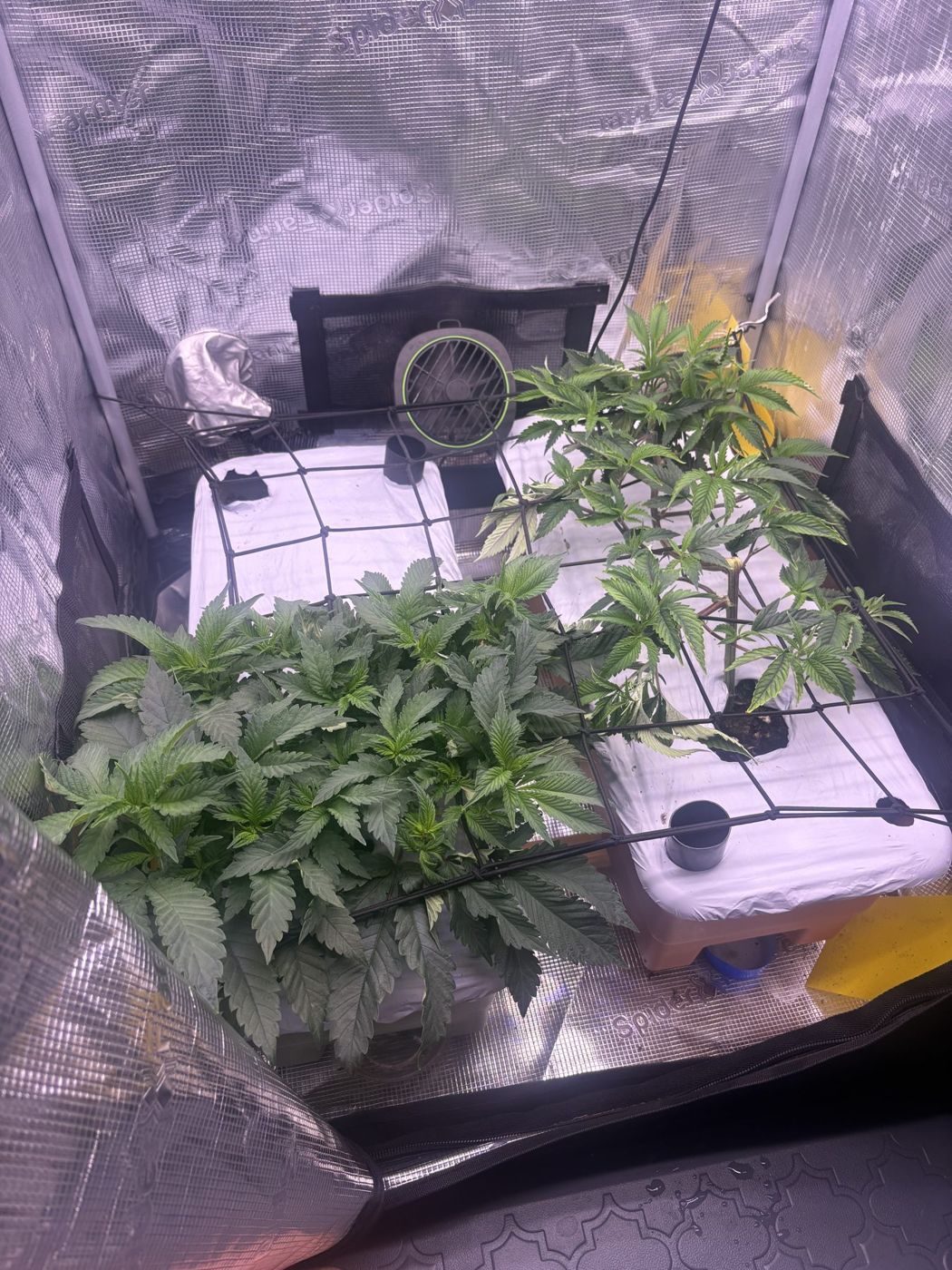
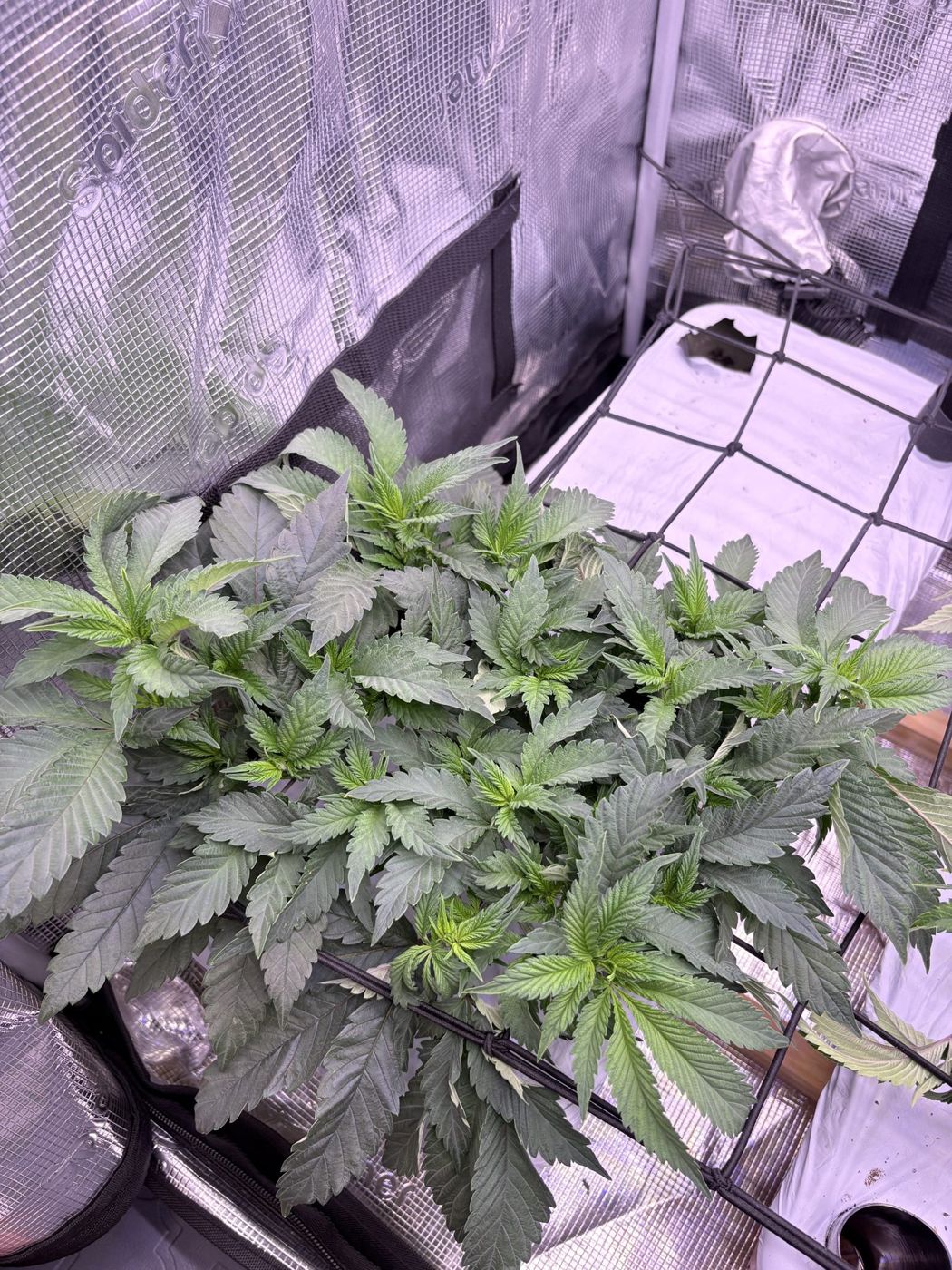
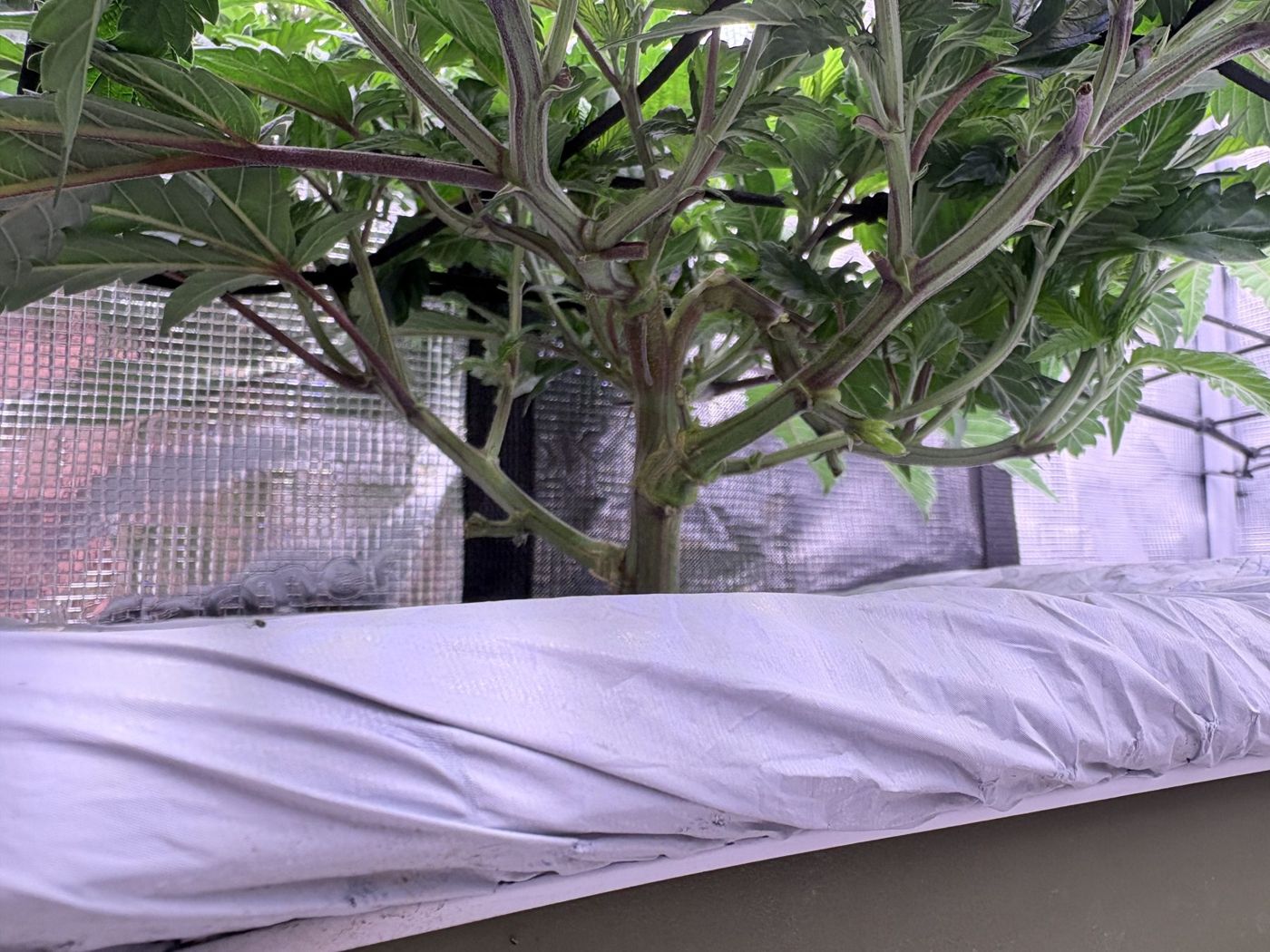
From the side you can see how many stems the training has produced, and how little light gets underneath them.
October 17: clearing out the bottom
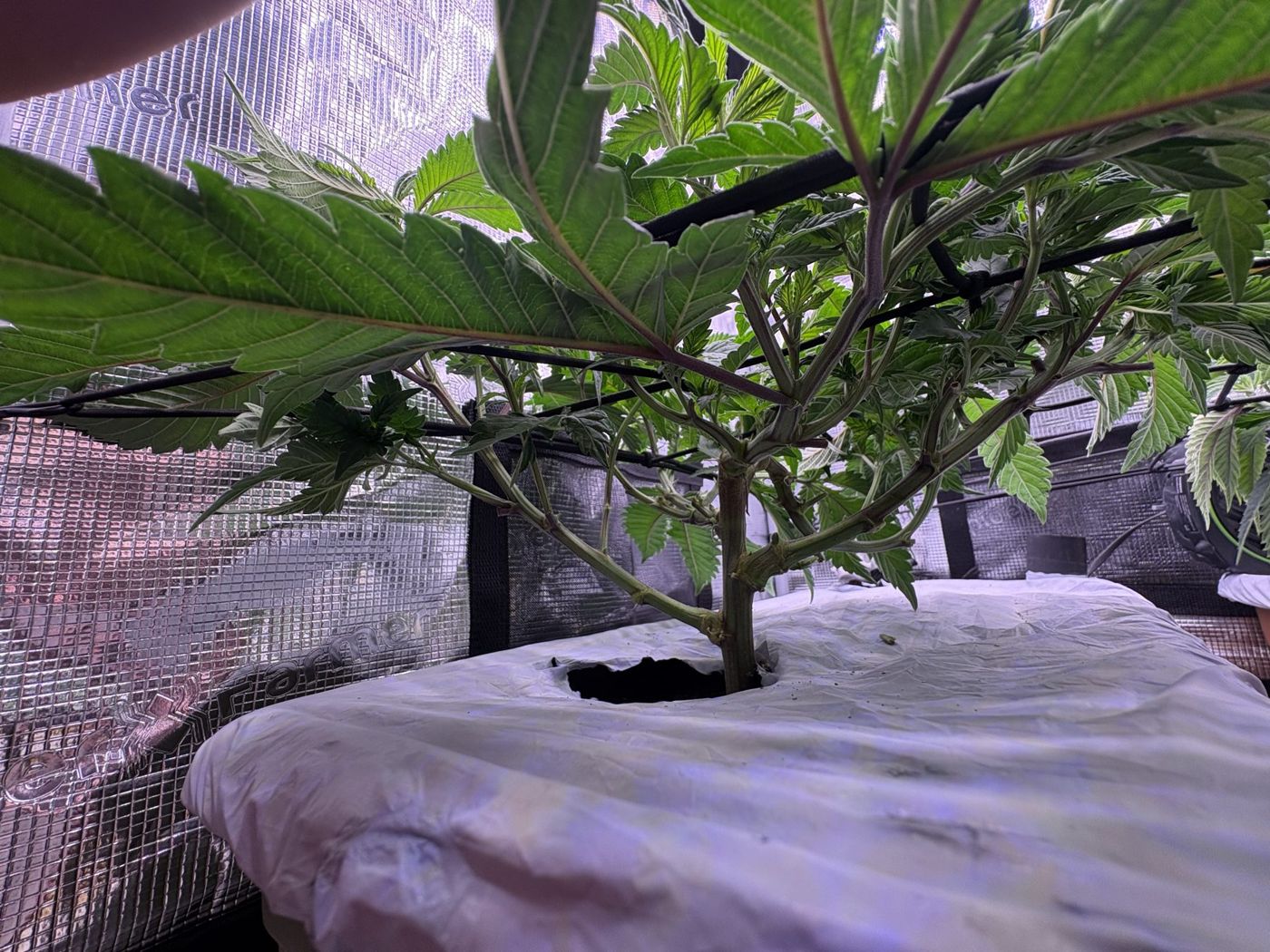
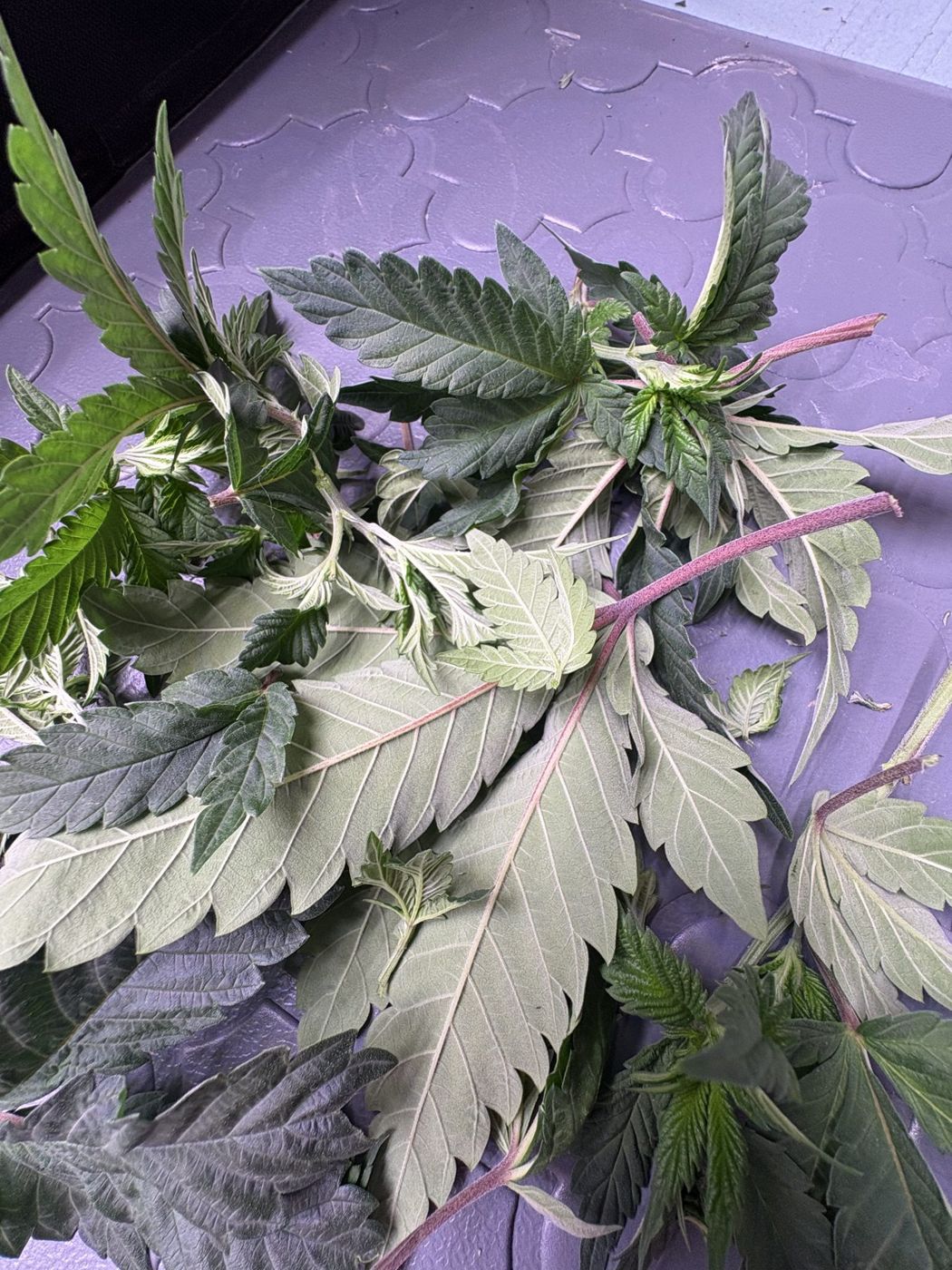
The lower growth that won't get much light was taken off. It was more than a tidy-up but short of a full lollipop: most of the lower third came off, and the rest was left.
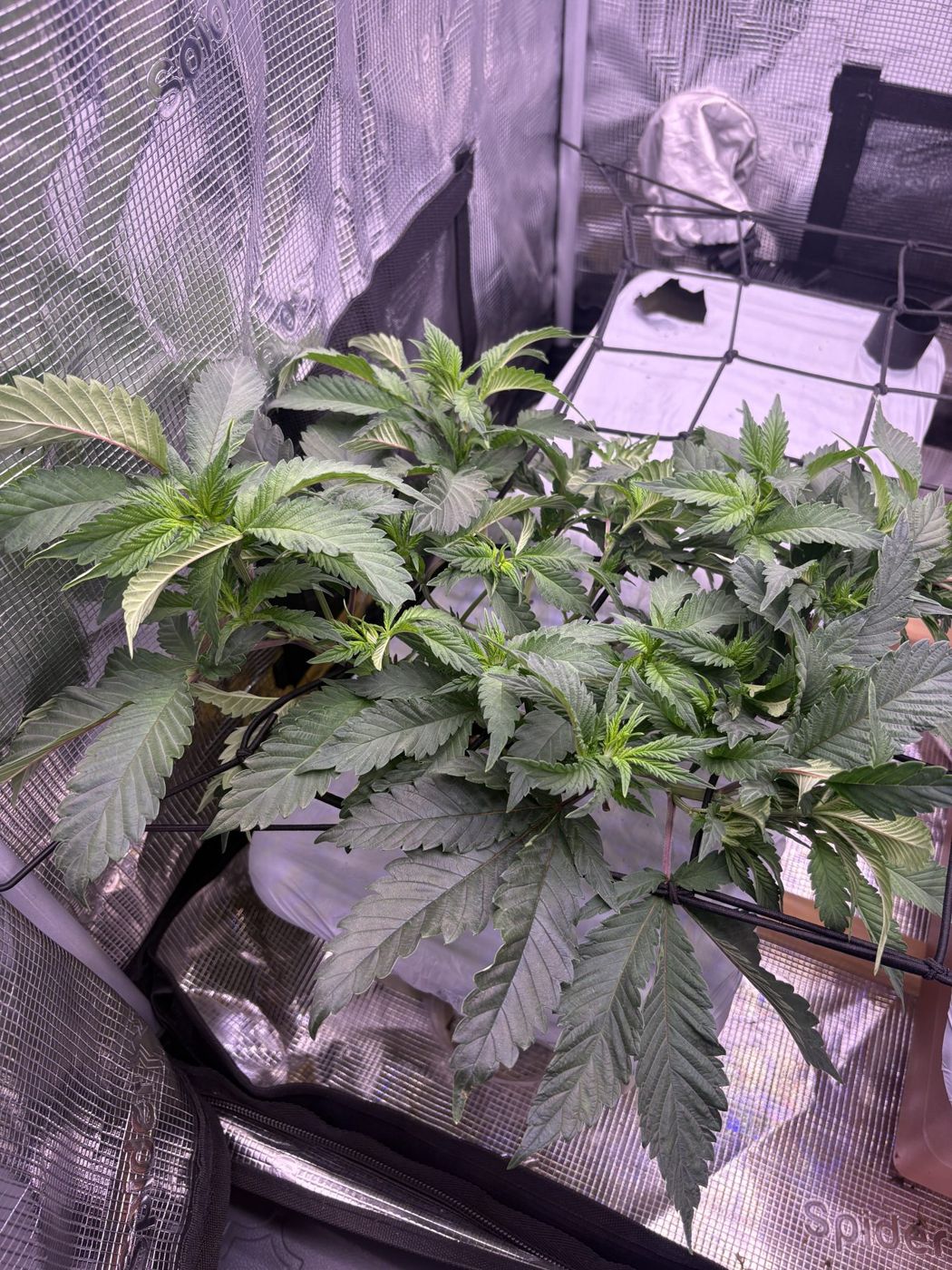
What this is all for, held up in front of the canopy: some Wooksauce Winery picked up at PuffCon. (Not from these plants. That comes later.)
October 18–19: flipped to flower
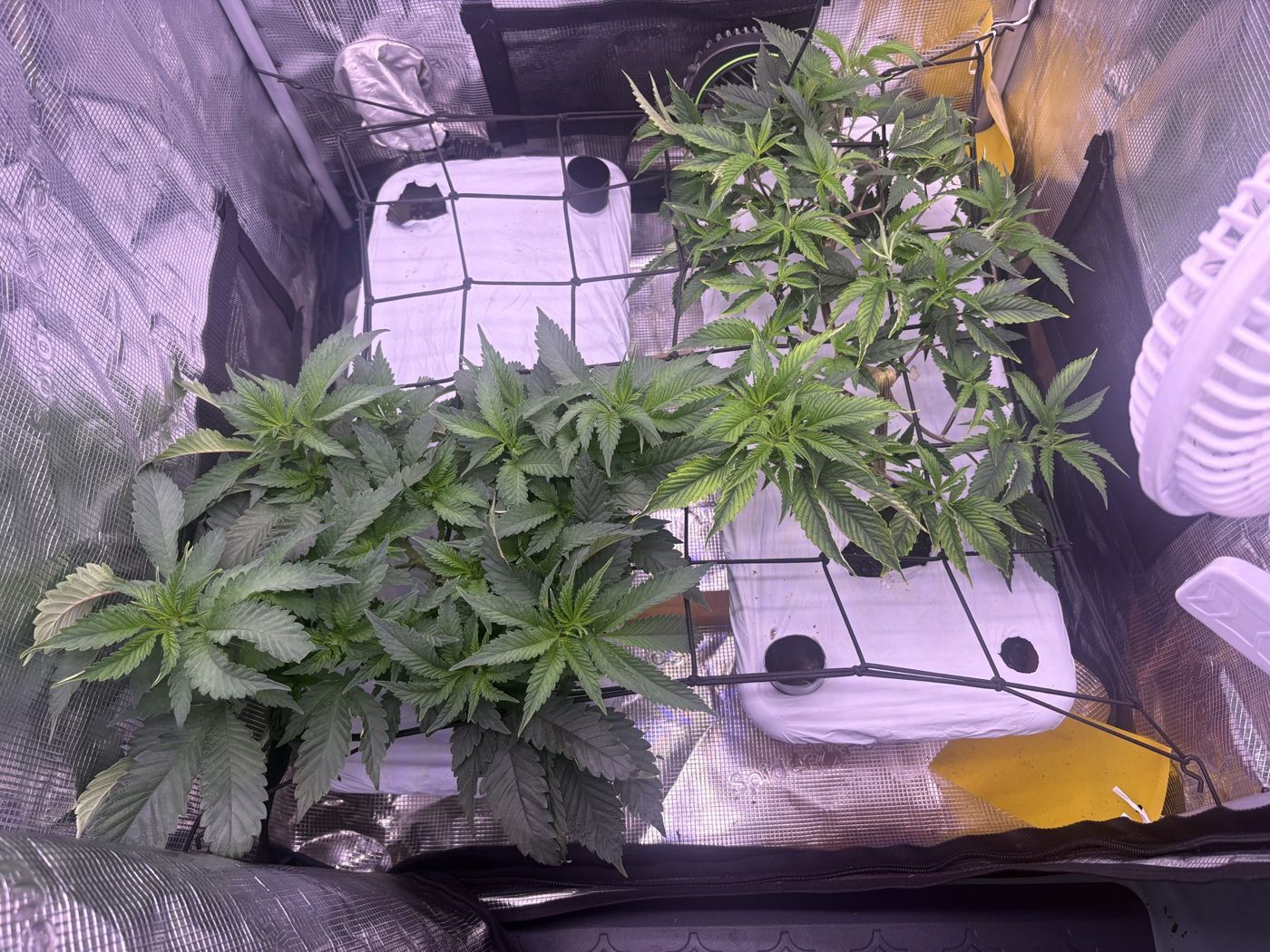
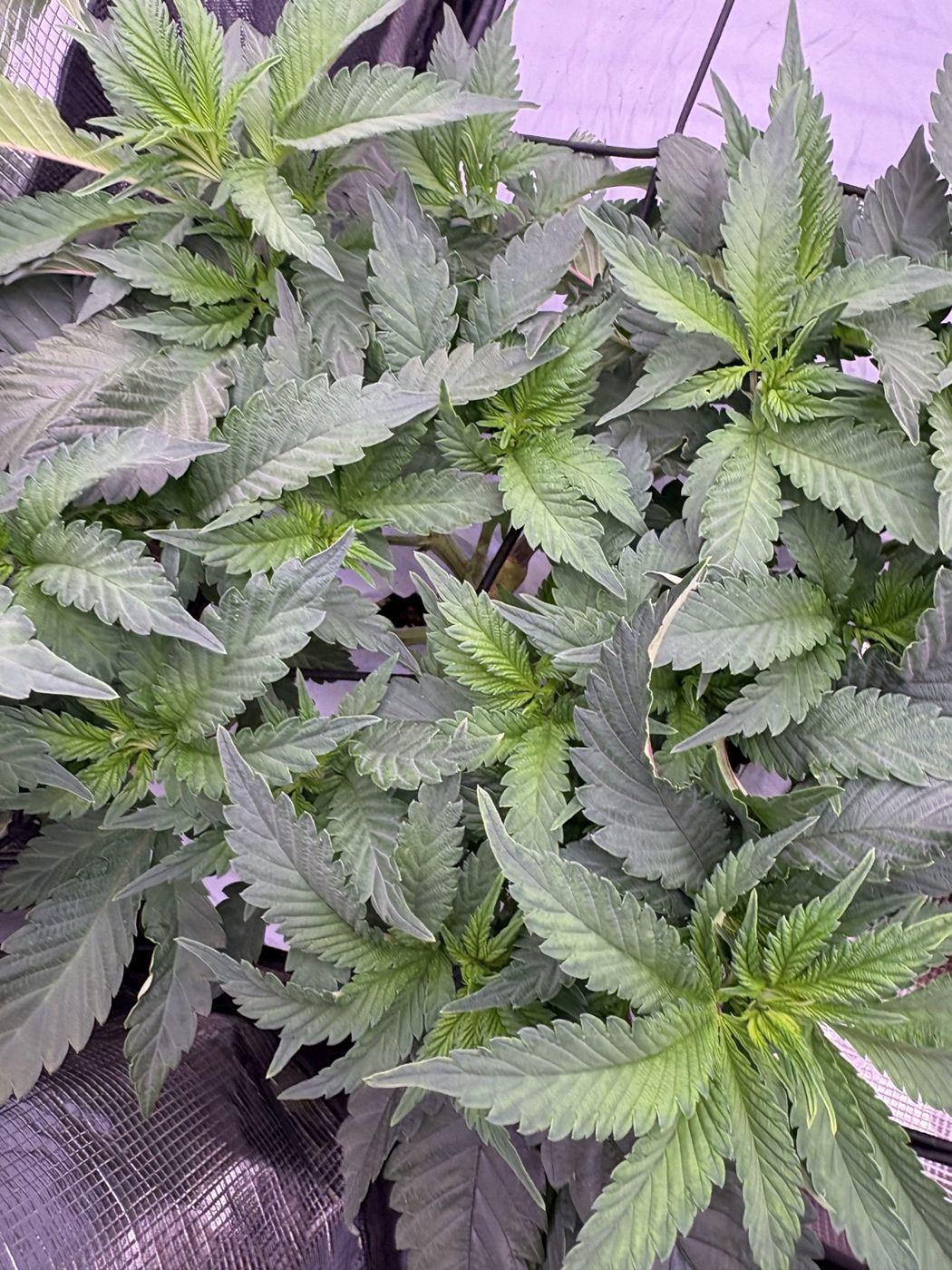
With the net full, the lights went to 12/12 on October 19. They switched off at 3pm, stayed dark for twelve hours, and now run 4am to 4pm. The light was also turned up for flower. Plants usually keep stretching for the first couple of weeks of flower, which is why the canopy was kept low and even beforehand.
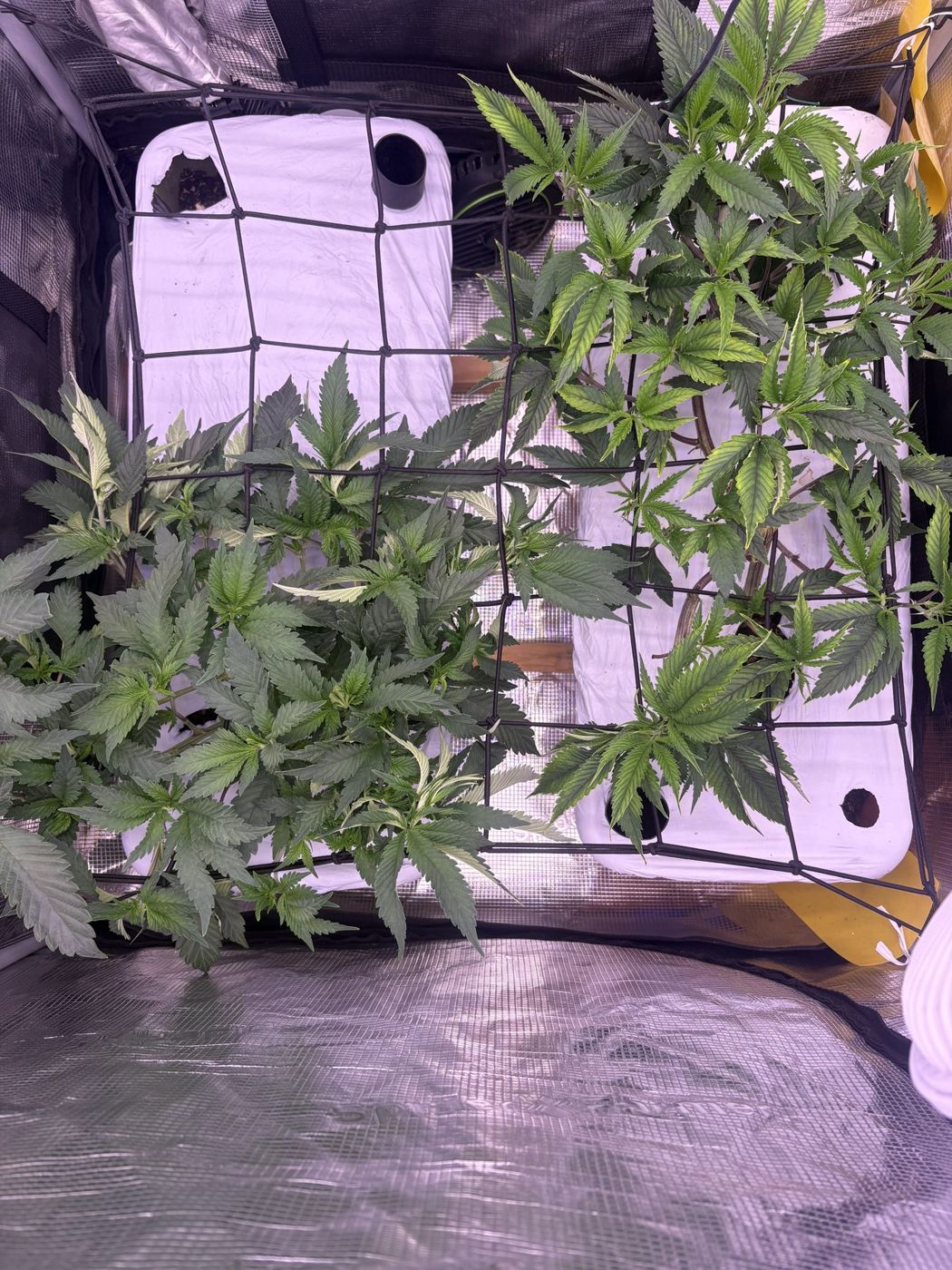
October 21: day 2 of flower
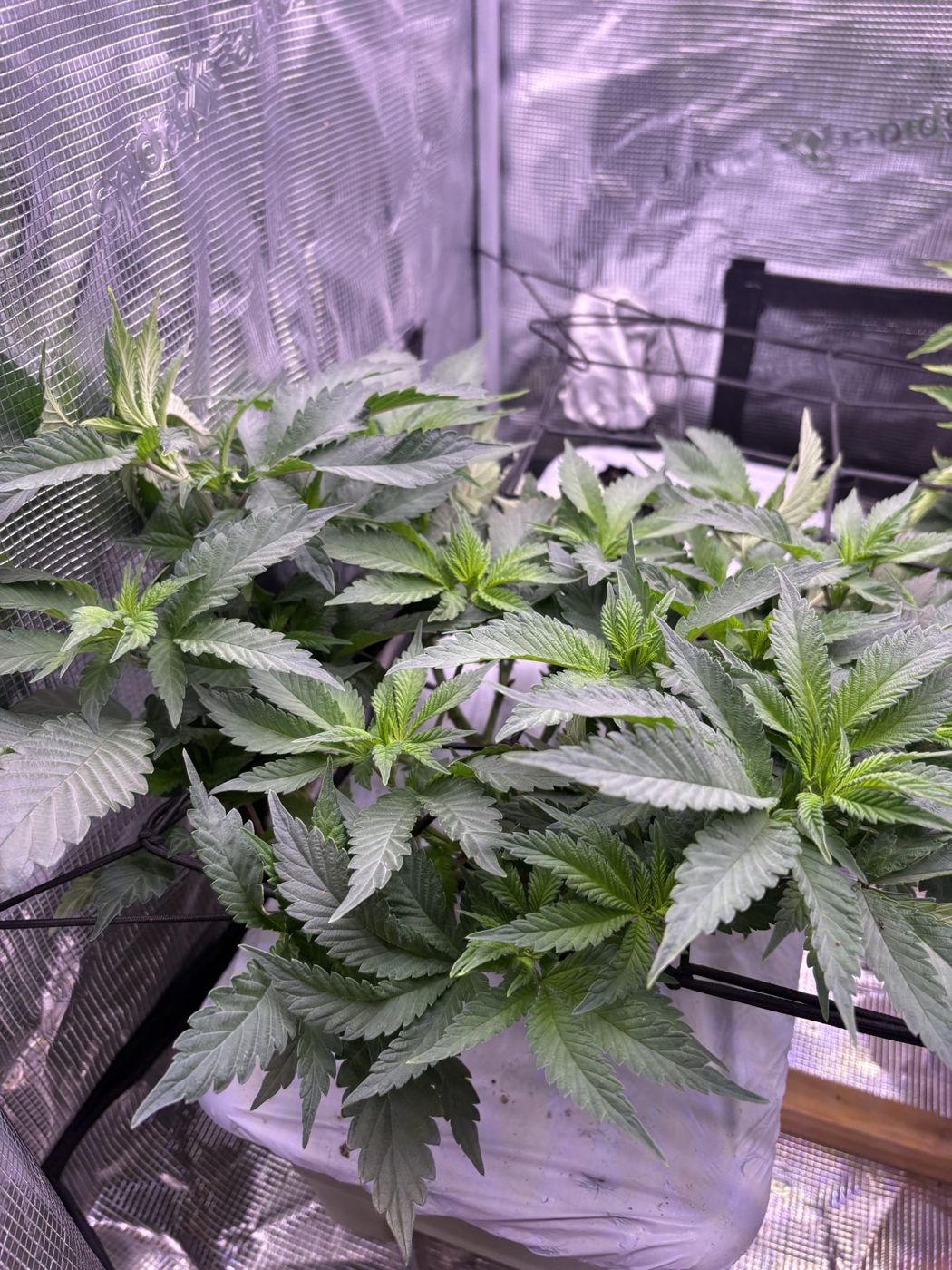
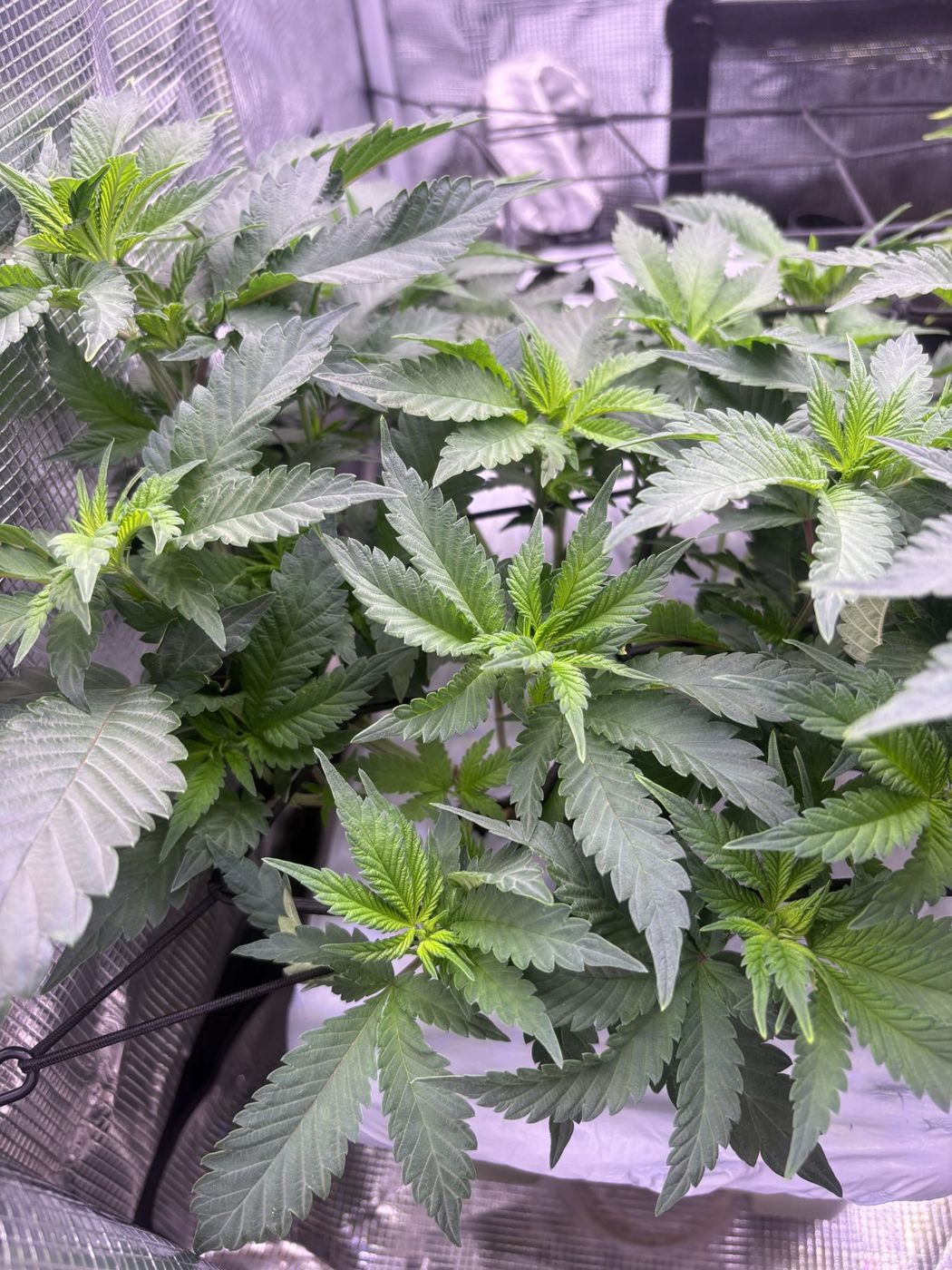
Two days after the flip, the net is full edge to edge. Some of the newest leaves are pale and silvery compared with the older ones. The light went up at the flip, so I'm watching it. More on this in the next entry.
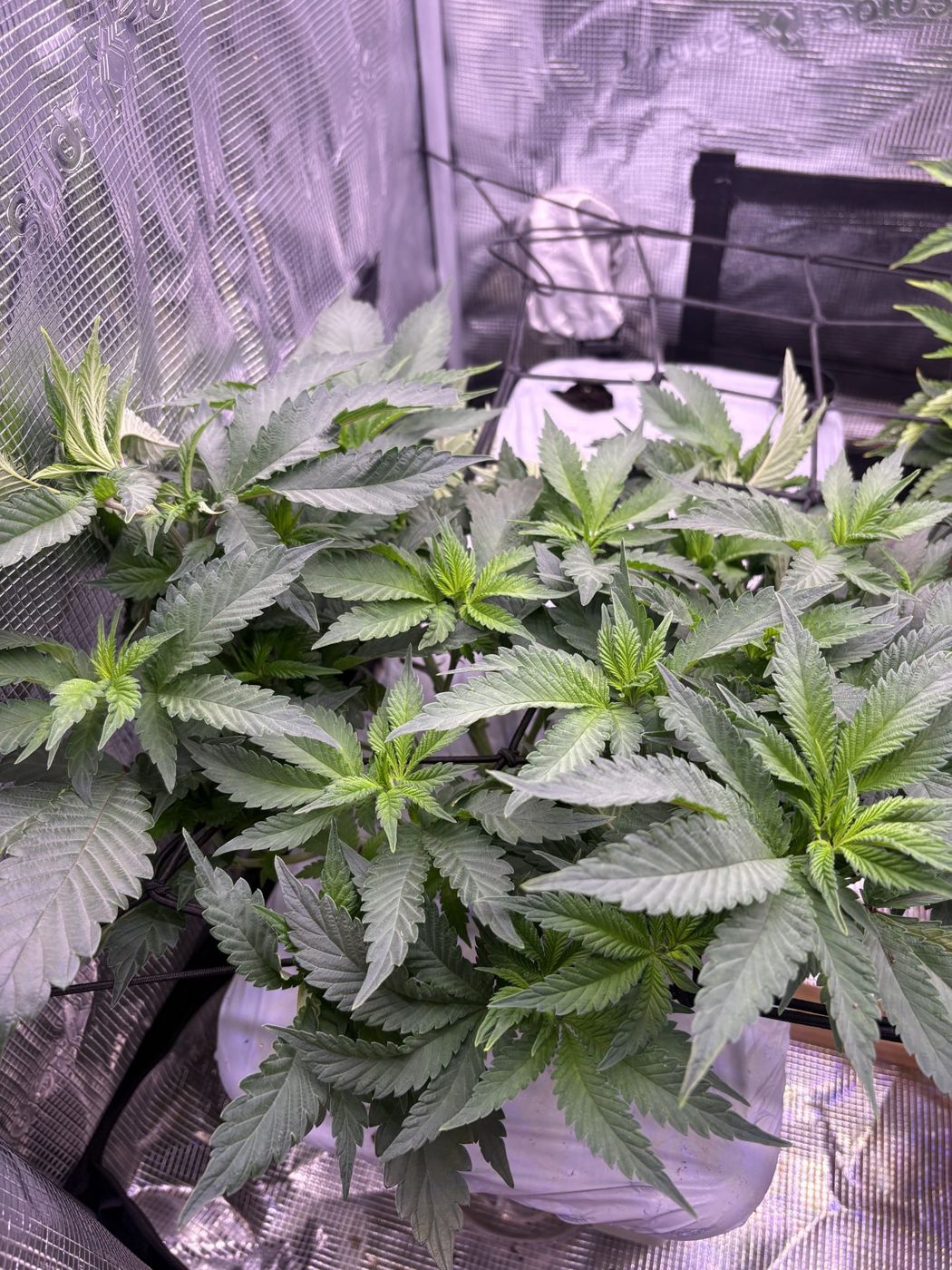
More as the stretch plays out.