I have a temperature and humidity probe at the canopy, another one in the room, and a dashboard that logs both every five minutes. Three weeks into flower, my plants started going pale and none of it showed up on the dashboard. The air was the same as the week before. The problem was in the pots, and I wasn't measuring the pots.
What it looked like
On November 9, day 21 of flower, the two plants in my tiny tent looked the best they had all grow. Deep green tops, thick white pistils, the first frost on the small leaves around each bud.
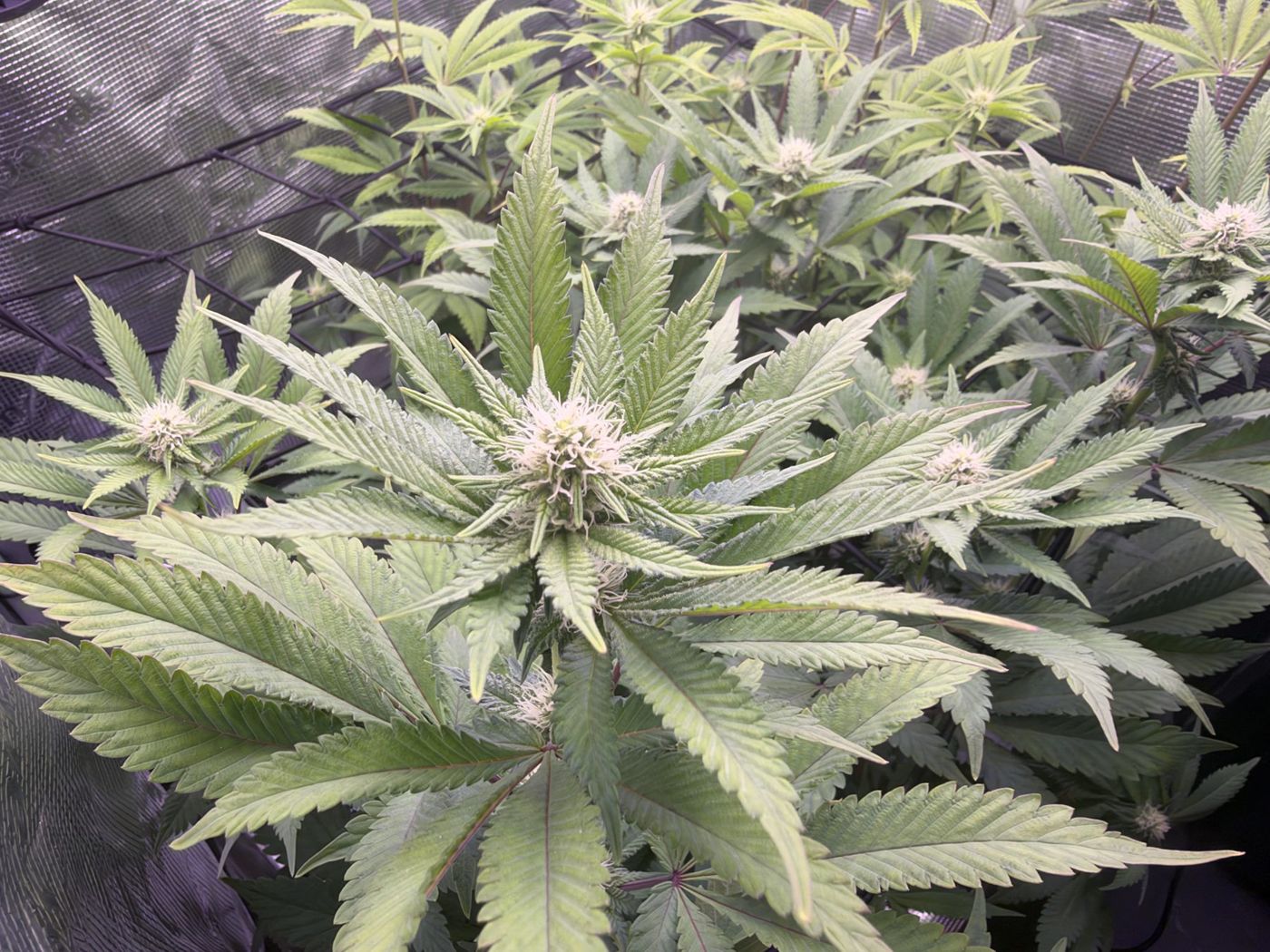
Four days later the Headband's fan leaves around the tops had gone lime-yellow, with rusty-pink edges and tips. The Rozay stayed darker but picked up rust-orange blotches with yellow halos along the edges of its big fan leaves.
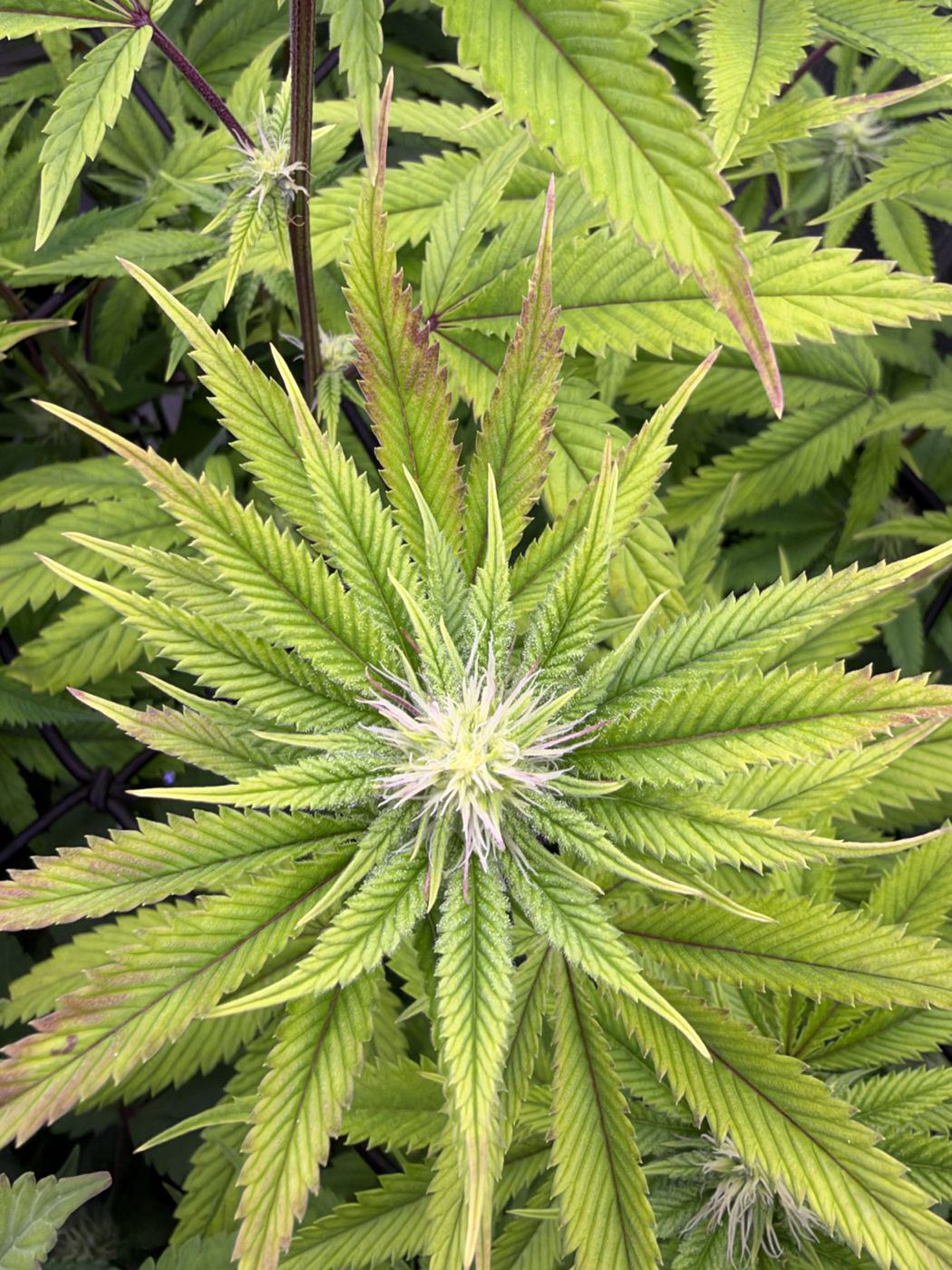
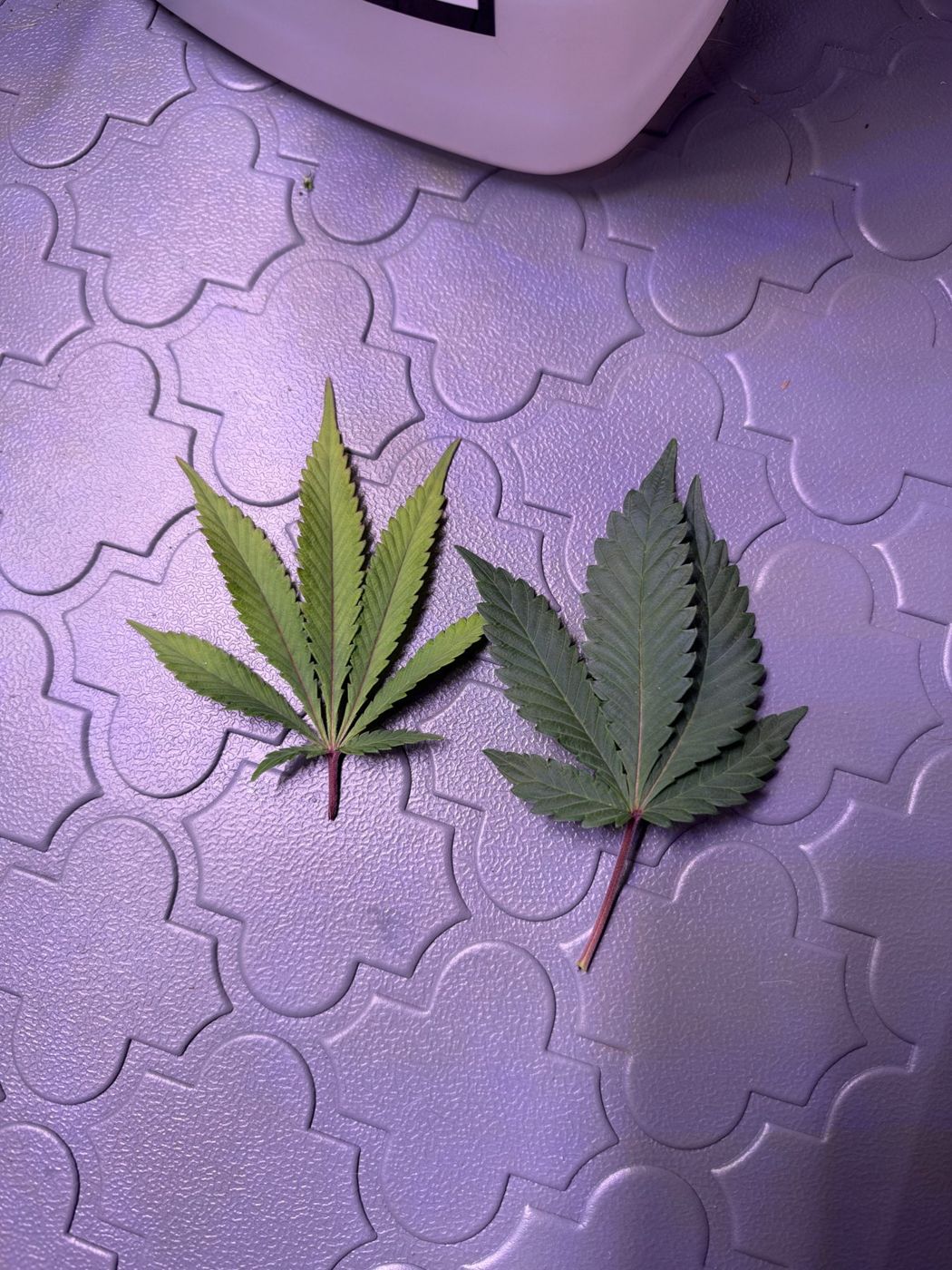
The weird part was where it showed up. A leaf from the top of the Headband next to one from the bottom of the same plant: the bottom one is still deep blue-green. The top of the plant, the part nearest the light, took it worst.
Why the data missed it
I went back through the logs looking for the cause. Lights-on averages from November 9 to 13 were 81.7 to 82.7°F at 61 to 66% humidity, about where they'd been all month. Lights-off ran 73 to 76°F. Nothing moved enough to explain plants changing that fast.
What changed was the water. I'd watered too much the week before. These plants are in EarthBox Juniors, which are self-watering planters: a reservoir under the soil keeps wicking water up into the root zone. That's the whole point of them, and it's also the trap. In a normal pot, extra water drains out the bottom. In a self-watering planter, it stays. Roots sitting in wet soil don't get enough oxygen, and roots short on oxygen take up less of everything, so the plant shows a deficiency even when the soil is full of food.
I made it worse a few weeks earlier. On October 26 I top-dressed each planter with about six cups of dry amendment, which is far more than the maker's rate of about a quarter cup per plant. While the soil was dry that mostly sat there doing nothing. Once the soil stayed wet, it was soaking in water the whole time. My best guess is that the plants got a pulse of nitrogen and salts they couldn't use, on top of roots that couldn't take up much anyway. That's an inference from the timing and the symptoms. I didn't test the soil.
The dashboard I built was supposed to have this covered. The plan included scales under each planter so I'd have a record of every watering and how fast the plants drank. I never set them up. So the one number that would have caught this, the weight of the pots, is the one number I don't have.
What I changed
Water by weight, not by schedule. I let both planters dry all the way down until they were very light. Then I gave each about three-quarters of a gallon, and stopped before anything ran out of the overflow hole. Overflow means the reservoir is full and the bottom of the soil is going to stay soaked. From here on I pick up the pot before I water it. Light means water. Heavy means wait.
No food. No nutrients, no cal-mag, no more dry amendments. The soil isn't short on anything. The roots are.
Turn the light down for a week. The pale leaves are at the top, nearest the light, while the bottom leaves are fine. That points at light and heat as part of it, not just the roots. The tops were seeing 850 PPFD with afternoon peaks around 87°F. I dropped the light to 620 at the Headband tops as a test. If the new growth up top comes in greener, the light was part of it.
Move the lights to nights. The lights ran 4am to 4pm, through the warm part of the day. Now they run 6pm to 6am. Getting there took one 26-hour dark period, which is the safe direction to shift in flower. How to change your light schedule during flower covers why.
Judge by new growth only. The leaves that are already pale or burnt are done. They won't turn green again. What matters is whether the leaves coming in at the tops over the next week come in green.
What I'd tell myself three weeks ago
Pick up the pot. A climate sensor tells you about the air, and the air was never the problem here. The cheapest, most useful instrument in a self-watering setup is your arm. A bathroom scale under each planter, written down every day, would have been better than any dashboard.