Introduction
Cleaning a Puffco Hot Knife means wiping the ceramic blade with isopropyl alcohol after each session and doing a deeper soak when residue builds up. The Hot Knife is a heated loading tool that slices through concentrates and deposits them into a Puffco Peak or Peak Pro atomizer. Over time, wax residue collects on the ceramic tip, which can affect heat transfer and make loading less precise. This guide from Resin Manual covers how to clean a Puffco Hot Knife, what supplies you need, and how often to do it. Quick answer: for routine cleaning, a cotton swab dipped in 91% or higher isopropyl alcohol and a gentle wipe of the ceramic tip after it cools is usually all it takes. For heavier buildup, a short alcohol soak of the tip restores full performance.
Background
The Puffco Hot Knife is a battery-powered tool with a ceramic heating element at its tip. When activated, the tip heats to a temperature that softens concentrates on contact, letting you transfer material without sticky fingers or metal dab tools. A few key terms to understand before cleaning:
Ceramic blade/tip — The flat, heated end of the Hot Knife. It is porous at a microscopic level, which means residue can settle into the surface if left uncleaned.
Isopropyl alcohol (ISO) — A solvent commonly used to dissolve cannabis concentrate residue. Concentrations of 91% or higher evaporate faster and leave less moisture behind than lower-percentage formulas.
Reclaim — The dark, sticky residue that builds up on surfaces that contact concentrates repeatedly. On a Hot Knife, reclaim collects mainly on and just behind the ceramic tip.
A common misconception is that the entire Hot Knife unit can be submerged in alcohol. It cannot. The Hot Knife contains a battery and electronic components in its body. Only the ceramic tip area should contact cleaning solvents. Submerging the full device risks permanent damage to the battery and circuitry.
Steps
Let the Hot Knife cool completely
After your last use, set the Hot Knife down on a clean, heat-safe surface and wait at least two to three minutes. The ceramic tip retains heat, and wiping it while hot can cause alcohol to flash-evaporate before it dissolves residue. A cool tip also prevents accidental burns. Never attempt to clean the tip immediately after activation.
Tip: If you are unsure whether the tip has cooled, hover your hand near it without touching. If you feel warmth, give it another minute.
Prepare your cleaning supplies
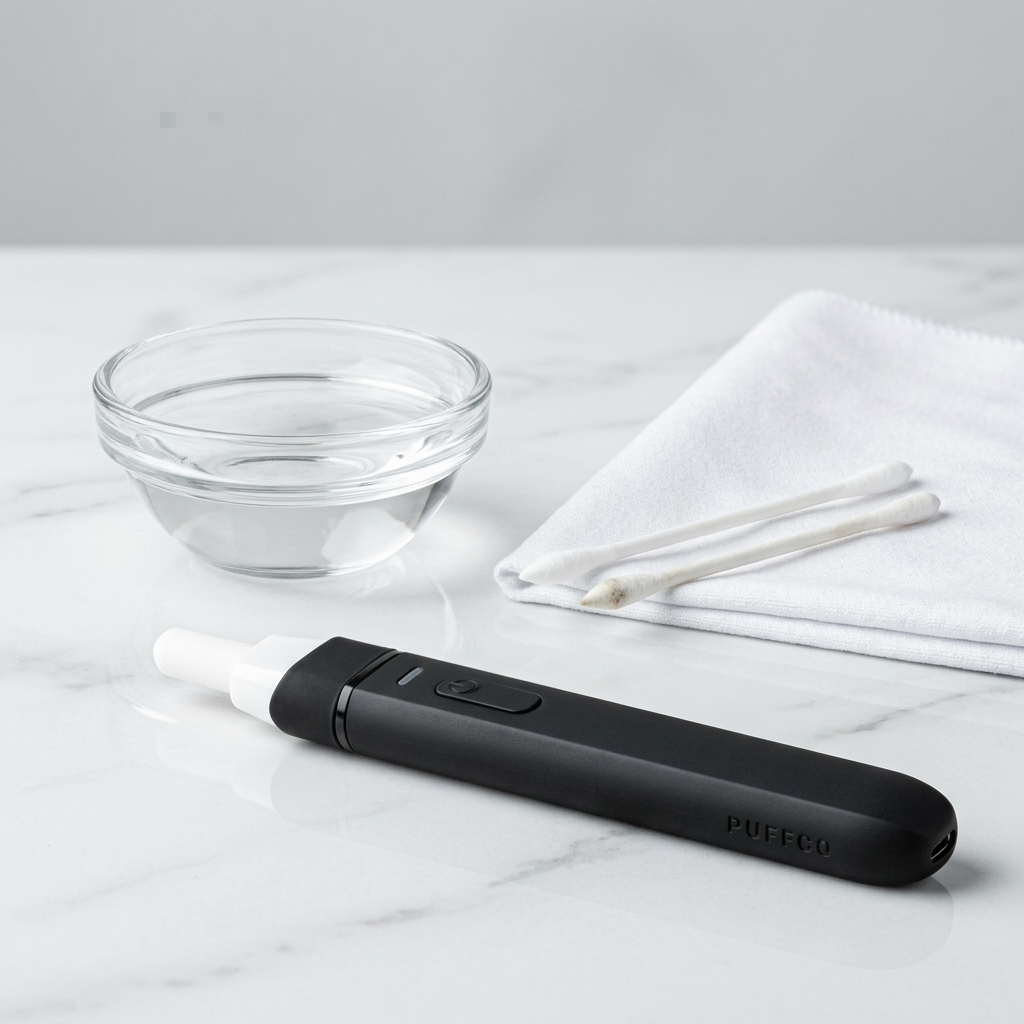
Gather the following: 91% or higher isopropyl alcohol, cotton swabs (pointed-tip swabs work best for precision), a small dish or shot glass for soaking, and a lint-free cloth or paper towel. Avoid using water, acetone, or commercial glass cleaners on the ceramic tip. These can leave residue or damage the material. Keep your workspace well-ventilated since isopropyl alcohol produces fumes.
Wipe the ceramic tip with a soaked cotton swab
Dip a cotton swab in isopropyl alcohol so it is saturated but not dripping. Gently wipe the flat surfaces and edges of the ceramic blade, rotating the swab to expose a clean section as it picks up residue. For light buildup after one or two sessions, a single swab pass on each side is usually enough. Isopropyl alcohol at 91% concentration dissolves most concentrate residue in under 30 seconds of contact.
Tip: Wipe in one direction rather than scrubbing back and forth. This reduces the chance of pushing residue further into the ceramic pores.
Soak the tip for heavy buildup
If routine wiping does not remove all residue, pour a small amount of isopropyl alcohol into a dish, just enough to submerge the ceramic tip. Stand the Hot Knife upright so only the tip sits in the alcohol, keeping the body and battery housing completely dry. Let it soak for 10 to 15 minutes. After soaking, remove the tool and wipe the tip clean with a fresh cotton swab. Most reclaim dissolves fully during this soak period.
Tip: Place a folded paper towel under the dish to catch any drips and protect your surface.
Dry thoroughly before next use
After cleaning, let the ceramic tip air-dry for at least five minutes. You can also gently pat it with a lint-free cloth to speed things up. Residual alcohol on the tip can produce an unpleasant taste or interfere with the next loading. Do not activate the Hot Knife until the tip is completely dry. Once dry, store the device upright or in its protective cap to keep the tip clean between sessions.
Pro Tips
- Clean the ceramic tip after every one to two sessions rather than waiting for visible buildup. Frequent light cleaning takes about 15 seconds and prevents reclaim from bonding to the ceramic surface.
- Use pointed-tip cotton swabs (sometimes labeled "precision" or "detail" swabs) instead of standard round swabs. The tapered shape reaches the edges and grooves of the ceramic blade more effectively.
- If you notice a slight discoloration on the ceramic that doesn't wipe away, it is likely a thin layer of carbon rather than concentrate residue. A longer soak of 20 to 30 minutes in fresh 91% ISO usually lifts it.
- Store the Hot Knife with its protective cap on whenever it is not in use. This keeps dust, pocket lint, and other debris off the ceramic tip between sessions.
- Keep a small, sealed container of isopropyl alcohol and a few swabs in your kit so you can do a quick wipe right after use, even when away from home.
Common Mistakes
- Submerging the entire Hot Knife in alcohol. The battery and electronics in the body are not waterproof or solvent-proof. Only let the ceramic tip contact the alcohol.
- Using low-concentration isopropyl alcohol (70% or below). Lower concentrations contain more water, which takes longer to evaporate and is less effective at dissolving concentrate residue. Use 91% ISO or higher for best results.
- Scraping the ceramic tip with metal tools. Metal dab tools or razor blades can chip or scratch the ceramic surface. Let alcohol do the dissolving work and wipe gently with a cotton swab instead.
- Activating the Hot Knife to burn off residue. Repeatedly heating caked-on concentrate without wiping it away first can carbonize the residue, making it harder to remove and potentially affecting the heating element over time.
Next Steps
With a clean Hot Knife, it's worth checking your companion device too. If your Peak or Peak Pro atomizer chamber has buildup, Resin Manual has a guide on how to clean a Puffco Peak atomizer that covers the same alcohol-and-swab approach for the chamber and threading. Our guide to cleaning dab accessories covers maintenance for the rest of your concentrate tools. If you are growing your own source material for making concentrates, Menu Growth Lab at https://menugrowthlab.com offers in-depth cultivation resources. Browse the Resin Manual reference library at https://resinmanual.com for more product breakdowns, storage guides, and terminology explainers.
Frequently Asked Questions
How often should I clean my Puffco Hot Knife?
A quick wipe with an alcohol-soaked cotton swab after every one to two sessions keeps the ceramic tip in good condition. A deeper soak is only needed when visible buildup remains after a standard wipe. That usually happens after 10 to 15 uses without routine cleaning.
Can I use water instead of isopropyl alcohol to clean the Hot Knife?
Water does not dissolve cannabis concentrate residue effectively, so it is not a good primary cleaning agent. Isopropyl alcohol at 91% or higher concentration is the standard solvent for this task because it breaks down wax-based residues fast and evaporates without leaving moisture behind.
Is it safe to soak the entire Puffco Hot Knife in alcohol?
No. Only the ceramic tip should be submerged. The body of the Hot Knife contains a lithium-ion battery and electronic components that can be damaged by liquid exposure. Stand the tool upright so only the tip contacts the alcohol.
What should I do if the ceramic tip looks stained even after cleaning?
A persistent brownish or dark stain usually means carbonized residue. Soak just the tip in fresh 91% isopropyl alcohol for 20 to 30 minutes, then wipe with a clean swab. If slight discoloration remains after repeated cleanings, it is cosmetic and does not usually affect performance.
Can I use rubbing alcohol wipes instead of liquid isopropyl alcohol?
Pre-made alcohol wipes can work for light surface residue, but they are often formulated at 70% concentration and may contain added moisturizers. For thorough cleaning, liquid isopropyl alcohol at 91% or higher applied with a cotton swab works better.