Introduction
Cleaning a Puffco Proxy means disassembling the device, soaking removable components in isopropyl alcohol, and swabbing the chamber to remove residual concentrate buildup. Regular cleaning preserves vapor flavor, maintains airflow, and extends the life of the device's ceramic heating chamber. This Resin Manual guide covers each step of the cleaning process so you can keep your Proxy working as intended. You will learn which supplies to gather, how to handle each component safely, and how often to clean to prevent permanent residue accumulation. A consistent cleaning routine is the single most practical thing you can do to protect the device.
Background
The Puffco Proxy is a modular concentrate vaporizer. Its core component, the power dock containing a ceramic heating chamber and battery, is designed to detach from its outer shell (called a "pipe" or "glass attachment"). This modular design makes cleaning easier than with many sealed devices, but it also means you need to know which parts are safe to soak and which are not.
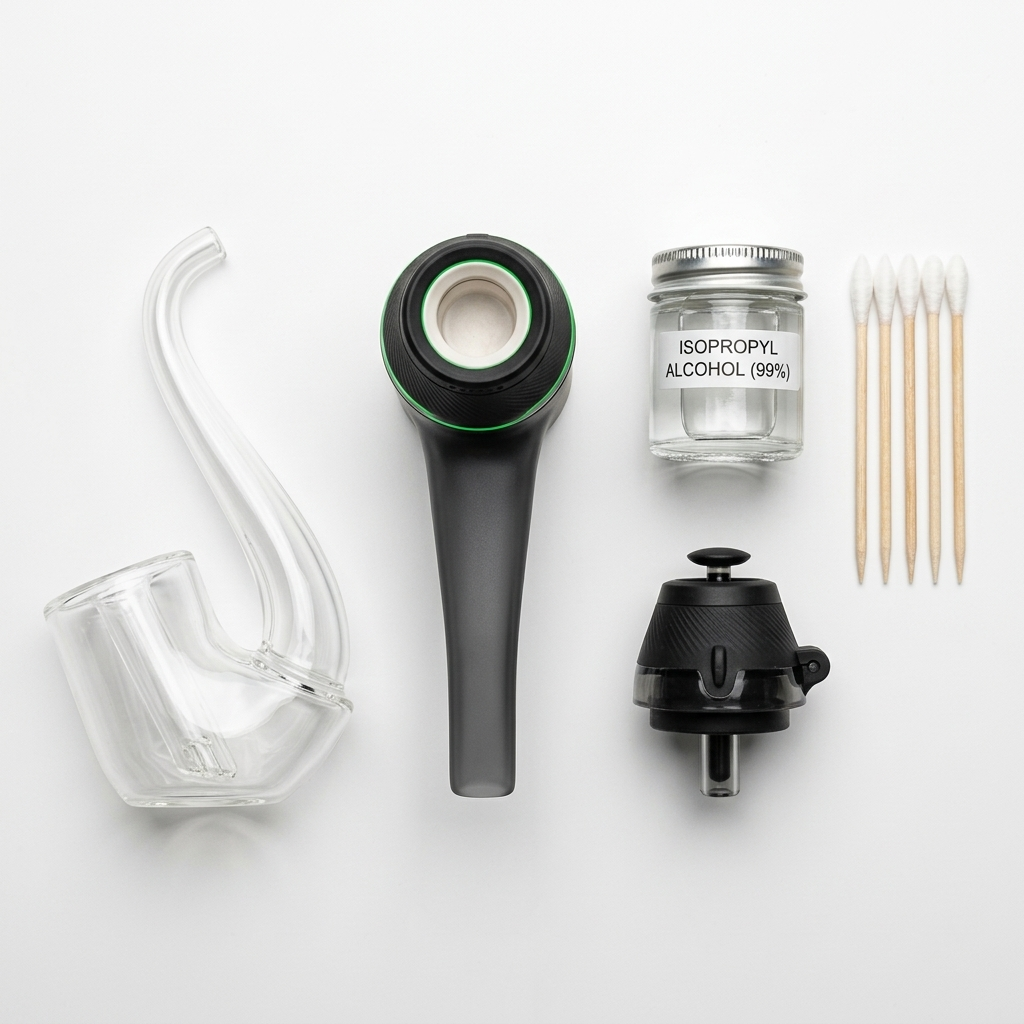
Key terminology: - Chamber: The ceramic bowl where concentrate is loaded and heated. This is the component that accumulates the most residue. - Glass attachment / pipe: The outer housing that holds the power dock. Available in different shapes and materials. - Oculus cap: The carb cap that sits on top of the chamber to regulate airflow. - Power dock: The removable electronic core containing the battery, heating element, and chamber.
People often assume the entire Proxy can be submerged in isopropyl alcohol. It cannot. The power dock contains electronics and a lithium battery. Submerging it will damage the device permanently. Only the glass attachment and the oculus cap should be fully soaked. The chamber itself should only be cleaned with cotton swabs dampened with isopropyl alcohol, never submerged.
Steps
Gather your cleaning supplies
Before you start, collect everything you need: isopropyl alcohol (91% concentration or higher), cotton swabs (pointed-tip swabs work best for small chambers), a sealable plastic bag or small glass container, paper towels, and a pipe cleaner for the glass airpath. Isopropyl alcohol at 91% or higher concentration dissolves concentrate residue significantly faster than 70% formulations, often breaking down fresh buildup in under five minutes of soaking.
Tip: Avoid using rubbing alcohol formulations that contain added moisturizers or fragrances. These leave behind a film that affects vapor taste.
Disassemble the Proxy
Remove the oculus cap from the top of the chamber. Then pull the power dock straight out of the glass attachment. These two pieces separate with a firm but gentle pull. Do not twist or pry. Set the power dock on a clean paper towel with the chamber facing up so no loose residue drips into the electronics housing.
Tip: Let the device cool completely before disassembly. Handling a hot ceramic chamber risks burns and can cause thermal shock if cold alcohol contacts a hot surface.
Soak the glass attachment and oculus cap
Place the glass attachment and the oculus cap in a sealable plastic bag or small glass container. Pour enough 91% isopropyl alcohol to fully submerge both pieces. Seal the bag and let them soak for 20 to 30 minutes. For heavy buildup, soaking for up to one hour is fine. Gently agitate the bag periodically to help loosen residue from the interior airpath of the glass piece.
Tip: If the glass attachment has a particularly narrow airpath, use a pipe cleaner after soaking to remove any remaining residue from hard-to-reach areas.
Swab the ceramic chamber
While the glass pieces soak, dip a cotton swab in isopropyl alcohol and gently wipe the inside of the ceramic chamber. Use a circular motion along the walls and the floor of the bowl. Swap to a fresh swab once the current one is visibly discolored. Repeat until the swab comes away clean, which typically takes three to five swabs depending on buildup. Do not pour alcohol directly into the chamber or flip the power dock upside down, as liquid can seep into the electronics beneath.
Clean the exterior contacts
Use a dry cotton swab to wipe the metal contacts on the bottom of the power dock and inside the glass attachment's dock seat. These contacts transfer power and signal between components, and residue or grime on them can cause connectivity issues or inconsistent heating. If contacts appear oxidized or sticky, a cotton swab lightly dampened with isopropyl alcohol can be used. Just make sure the contacts are completely dry before reassembly.
Rinse, dry, and reassemble
Remove the glass attachment and oculus cap from the alcohol soak. Rinse both pieces thoroughly under warm running water to flush away dissolved residue and any remaining alcohol. Set all components on a clean paper towel and allow them to air dry completely. This typically takes 15 to 30 minutes at room temperature. Once every piece is fully dry, slide the power dock back into the glass attachment and replace the oculus cap. The device is now ready for use.
Tip: Never reassemble while any component is still wet with alcohol. Residual isopropyl alcohol produces harsh, unpleasant vapor and may irritate airways.
Pro Tips
- Clean after every few sessions, not just when performance drops. Residue begins to affect flavor well before it visibly obstructs airflow. A quick post-session swab of the chamber while it is still slightly warm (not hot) makes deep cleans less frequent.
- Use pointed cotton swabs for the chamber. Standard round-tip swabs do not reach the edges where the chamber wall meets the floor. Pointed-tip swabs, sometimes labeled as "precision" or "detail" swabs, are specifically designed for this geometry.
- Keep a dedicated small glass jar for soaking. A glass jar with a lid (like a small mason jar) is reusable and avoids waste from single-use plastic bags. Glass does not absorb odors or degrade from repeated alcohol exposure.
- Run a dry burn cycle after cleaning. Once reassembled and fully dry, running the Proxy on its lowest heat setting for one cycle with an empty chamber can help burn off any trace alcohol residue and confirm the device is heating correctly.
- Store the device upright between uses. Keeping the Proxy upright prevents residual concentrate from flowing into the airpath, which reduces the frequency of deep cleans needed.
Common Mistakes
- Submerging the power dock in alcohol. The power dock contains a battery and circuit board. Clean only the ceramic chamber surface using dampened cotton swabs.
- Using 70% isopropyl alcohol for soaking. The higher water content in 70% formulations is less effective at dissolving concentrate residue and takes significantly longer. Use 91% or higher for efficient cleaning.
- Reassembling while components are still wet. Allow 15 to 30 minutes of air drying time on a paper towel to ensure all alcohol has evaporated before putting the device back together.
- Scraping the ceramic chamber with metal tools. Metal picks or dab tools can chip or scratch the ceramic surface. Use only cotton swabs or soft silicone-tipped tools for chamber cleaning.
Next Steps
Now that your Puffco Proxy is clean, consider setting up a regular maintenance schedule. A quick chamber swab after every two to three sessions and a full deep clean every one to two weeks will keep the device performing consistently. For more information on concentrate types and how different textures may affect residue accumulation, browse the Resin Manual reference library at resinmanual.com. If you are interested in the cultivation side of how source plant material is grown before extraction, Menu Growth Lab at menugrowthlab.com offers detailed cultivation guides. You can also check out our guides on cleaning other concentrate devices and understanding the differences between various extract categories.
Frequently Asked Questions
How often should I clean my Puffco Proxy?
A light cleaning of the chamber with a cotton swab after every two to three sessions is recommended. A full deep clean, including soaking the glass and oculus cap, should be done every one to two weeks with regular use. Devices used daily may benefit from weekly deep cleans.
Can I use water instead of isopropyl alcohol to clean the Puffco Proxy?
Water alone will not effectively dissolve concentrate residue, which is oil-based. Isopropyl alcohol at 91% or higher concentration is the standard cleaning solvent for concentrate devices. Always rinse glass components with warm water after the alcohol soak to remove any remaining solvent.
Is it safe to use a torch or lighter to burn residue out of the chamber?
No. Applying an open flame to the ceramic chamber can crack it and may damage the electronics housed beneath it. The built-in heating element on its lowest setting is sufficient to burn off trace residue during a dry cycle after cleaning.
What happens if I never clean my Puffco Proxy?
Accumulated residue restricts airflow through the chamber and airpath, which reduces vapor production and degrades flavor. Over time, heavily carbonized buildup can become very difficult to remove and may permanently stain the ceramic chamber.
Can I clean the Puffco Proxy glass attachment in a dishwasher?
No. Dishwasher detergents can leave chemical residue on the glass that is difficult to fully rinse away. The high heat and water pressure may also damage the glass. Hand cleaning with isopropyl alcohol and warm water is the recommended method.