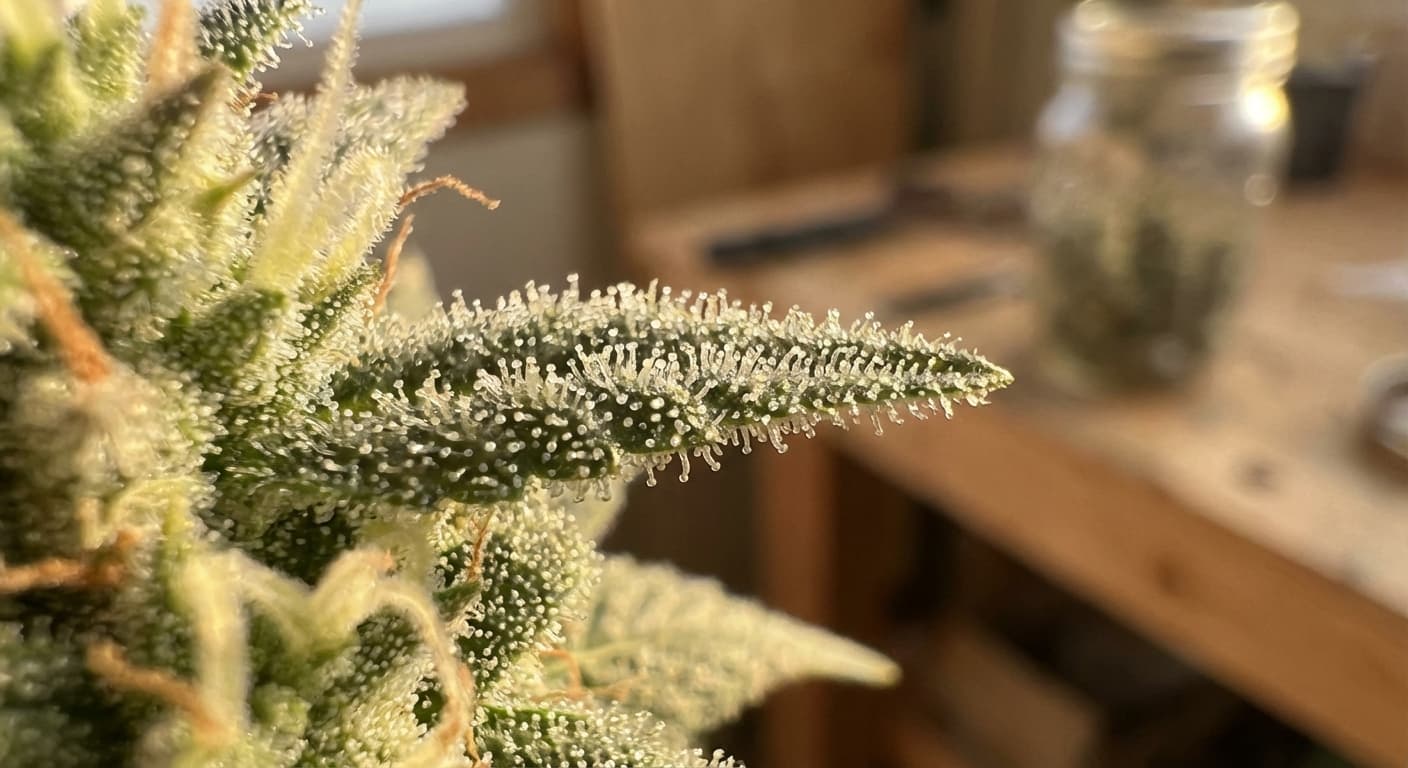
What Terpene Preservation Means
Terpene preservation is about keeping the original aromatic compounds from fresh cannabis plants intact through controlled processing, handling, and storage.
How Terpene Preservation Works
Terpenes are volatile organic compounds that give cannabis its smell and flavor. "Volatile" means they evaporate easily at room temperature, which is why you can smell cannabis from across a room. Fresh plants have the highest terpene concentration, but these compounds start breaking down the moment you harvest.
Preservation means slowing that breakdown. Temperature control prevents early evaporation. Light protection stops photodegradation from altering molecular structure. Limiting oxygen reduces the oxidation that creates harsh flavors. Proper humidity prevents both over-drying and the moisture that leads to mold.
Different terpenes have different boiling points and stability. Limonene holds up relatively well. Myrcene degrades fast. Preservation methods need to account for this range to maintain the full spectrum.
Fresh frozen material (frozen immediately after harvest) gives the best preservation potential because freezing stops the enzymatic breakdown that starts in harvested plants.
Terpene Preservation vs. Added Terpenes
Preservation and enhancement are different things. Enhancement means adding external terpenes (cannabis-derived or botanical) to boost aroma and flavor. Preservation means keeping only the original compounds from the source material.
A lot of products labeled "terpene-rich" actually have added terpenes. Dispensary descriptions blur the line, using "enhanced" and "preserved" as if they're the same. Preserved products maintain the original ratios and combinations from the specific plant. Enhanced products may have a completely different profile.
A product can look fresh but have lost most of its terpenes. And properly preserved material might look less appealing while retaining full aromatic complexity. Appearance and preservation aren't the same thing.
Freezing alone doesn't equal preservation either. Material in a freezer without proper packaging still loses terpenes through sublimation and oxidation. Real preservation means controlling the whole environment, not just temperature.
Why Terpene Preservation Matters
Preservation directly affects quality. Well-preserved products keep the flavor and aroma that distinguish different strains and methods. Poor preservation gives you generic, muted, or harsh flavors no matter how good the starting material was.
For buyers, understanding preservation helps you evaluate freshness and processing quality. Strong, clear aromas usually mean good practices throughout the supply chain. That's a better indicator than marketing copy.
For producers, preserved products hold value longer and deliver consistent experiences. Lost terpenes mean complaints, returns, and reputation damage.
In concentrates, preserved terpenes are the difference between premium pricing and competing on THC numbers alone.
Key Preservation Factors
Temperature Control
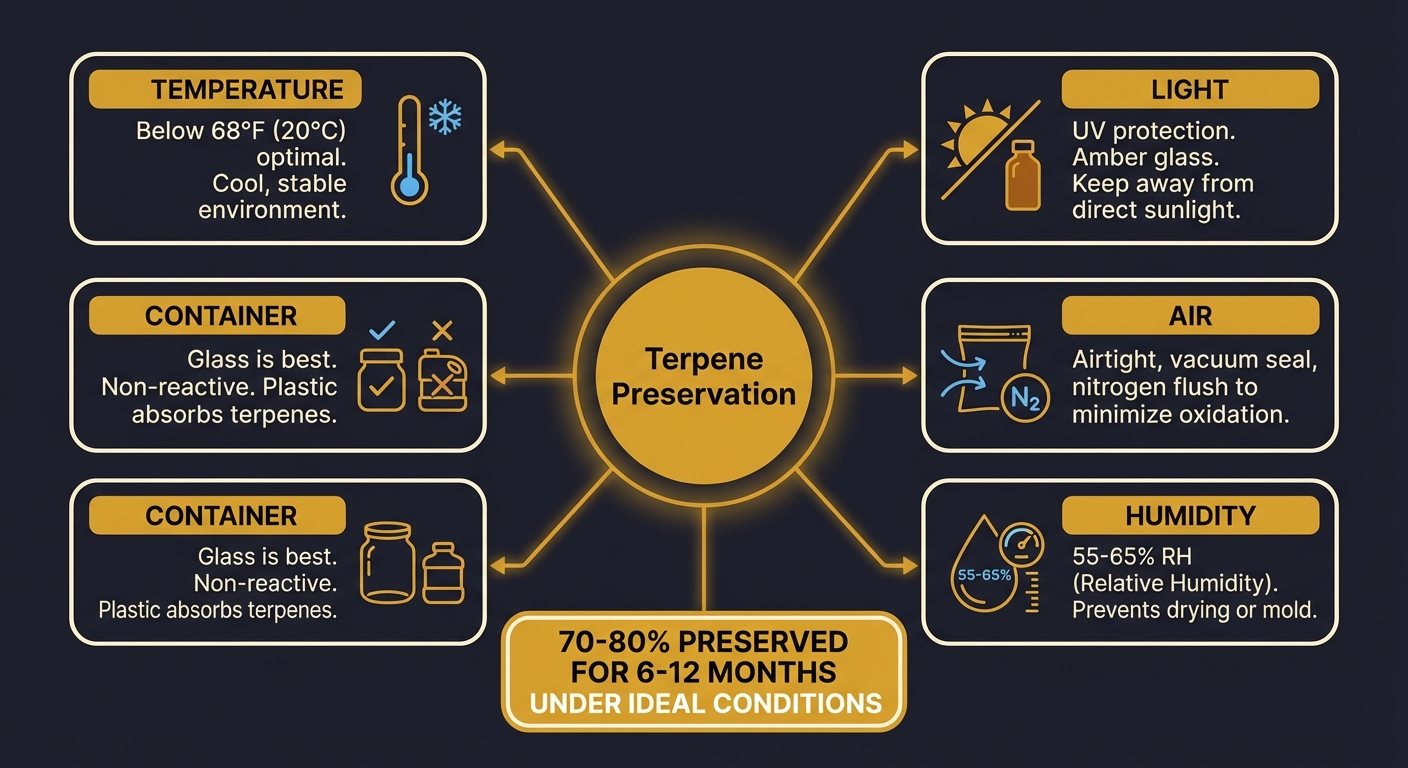
Most terpenes stay stable below 68°F (20°C). Above that, evaporation and breakdown accelerate. Freezing works for long-term preservation but can change texture and handling. Above 100°F, terpene loss is rapid. Lower-temperature rosin presses keep more terpenes than high-heat extractions, though yield may drop.
Light Protection
UV breaks down terpene molecules through photodegradation. Amber glass, opaque packaging, and dark storage prevent this. Clear containers work only for short-term display.
Air Exposure
Oxygen oxidizes terpenes, changing their structure and creating off-flavors. Vacuum sealing, nitrogen flushing, and airtight containers cut air contact. Every time you open a container, you're letting in air that degrades what's inside.
Humidity Balance
55-65% relative humidity prevents excessive drying without creating mold-friendly conditions. Humidity packs help maintain stable levels.
Processing Methods and Preservation
Heat-Based vs. Cold Processing
Distillation gets high cannabinoid purity but destroys most original terpenes. Cold processing (ice water extraction, low-temp rosin pressing) keeps more of the original terpene profile. Purity versus preservation is a real tradeoff that shapes both the product and its price.
Fresh vs. Dried Material
Fresh frozen material preserves terpene profiles closest to the living plant. Dried material starts with already-degraded levels, so even perfect handling can't fully compensate. This gap is why live products cost more.
Equipment
Presses with precise temperature control preserve more than basic heat plates. Closed-loop systems limit air exposure compared to open methods. Professional gear generally offers better preservation than DIY setups.
Advanced Concepts
Entourage Effects
Preservation maintains not just individual terpenes but their natural ratios and interactions. Those relationships create strain-specific effects and characteristics that vanish when preservation fails.
Degradation Pathways
Different terpenes break down in predictable ways. Limonene oxidizes into harsh, solvent-like flavors. Linalool degrades into less aromatic alcohols. Knowing these pathways helps identify storage problems and judge product quality.
Analytical Testing
Gas chromatography can quantify preservation by comparing fresh and stored samples. It shows both preserved compounds and degradation byproducts. Useful for optimizing methods and validating claims, but testing costs put routine monitoring out of reach for most small operations.
Further Reading
- Terpene, Wikipedia
- Terpenes: What Are They?, Leafly
- Why Terpene Preservation Matters, PurePressure
FAQ
How long do preserved terpenes last?
6-12 months at 70-80% of original levels under ideal conditions. Temperature, light, and container quality matter most. Pinene holds up better than myrcene.
Can you restore lost terpenes?
No. Once evaporated or degraded, they're gone. Adding external terpenes improves aroma and flavor, but that's enhancement, not restoration.
Do different processing methods affect preservation?
Yes. Cold methods like ice water hash preserve more terpenes than heat-based methods. Fresh frozen processing keeps higher levels than working with dried material.
How can you tell if terpenes are well-preserved?
Open the container. Strong, clear aromas that match the strain profile mean good preservation. Muted, harsh, or off smells mean something went wrong.
Does preservation affect potency?
Not directly. Terpene preservation doesn't change cannabinoid content. But preserved terpenes may influence the experience through entourage effects, and poor storage that hurts terpenes can also degrade cannabinoids over time.
Are some containers better for preservation?
Glass with airtight seals. Amber or opaque glass blocks light and stays inert. Plastic absorbs terpenes over time.
What's the difference between live and cured preservation?
Live processing from fresh frozen material preserves terpenes closest to the living plant. Cured material has already lost volatile compounds during drying. That's the reason live products cost more and smell more complex.
What affects preservation most?
Starting material, processing method, equipment, and storage. Fresh frozen hash rosin preserves better than BHO from dried trim. Attention to detail at every step matters.
Further Reading
- Terpene, Wikipedia
- Terpenes: What Are They?, Leafly
- Why Terpene Preservation Matters, PurePressure