Hash Rosin at a Glance
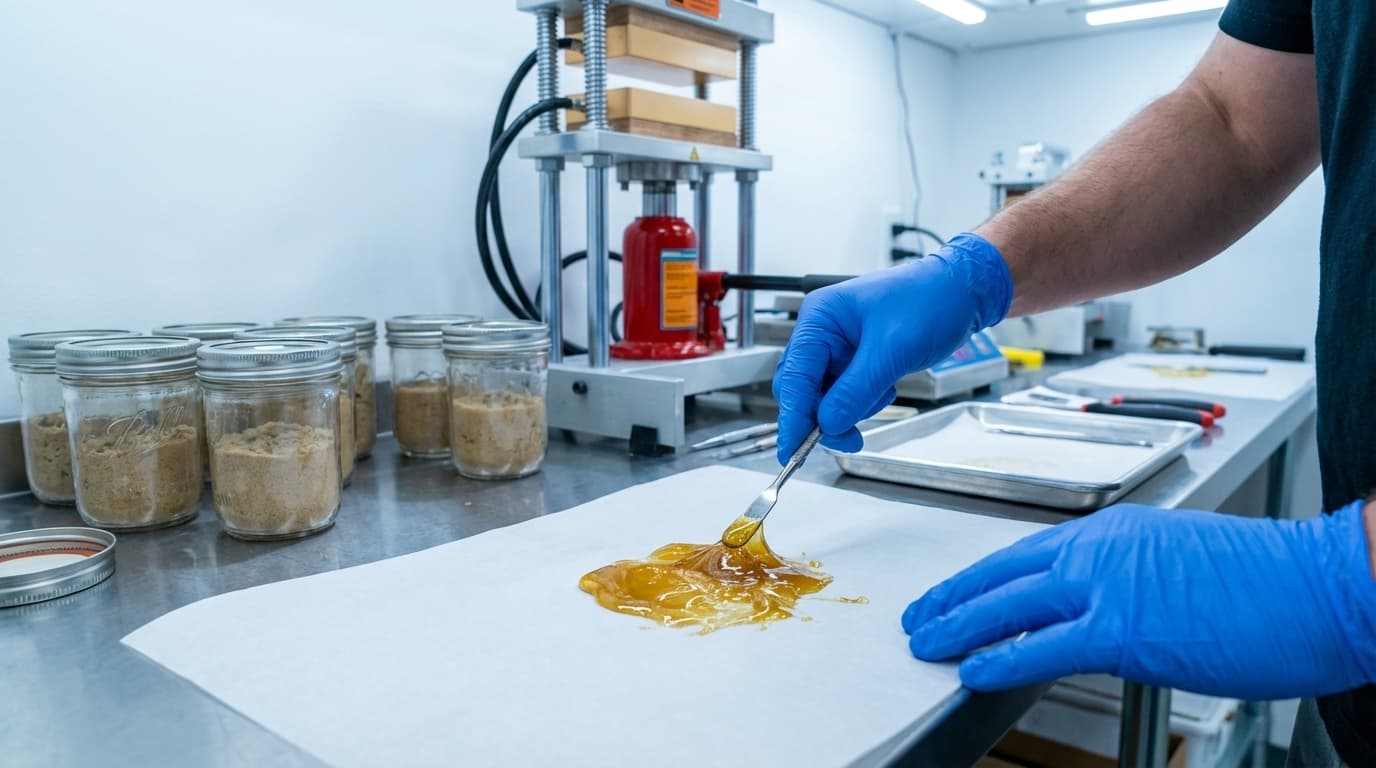
Hash rosin is a solventless cannabis concentrate made by applying heat and pressure to bubble hash or dry sift hash rather than flower material. This two-step process—first creating hash, then pressing it into rosin—typically produces a more refined concentrate with higher terpene preservation and cleaner flavor profiles than flower rosin. The starting material's quality directly determines the final product's potency and consistency.
How Hash Rosin Is Made
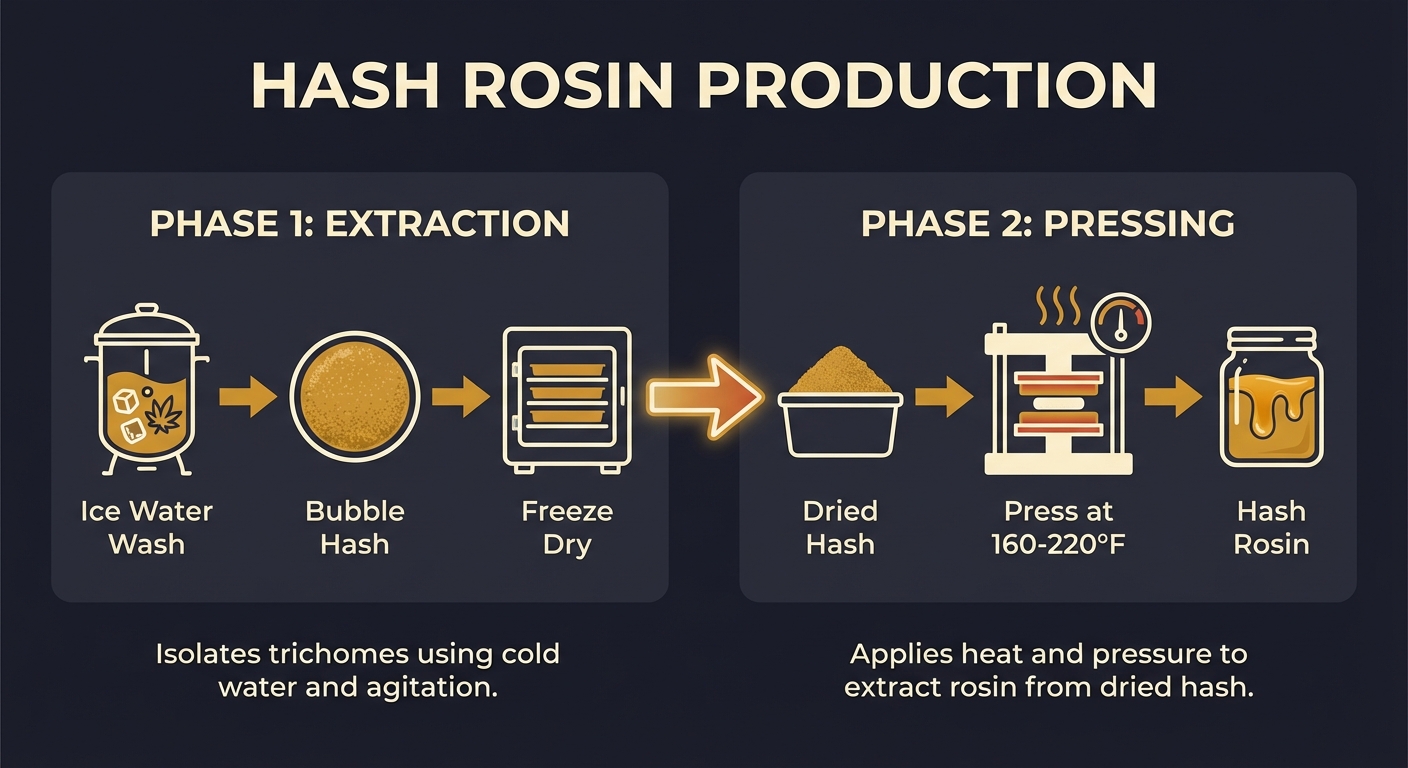
Hash rosin represents the premium tier of solventless extraction methods. The process begins with creating bubble hash through ice water extraction or dry sift screening to separate trichome heads from plant material. This hash is then freeze-dried and pressed using heated plates at temperatures between 160-220°F with controlled pressure.
The two-stage process allows extractors to remove more plant contaminants before the pressing stage, resulting in a cleaner starting material. Hash rosin typically yields between 50-80% return rates from quality bubble hash, though yields depend heavily on the hash grade and pressing technique used.
Professional hash rosin operations often use 6-star bubble hash as starting material, indicating the highest purity level with minimal plant contamination. The pressing process requires precise temperature and pressure control to preserve volatile terpenes while achieving proper consistency.
Hash Rosin vs. Flower Rosin
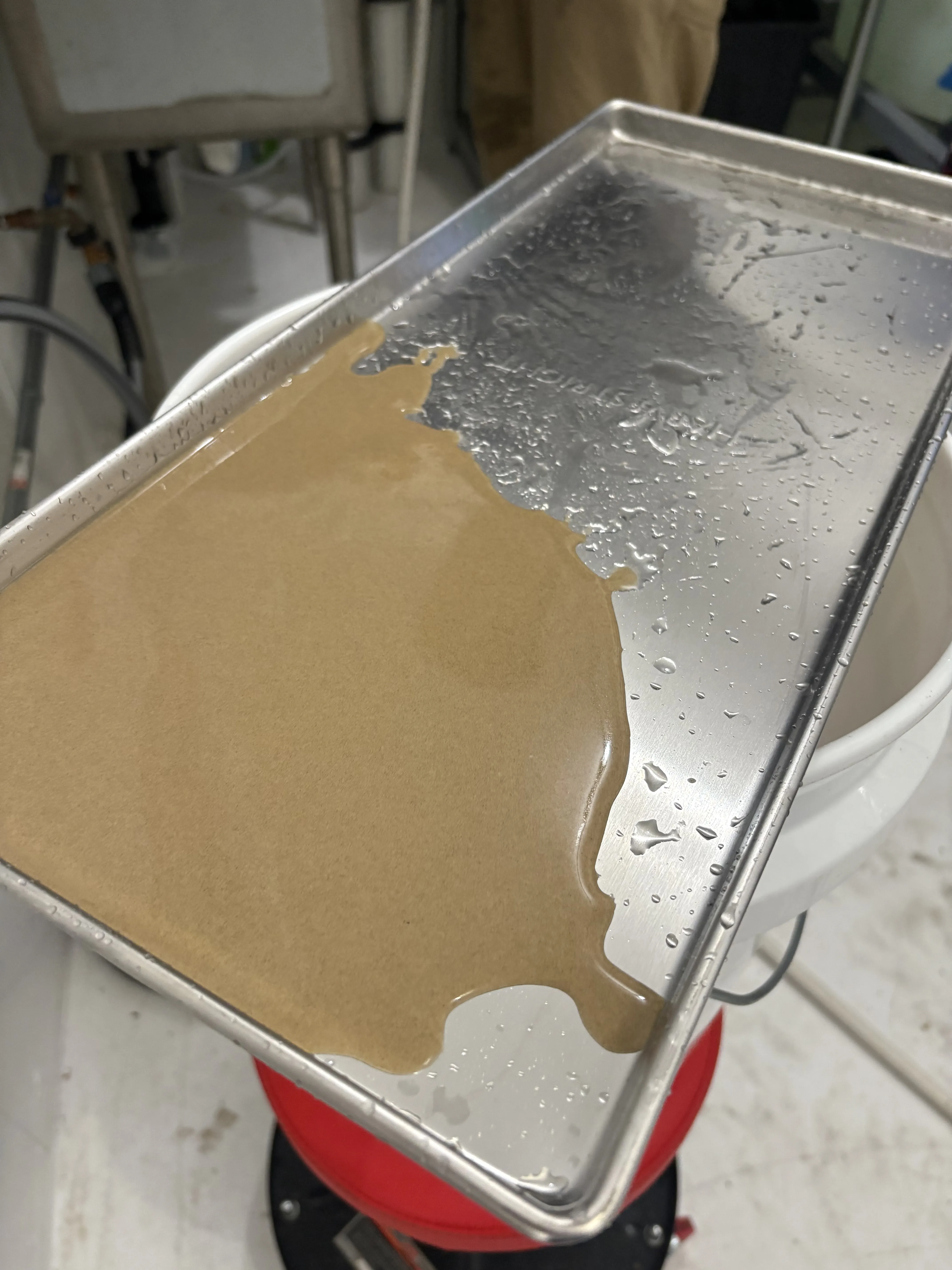
Hash rosin is frequently confused with flower rosin, which is made by pressing cannabis flower directly without the intermediate hash-making step. Flower rosin typically appears darker and contains more plant lipids and waxes, while hash rosin usually shows lighter colors and cleaner textures.
Live hash rosin represents another distinction—this uses fresh-frozen cannabis as the bubble hash starting material rather than dried flower. Live hash rosin commands premium pricing due to enhanced terpene preservation but follows the same two-step extraction process. For a direct comparison, see live rosin vs. hash rosin.
Retail menus sometimes mislabel pressed hash or even solvent-based concentrates as "hash rosin." True hash rosin requires no chemical solvents and specifically uses hash as the intermediate step. BHO or CO2 extracts made from hash starting material are not hash rosin, despite similar naming conventions used by some dispensaries.
Why Hash Rosin Commands a Premium
Hash rosin commands premium pricing in legal markets because the two-step process requires more labor, time, and starting material than single-step extractions. Understanding the distinction helps consumers evaluate pricing and quality claims accurately.
The refined process typically produces concentrates with cannabinoid levels between 70-90% while preserving more delicate terpene compounds that can be lost in other extraction methods. This preservation affects both flavor profiles and the overall experience.
For retailers and budtenders, correctly identifying hash rosin versus other concentrates prevents customer confusion and supports proper product positioning.
How to Spot Quality Hash Rosin
Visual Identification
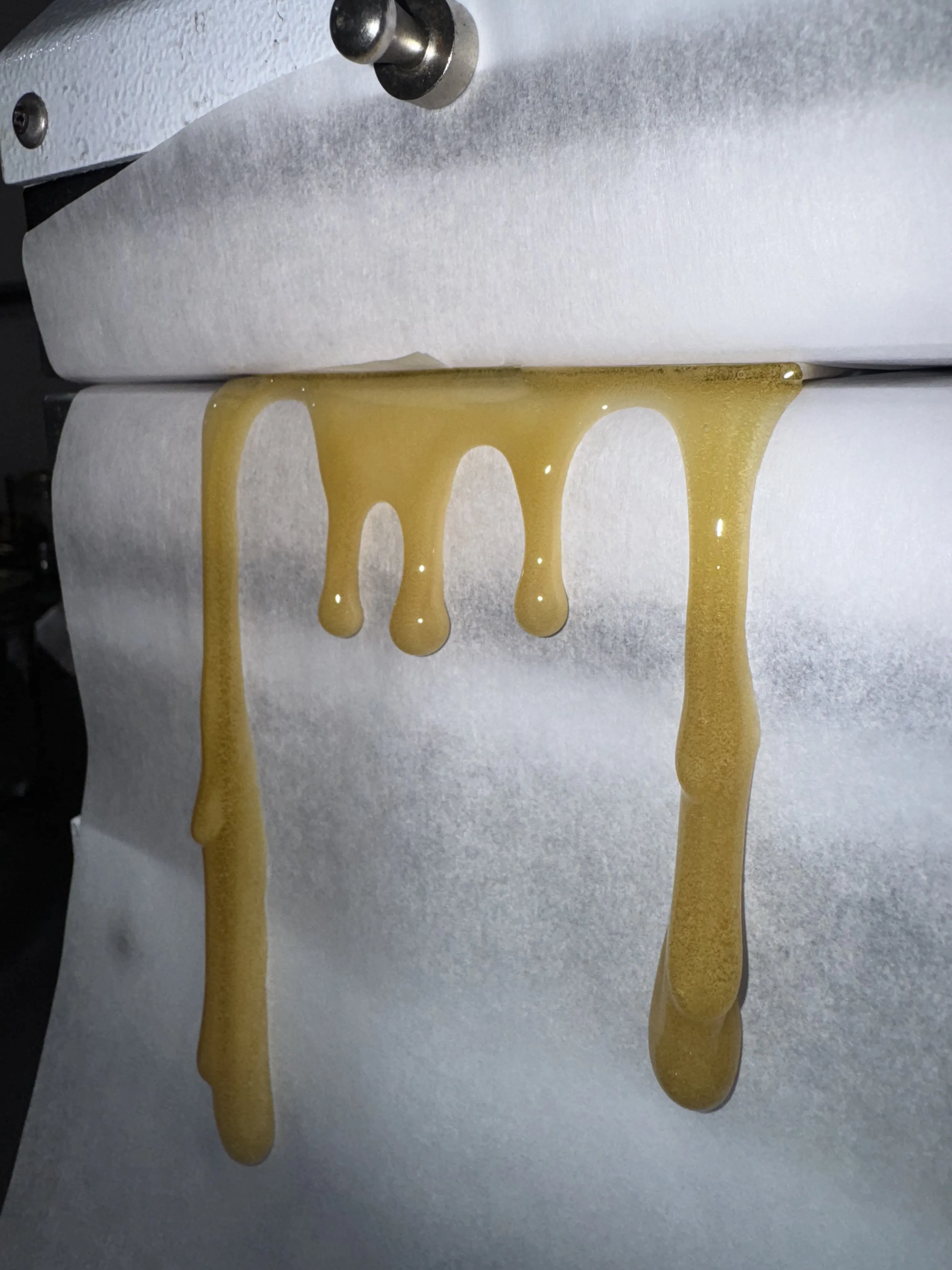
- Color ranges from light golden to amber, typically lighter than flower rosin
- Texture varies from badder-like consistency to stable shatter, depending on processing
- Minimal plant particulate visible compared to flower rosin
Production Indicators
- Starting hash grade directly correlates with final product quality
- Pressing temperatures between 160-220°F for optimal terpene preservation
- Fresh hash typically presses better than aged material
- Temperatures above 220°F can degrade terpenes and darken the final product
Storage Requirements
- Refrigeration maintains consistency and prevents degradation
- Airtight containers prevent terpene loss and oxidation
- Avoid temperature fluctuations that can cause texture changes
Further Reading
- Rosin (extraction), Wikipedia
- What Is Hash Rosin?, PurePressure
- Guide to Trichomes and Solventless Extraction, The Press Club
Hash Rosin FAQ
How is hash rosin different from regular rosin?
Hash rosin uses hash as starting material while regular rosin presses flower directly. The hash intermediate step removes more plant contaminants, typically producing cleaner flavors and lighter colors than flower rosin.
Why does hash rosin cost more than other concentrates?
Hash rosin requires a two-step process and larger amounts of starting flower to create the hash before pressing. The additional labor, time, and material requirements increase production costs compared to single-step extractions.
What makes live hash rosin different?
Live hash rosin uses fresh-frozen cannabis for the bubble hash step instead of dried flower. This preserves more volatile terpenes but follows the same hash-then-press process as regular hash rosin.
How should hash rosin be stored?
Store hash rosin in airtight containers under refrigeration to maintain consistency and preserve terpenes. Room temperature storage can cause texture changes and accelerate degradation of volatile compounds.
What hash grades work best for rosin pressing?
Higher grade bubble hash (4-6 star ratings) typically produces better hash rosin with higher yields and cleaner flavors. Lower grades can be pressed but may result in darker colors and plant-forward tastes.
Can you make hash rosin at home?
Hash rosin production requires bubble hash or dry sift as starting material plus a rosin press with temperature and pressure controls. The process involves significant equipment investment and technical skill development for consistent results.
Closing
Hash rosin represents the premium segment of solventless concentrates through its refined two-step extraction process. The hash intermediate step distinguishes it from flower rosin and other concentrate categories, justifying its position in premium product lineups. Understanding these production differences helps consumers and retailers navigate quality distinctions and pricing in expanding solventless markets.