The Short Answer
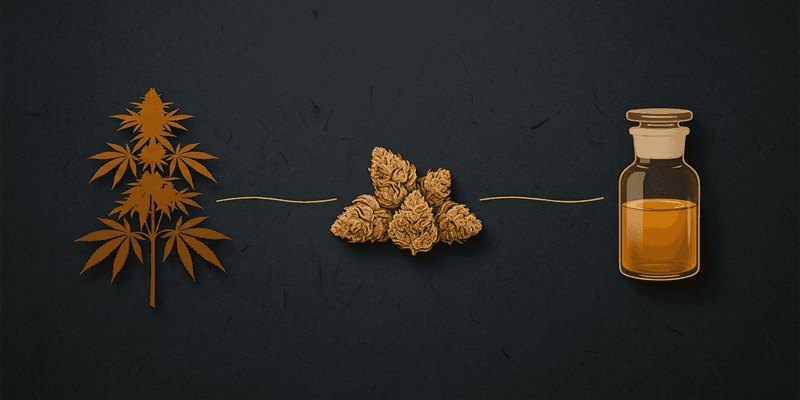
Single source means one person or one operation handled every step: growing the plant, washing the bubble hash, and pressing the hash rosin. No outsourced grows, no contract washing, no third-party pressing. The same hands (or the same small team) controlled the process from seed or clone through the final jar. In the solventless market, single source is the highest tier of traceability and craft positioning.
What "Single Source" Actually Covers
The term maps to three distinct production stages, all performed under one roof or by one operator:
- Grow: The cultivator selects genetics, runs the grow cycle, and harvests the plant material. For live rosin, this means fresh-freezing immediately after harvest, a step where timing and handling directly affect the final product.
- Wash: The same operation washes the trichomes from the plant material using ice water, collecting them through a series of micron bags. This is where hash grades are determined, the washer decides which micron ranges to keep, which to combine, and which to set aside.
- Press: The dried or fresh-frozen hash is pressed into rosin using heat and pressure. Temperature, pressure, and timing are all dialed to the specific cultivar and hash quality.
When one operation controls all three stages, every decision feeds into the next. The grower knows exactly what the washer needs. The washer knows what the press can handle. There's no handoff where information gets lost, no middleman optimizing for their own margin, and no blending of material from different gardens to hit a volume target.
Why Single Source Matters for Quality
The value isn't mystical. It's operational. Vertical control creates three concrete advantages:
Traceability. With single source, you know exactly which cultivar, which harvest, and which wash run produced the rosin in your jar. If a hash maker posts "Garlic Juice 2.0 90u" or "Space Jam 73-159u," they're telling you the cultivar and the exact micron range, because they controlled every step and can speak to each one. That level of specificity is impossible when material comes from multiple contract grows.
Consistency. When one team handles the full chain, they develop institutional knowledge about their own genetics. They learn that a particular cultivar washes best at a certain ice-to-water ratio, yields its cleanest heads in the 73-120u range, and presses optimally at a specific temperature. That feedback loop tightens over multiple runs. Multi-source operations don't get those reps with any single input because the input changes constantly.
Accountability. If the rosin is exceptional, the single-source producer built that from the ground up. If it's subpar, there's no one else to blame. This creates a direct incentive to maintain standards at every stage. Hash makers who post their single-source work, and they do, frequently and proudly, are putting their entire process on display with every release.
Single Source vs. Multi-Source vs. Toll Processing
These three models represent different levels of vertical integration:
Single source is fully vertical. One operation, one set of hands, seed to jar. This is the model used by small-batch hash makers and home producers alike. It commands the highest prices because the consumer is paying for complete process control.
Multi-source (or blended) means the processor sources plant material from multiple growers, then washes and presses it. The final product may blend trichomes from different gardens, different harvests, or different cultivars. This is how most commercial-scale live rosin operations work, they need volume, and no single garden can always supply enough. Quality can still be high, but traceability to a specific plant or harvest is weaker.
Toll processing (or tolling) is a service arrangement. A grower sends their harvested material to a separate wash-and-press operation. The hash maker processes it for a fee or a split of the yield, then sends the finished rosin back. The grower's name may go on the label, but they didn't wash or press it. Toll processing isn't inherently bad, some toll operators are excellent, but it breaks the single-source chain. The grower loses control of extraction decisions, and the processor may be running dozens of clients' material through the same workflow.
How to Identify Single-Source Products
Not every label spells it out, but there are reliable signals:
- The words "single source" on the label. Some producers state it directly. If they grew it, washed it, and pressed it, they want you to know.
- Micron specifications. When a label reads "73-159u" or "90u full spec," the producer is telling you they controlled the wash and made deliberate decisions about which trichome sizes to include. Multi-source blends rarely get this specific. See how to read rosin labels for a full breakdown of what those numbers mean.
- Named cultivar with harvest details. Single-source producers often list the specific cultivar, the harvest date or run number, and sometimes the pheno. "GMO R2 Fresh Frozen, Harvest 11/24" is the kind of specificity that comes from controlling the full chain.
- Small-batch or limited-run language. "Small batch" and "single source" frequently appear together because the model doesn't scale easily. If a brand produces thousands of grams per week across dozens of strains, they're almost certainly not single source for all of them.
- The producer's social presence. Single-source hash makers tend to document their process, grow photos, wash day posts, fresh press shots. If the same account shows the garden, the wash bags, and the finished rosin, that's your verification. When you see the ice water, the drying screens, and the press all in one feed, that person is single source.
Price is also an indicator, though not proof. At farmers markets and direct-to-consumer sales, single-source rosin typically commands a premium over comparable multi-source products. A gram of single-source hash rosin at $50-80 reflects the labor intensity of the model. Deals like $60 for three grams at a market setting are considered strong value when the quality backs it up.
The Home Single-Source Movement
Single source isn't just a commercial label. A growing community of home producers grow their own cannabis, wash their own bubble hash, and press their own rosin, sometimes from a single room or apartment. The appeal is the same as the commercial model: total control, complete traceability, and the satisfaction of a finished product that started as a seed in your own garden.
Home single-source setups are more accessible than they've ever been. A small grow tent, a set of wash bags, a freeze dryer (or screen-drying setup), and a rosin press cover the full chain. The community shares results openly, micron breakdowns, yield data, cultivar-specific wash notes, building a collective knowledge base that rivals commercial operations in depth if not in scale.
The economics work differently at home. Without overhead, licensing, or retail margins, the cost per gram drops substantially. But the labor investment is real: a home single-source run from harvest through finished rosin can take days of active work across washing, drying, and pressing. The people who do it aren't optimizing for cost, they're optimizing for quality and the knowledge that every variable was theirs to control.
Single Source Hash Rosin FAQ
Does single source always mean better quality?
Not automatically. Single source means one operation controlled the full process, it doesn't guarantee that every decision was the right one. A skilled multi-source processor working with excellent input material can produce rosin that outperforms a mediocre single-source operation. What single source does guarantee is traceability and accountability. The quality ceiling is higher because the feedback loop is tighter, but the floor depends on the operator's skill.
Why is single-source rosin more expensive?
Because one operation is absorbing the cost and labor of three distinct production stages: cultivation, washing, and pressing. Commercial growers, wash houses, and press operators each have specialized equipment and expertise. When one team does all three, they need all the infrastructure and all the knowledge. That labor intensity, combined with smaller batch sizes, gets reflected in the price. For more on rosin pricing, see why live rosin is so expensive.
Can large brands be single source?
In theory, yes, if they grow all their own material and process it in-house. In practice, most large brands source at least some material externally to maintain volume. A brand might be single source for specific limited runs while using contract grows for their mainline products. If single source matters to you, look for it on a per-product basis rather than assuming it applies to everything a brand sells.
What do the micron numbers on single-source rosin mean?
Micron numbers refer to the mesh size of the filter bags used during the bubble hash wash. "73-159u" means the trichome heads collected between the 73-micron and 159-micron screens. Smaller ranges (like "90u" or "73u") indicate a tighter selection of trichome sizes, which often corresponds to higher purity. Single-source producers specify these because they made the decision about which fractions to keep. See how to read hash grades for the full breakdown.
Is single source the same as small batch?
Not exactly, but they overlap heavily. Single source describes who controls the process (one operation, start to finish). Small batch describes the scale (limited quantity per run). Most single-source operations are small batch by necessity, one team can only grow, wash, and press so much. But a small-batch product isn't necessarily single source if the processor bought the starting material from a separate grower.
How can I tell if a brand is really single source?
Look for specificity. Single-source producers can tell you the cultivar, the harvest, the micron range, and the press conditions because they were there for all of it. Vague labels with no cultivar details, no micron specs, and no harvest information are harder to verify. Social media is often the best confirmation, if the same brand or person posts grow updates, wash days, and finished rosin from the same runs, the chain of custody is visible. When in doubt, ask. Legitimate single-source producers are happy to talk about their process because the process is the product.