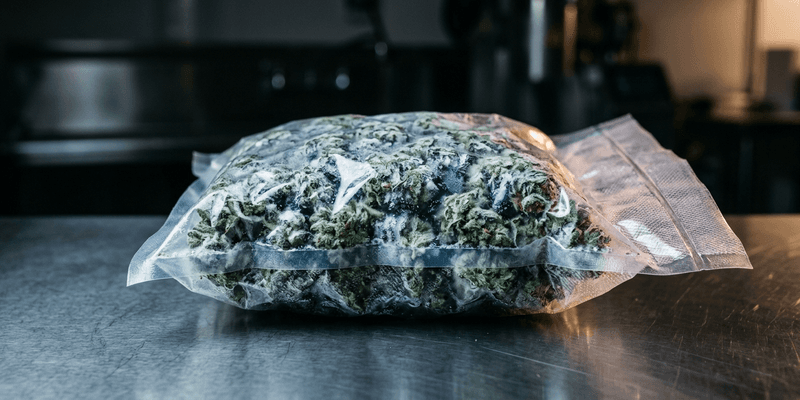
Fresh Frozen in One Sentence
Fresh frozen cannabis is plant material that goes from a living plant into a freezer immediately after harvest, no drying, no curing, no hang time. The goal is to lock the terpene and cannabinoid profile in place exactly as it existed on the living plant. This is the starting material behind every product labeled "live" in the solventless world. If you see live rosin, live bubble hash, or live hash rosin on a menu, the process started with fresh frozen material.
Fresh Frozen vs Dried and Cured Starting Material
The traditional cannabis workflow is harvest, hang dry for 7-14 days, then cure in jars for weeks. That process is designed for smokable flower, it develops flavor, smooths out harshness, and brings moisture content into the right range for combustion. But drying and curing cost terpenes. The volatile monoterpenes that define a strain's top notes, myrcene, limonene, linalool, pinene, evaporate steadily throughout the drying process. By the time flower is fully cured, a significant portion of those lighter aromatics are gone.
Fresh frozen skips that entire chain. The plant goes from living to frozen within hours of being cut, preserving the full spectrum of volatile compounds that would otherwise evaporate during a dry and cure. The tradeoff: fresh frozen material can only be processed into concentrates. You cannot smoke it, roll it, or vape it as flower. It exists solely as input material for extraction, primarily ice water hash that then becomes live rosin.
The difference in the final product is noticeable. Live rosin made from fresh frozen material tends to have a louder, more complex terpene profile than cured rosin made from dried flower. The flavor is often described as closer to how the living plant smelled in the garden. Cured rosin still has value, some people prefer the mellowed, developed flavors that curing produces, but fresh frozen is the standard for premium solventless products.
Why Fresh Freezing Matters
The word "live" in live rosin means the starting material was fresh frozen. That single decision at harvest, freeze instead of dry, is what separates live products from everything else. It is the fundamental quality divide in solventless extraction.
Terpene preservation is the entire point. Cannabis trichome heads contain a mixture of cannabinoids, terpenes, and flavonoids. The cannabinoids (THC, CBD) are relatively stable, they survive drying and curing without major losses. The terpenes are not. Many of the most desirable terpenes have boiling points well below room temperature when measured in their pure form, and they begin volatilizing the moment the plant is cut. Freezing halts that process. The trichome heads stay intact, the terpene-rich oils inside them stay locked in place, and the full profile is available when the material is eventually washed into hash.
This is also why fresh frozen material produces bubble hash with better yields in the desirable micron ranges. Frozen trichome heads are brittle and snap off cleanly during ice water agitation. Dried trichomes are more pliable and tend to fold or smear rather than break free, contaminating the hash with more plant material.
How to Fresh-Freeze Properly
The process is straightforward but the details matter.
Harvest timing. Cut the plant at peak ripeness, same as you would for any harvest. The trichomes should be mostly cloudy with some amber when viewed under magnification. Fresh freezing preserves whatever is there at the moment of harvest, it does not improve immature or overripe material.
Trimming. Most operations remove large fan leaves (the ones with minimal trichome coverage) but leave sugar leaves intact. The sugar leaves surrounding the buds carry trichomes worth capturing during the wash. Some producers freeze entire branches with fan leaves attached, this is whole plant fresh frozen (WPFF), covered in the next section.
Bagging. Place trimmed material loosely into turkey bags, vacuum-seal bags, or heavy-duty trash bags. Remove as much air as possible before sealing. Air is the enemy, it carries moisture that forms ice crystals on the surface of the trichomes, and oxygen degrades cannabinoids and terpenes over time even at freezing temperatures. Do not pack the bags tightly. You want the material to freeze quickly and evenly, not in a compressed mass.
Temperature. Get the material below freezing as fast as possible. A standard kitchen freezer (0°F / -18°C) works for home growers, but a chest freezer or deep freeze at -20°F (-29°C) or below is better. Colder temperatures freeze the material faster, which means smaller ice crystals and less cellular damage to the trichomes. Commercial operations often use dedicated chest freezers set as cold as possible.
Timing. The window from harvest to freezer should be as short as you can manage, ideally under four hours. Some commercial operations have freezers in the harvest room and material goes from plant to bag to freezer within an hour. The longer the material sits at room temperature after cutting, the more terpenes volatilize and the more degradation occurs.
Whole Plant Fresh Frozen (WPFF) vs Buds Only
WPFF means the entire plant, buds, sugar leaves, fan leaves, sometimes small stems, goes into the freezer. No trimming at all. The plant is cut, broken into manageable branches, bagged, and frozen immediately.
The advantage of WPFF is speed. Trimming takes time, and every minute the cut plant sits at room temperature is a minute of terpene loss. By skipping the trim entirely, you minimize the harvest-to-freezer window. The wash process will sort out the quality, trichome heads separate by size in the bubble hash wash bags regardless of what plant material they were attached to.
The downside is that WPFF material takes up significantly more freezer space and produces more contaminant material during the wash. Fan leaves contribute very little trichome content but take up bag space and freezer real estate. The wash water gets dirtier, and you may see slightly more plant material in your lower-quality micron ranges.
Most small-scale producers compromise: remove the large fan leaves (a quick, rough trim that takes minutes rather than hours), keep the sugar leaves, and freeze everything else. This balances speed with efficiency. Large commercial operations with dedicated freezer space and high-volume washing setups often go full WPFF because the time savings at harvest scale outweigh the minor wash inefficiency.
Storage and Shelf Life of Frozen Material
Fresh frozen material is not a permanent preservation method, it is a pause button. The material degrades over time even at freezer temperatures, just much more slowly than at room temperature.
For best results, wash the material into hash within a few weeks of freezing. Some producers have reported good results washing material that was frozen for several months, and there are community examples of aged fresh frozen material producing quality bubble hash after extended storage. But the consensus is that fresher is better. Terpene loss accumulates over time, and ice crystal formation can damage trichome heads during long-term storage.
Storage conditions matter. Keep the bags sealed with minimal air inside. Do not open and reseal bags repeatedly, each time you expose the material to warmer air, you get condensation that turns to ice crystals. A dedicated freezer that does not cycle through defrost periods is better than a frost-free household freezer, which periodically warms slightly to melt ice buildup. That temperature cycling is hard on frozen plant material.
Never store cannabis extracts or frozen material in direct contact with silicone containers. Silicone absorbs terpenes over time, degrading the material and contaminating the silicone. Use glass, parchment, or sealed plastic bags. See how to store bubble hash for post-wash storage guidance.
How Fresh Frozen Connects to Live Rosin
The production chain for live rosin starts with fresh frozen cannabis. Here is the full sequence:
- Harvest and freeze: Plant material goes into the freezer immediately after cutting.
- Ice water wash: Frozen material is agitated in ice water to break trichome heads free from the plant. The hash is collected in graduated filter bags by micron size. This is bubble hash production.
- Freeze dry: The wet hash is freeze-dried to remove moisture without heat. A freeze dryer is essential equipment at this stage, air drying or using a standard dehydrator introduces too much heat and degrades the product.
- Press: The dried bubble hash is pressed in a rosin press at low temperature and pressure through fine micron filter bags. The result is hash rosin, and because the starting material was fresh frozen, it earns the "live" designation.
- Post-processing: The fresh-pressed rosin can be sold as fresh press or processed further into a cold cure for a different consistency and flavor profile.
Every step in this chain matters, but the decision to fresh-freeze at harvest is the one that cannot be made retroactively. You can improve your wash technique, upgrade your press, or dial in your cure, but you cannot add back the terpenes that were lost during a dry and cure. Fresh frozen is the foundation.
Fresh Frozen FAQ
What does "fresh frozen" mean on a rosin label?
It means the cannabis used to make the rosin was frozen immediately after harvest instead of being dried and cured. This preserves the live terpene profile. On a dispensary menu, "fresh frozen" and "live" indicate the same thing about the starting material.
Is fresh frozen the same as live?
Yes. In the solventless world, "live" means the starting material was fresh frozen. Live rosin is rosin made from fresh frozen cannabis. The terms are used interchangeably.
Can I fresh-freeze in a regular kitchen freezer?
Yes, a standard kitchen freezer at 0°F (-18°C) works for home growers. A chest freezer or deep freeze at -20°F (-29°C) or below is better because the colder temperature freezes the material faster and produces smaller ice crystals, which means less damage to the trichomes. The most important thing is getting the material into the freezer quickly after harvest.
How long can fresh frozen material be stored before washing?
Ideally within a few weeks. Some producers have washed material stored for several months with acceptable results, but quality declines over time. Keep bags sealed with minimal air, use the coldest freezer available, and avoid temperature cycling from opening and closing the freezer frequently.
What is WPFF?
Whole Plant Fresh Frozen. The entire plant is frozen immediately after harvest with no trimming, buds, sugar leaves, fan leaves, and small stems all go into the freezer. The advantage is speed at harvest, minimizing the window for terpene loss. The wash process separates quality material from contaminants regardless.
Does fresh frozen material cost more?
Fresh frozen material requires dedicated freezer space, fast processing at harvest, and a freeze dryer after washing, all of which add cost compared to traditional dry-and-cure workflows. These costs are reflected in the higher price of live rosin compared to cured rosin. The premium exists because fresh frozen preserves a terpene profile that cannot be achieved any other way.