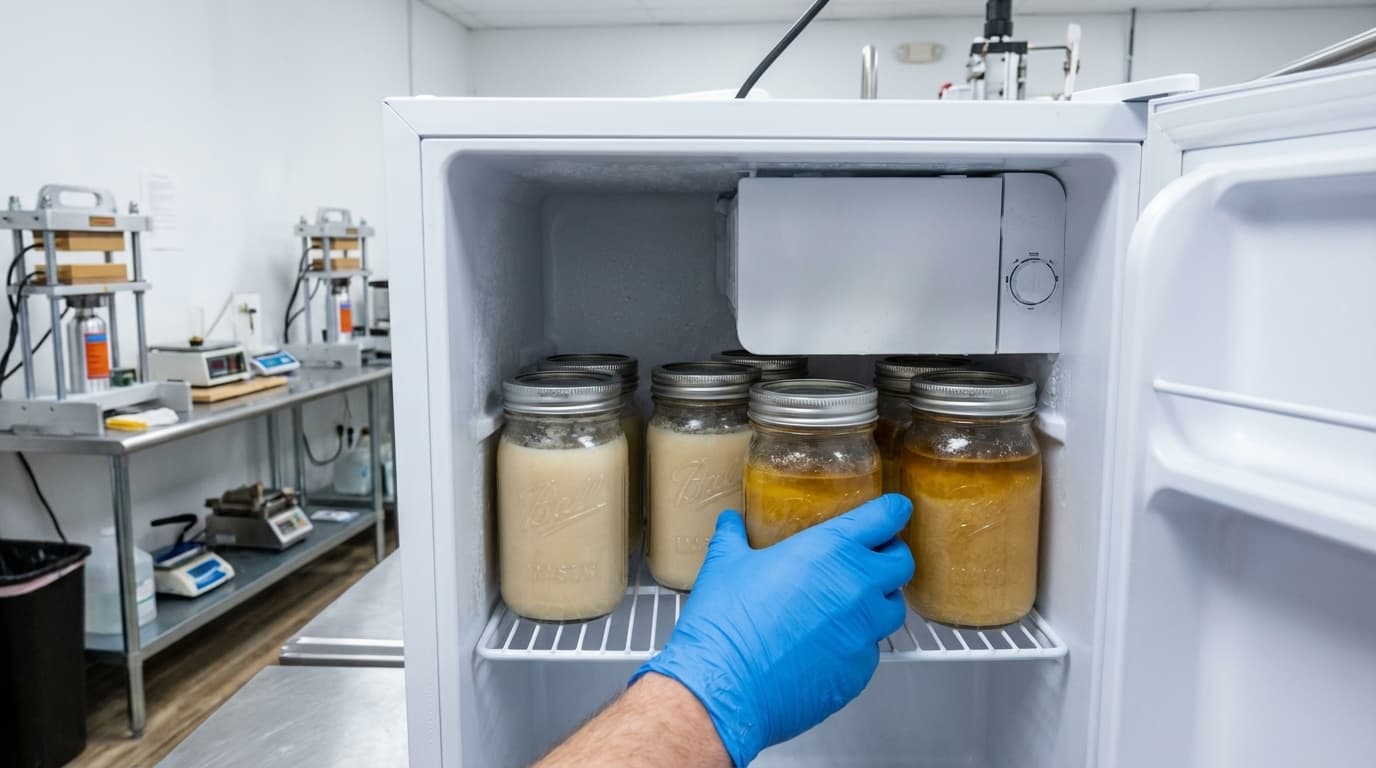
How to Keep Rosin Cold Without Damaging It
Keeping rosin cold isn't just about sticking it in the fridge. You need to hold it between 32-45°F while preventing condensation and terpene loss. If you get it right, your rosin stays fresh and flavorful for months. If you get it wrong, you'll end up with moisture in your dabs or a brittle, flavorless product.
What You Need to Know About Rosin Storage
Rosin is a solventless concentrate. Because it's made using only heat and pressure, it relies entirely on its volatile terpenes for flavor and effect. Those terpenes evaporate quickly if they aren't kept cold and sealed away from light.
The biggest challenge with cold storage is the transition. Moving rosin from a cold fridge to a warm room can cause condensation inside the jar. That moisture will ruin the texture and cause "sizzling" when you dab it. Many people make the mistake of using the freezer or opening cold jars too early, which leads to a harsh smoke.
Aim for a steady 35-40°F in airtight containers. This range protects the terpenes without making the rosin so brittle that it's hard to work with. If you're handling live rosin, be even more careful—its higher terpene content makes it sensitive to even small temperature swings.
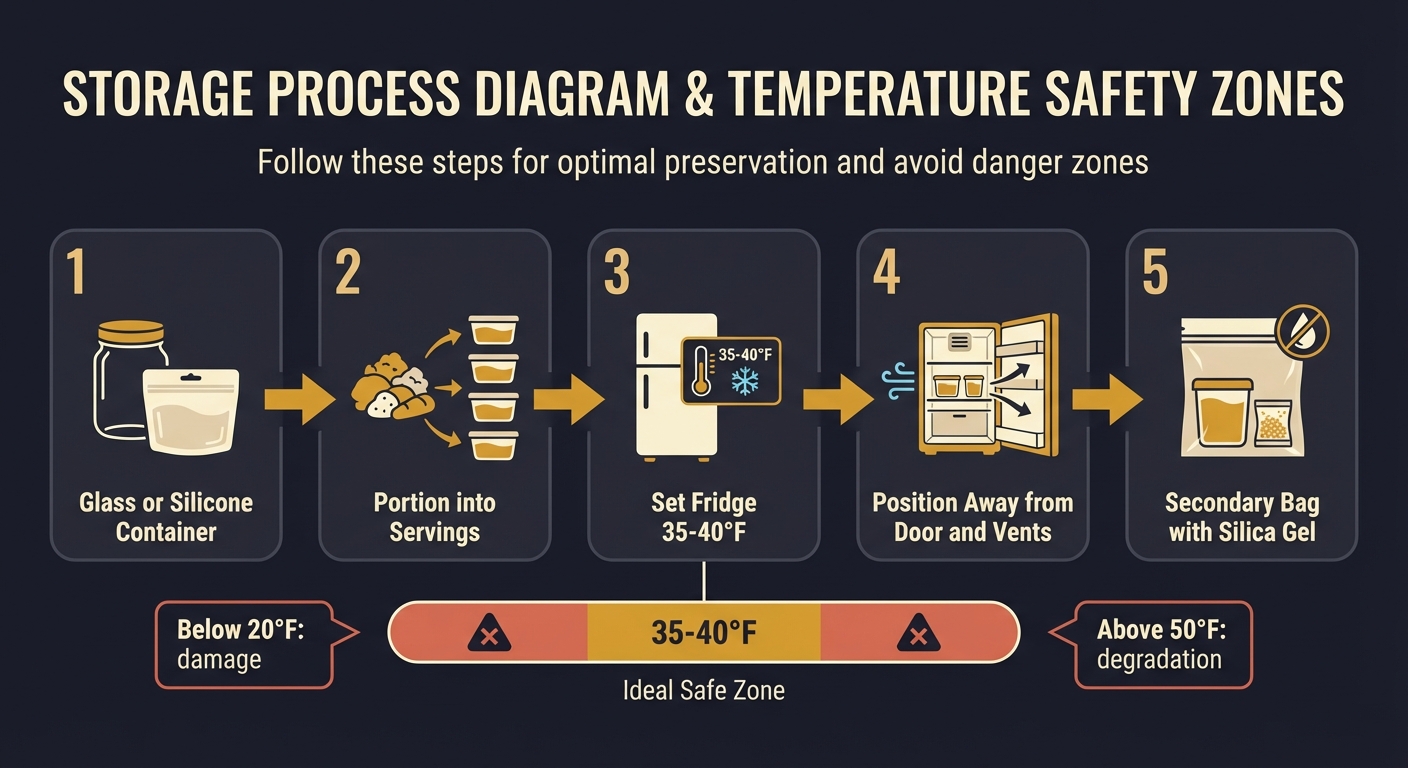
Step-by-Step Cold Storage Guide
1. Choose the Right Containers
Stick to glass or food-grade silicone with airtight seals. Small glass jars with rubber gaskets work best for larger stashes. Silicone is convenient for small amounts because the rosin won't stick, but it's not ideal for long-term storage as terpenes can eventually leach into the material. Avoid plastic; it tends to crack and doesn't provide a good enough seal.
2. Portion Your Stash
Divide your rosin into smaller serving sizes before you put it in the fridge. This way, you only take out what you need for a few days. Keeping the rest of the supply at a stable temperature prevents the degradation that comes from constant warming and cooling. Most rosin holds its peak quality for about six months when stored this way.
3. Verify Your Temperature
Don't trust your fridge's built-in display. Use a separate thermometer to make sure it's staying between 35-40°F. Avoid the freezer unless you plan on storing your product for more than a year. Freezing can permanently alter the texture, making it crumbly and difficult to dab.
4. Pick a Stable Spot
Store your jars in the main compartment of the fridge, away from the door or the back vents. Temperature fluctuations are highest near the door, and the vents can get cold enough to freeze your jars. Keep them away from food with strong odors, as flavors can sometimes find their way into the concentrate.
5. Control Humidity
Seal your jars inside a secondary Ziploc bag with a small silica packet. This provides an extra layer of protection against moisture. Check your jars every few weeks to make sure the seals are holding up and no moisture has found its way inside.
Practical Tips for Better Storage
- Wine coolers are great for rosin because they don't get opened as often as a kitchen fridge, which keeps the temperature steadier.
- Always let your jar sit at room temperature for at least 15 minutes before opening it. This is the only way to prevent condensation from forming on your rosin.
- Wrap your jars in aluminum foil or keep them in a dark bag. Even in the fridge, light exposure will slowly degrade your terpenes.
- Keep a "daily use" jar at room temperature. Use it up within a week so you aren't cycling your main stash in and out of the fridge.
- Inspect your jar gaskets regularly. Cold air causes rubber to contract, which can break the airtight seal over time.
Common Storage Mistakes
Freezing without a plan makes rosin hard to handle. Unless you're putting it away for a year, stick to the fridge.
Taking out the whole supply every time you want a dab exposes everything to temperature changes. Use small portions instead.
Cheap containers are a recipe for dry rosin. Invest in high-quality glass jars with a tight seal.
Opening a cold jar is the fastest way to ruin a gram. Be patient and wait for it to warm up.
Storing at 50°F is better than leaving it on the counter, but it won't stop terpene loss nearly as well as 35°F will.
Handling Different Rosin Types
Live rosin is the most sensitive because it has the highest concentration of volatile terpenes. It needs very slow transitions. Hash rosin and flower rosin are slightly more stable, but they still benefit from the same 35-40°F range.
Flower rosin is generally the easiest to store, as it tends to maintain its consistency better through temperature changes. No matter the type, the goal is always the same: keep it cold, keep it dark, and keep it sealed.
Rosin Cold Storage FAQ
How long does rosin last in the fridge?
Expect 6 to 12 months of peak quality if you keep the temperature steady. After a year, you'll start to notice a fade in the flavor and aroma as the terpenes slowly break down.
Is it okay to use a regular freezer?
You can use a freezer for long-term storage, but it isn't ideal for daily use. Extreme cold makes rosin very brittle and can even change the texture permanently. If you do freeze it, give it at least 30 minutes to warm up before you open the jar.
What temperature is too cold?
Anything below 20°F is unnecessary for most storage needs. It increases the risk of cracking glass jars and makes the product hard to portion. Stick to the 35-40°F range for the best balance of preservation and usability.
How do I stop condensation?
The golden rule is to never open a cold jar. Let it sit on the counter until it reaches room temperature. If you see moisture on the outside of the jar, it's not ready to open yet.
Do I need different temps for different rosin?
Most varieties do perfectly well at 35-40°F. Live rosin is more sensitive to fluctuations, but the target temperature remains the same across the board.
How much should I keep out of the fridge?
Only keep what you'll use in 3-5 days at room temperature. This gives you the convenience of easy dabbing without risking the quality of your entire stash.
How much temp swing is too much?
Small fluctuations of 5 degrees are fine. The real damage comes from rapid spikes, like leaving the jar on a warm desk for an hour before putting it back in the fridge.
Further Reading
- Rosin (extraction) — Wikipedia
- How to Store Rosin — PurePressure
- How to Store Rosin Properly — The Press Club