Full Melt vs Rosin — Frequently Asked Questions

This FAQ addresses common questions about full melt hash and rosin, two premium cannabis concentrates that are often confused with each other. These answers are based on extraction science, material properties, and real questions from concentrate collectors. Both products represent high-quality cannabis processing, but they differ significantly in production methods, consistency, and storage requirements.

General Questions

What is the main difference between full melt and rosin?

Full melt is a solventless hash made from ice water extraction that melts completely when heated, while rosin is a solventless concentrate made by applying heat and pressure to cannabis flower or hash. Full melt refers specifically to the highest grade of bubble hash (typically 5-star or 6-star ratings), whereas rosin describes any concentrate produced through heat-pressure extraction. The key distinction lies in their production methods: full melt uses agitation in ice water to separate trichomes, while rosin uses mechanical pressure and controlled heat. For those encountering these concentrates the first time, rosin typically appears more uniform and glossy, while full melt has a distinctive sandy to slightly sticky texture that experienced collectors recognize immediately. When you see premium full melt that looks fire under proper lighting, it often displays a crystalline structure that's never seen in pressed rosin products, making visual identification straightforward for experienced collectors.

Which concentrate is considered higher quality?

Both full melt and rosin can achieve premium quality when properly produced, but full melt hash generally commands higher prices due to rarity and labor intensity. True full melt represents less than 5% of typical bubble hash yields, making it exceptionally scarce. Rosin quality varies significantly based on starting material and pressing techniques. Live rosin made from fresh frozen material often rivals full melt in both quality and market value. When evaluating premium concentrates, collectors often perform a jar test to assess melt quality - true full melt will leave minimal residue, while lower grades leave behind plant material that doesn't fully vaporize. Single source full melt, produced from one exceptional cultivar harvest, typically represents the absolute pinnacle of concentrate quality and commands the highest market prices among knowledgeable collectors.

Why are these concentrates more expensive than other extracts?

Full melt and rosin cost more because they require no chemical solvents and involve labor-intensive processes with lower yields. Full melt production can take 8-12 hours of washing and requires extensive knowledge to achieve proper separation. Rosin pressing demands precise temperature control (typically 160-220°F) and optimal pressure timing. Both methods preserve more terpenes and cannabinoids compared to solvent-based extractions, but at the cost of efficiency and scale. Commercial producers often struggle with consistency, as achieving top-tier results every time requires perfect environmental conditions and exceptional starting plant material. The labor costs add up quickly when processors need to monitor every dab worth of material through multiple quality checkpoints, ensuring that only food grade standards are maintained throughout production.

Can you tell them apart visually?

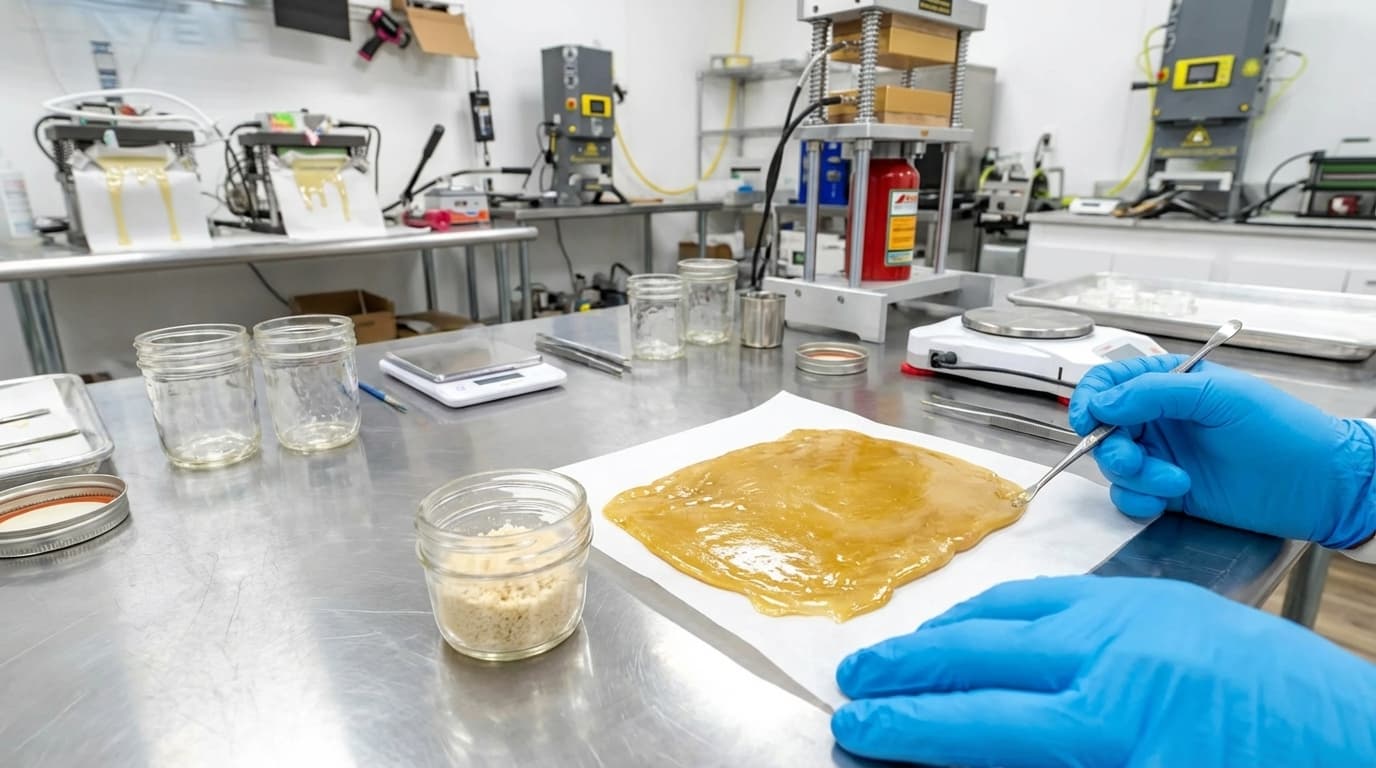
Yes, full melt and rosin have distinct visual characteristics that experienced collectors can identify. Full melt appears as loose, sandy to slightly sticky resin that ranges from blonde to light brown, often with visible trichome heads under magnification. Rosin typically has a more uniform, glossy appearance and can range from sap-like consistency to budder-like texture depending on curing methods. Fresh rosin often appears lighter and more translucent than aged full melt. High-grade full melt sometimes develops a crystalline structure that collectors call "dark crystal" formations - these geometric patterns indicate exceptional trichome preservation and typically signal premium quality material. When material looks great under macro photography, you'll notice that full melt maintains individual trichome head integrity, while rosin shows the characteristic pressed and merged resin structure from the mechanical extraction process.

Production and Processing Questions

What equipment is needed to make each concentrate?

Full melt production requires bubble bags (multiple micron sizes from 25-220μm), ice, filtered water, and washing machines or manual agitation tools. Rosin production needs a hydraulic or pneumatic press capable of 1-20 tons pressure, temperature-controlled heated plates, and specialized rosin bags (15-220μm). Full melt setups cost $200-2000, while quality rosin presses range from $500-15000. Both require freeze dryers for optimal results, adding $2000-8000 to equipment costs. Many home extractors start with parchment paper for rosin collection, though professional operations use silicone-lined collection tools for easier handling and reduced waste. Essential accessories include a proper dab tool for handling the finished concentrates, terp pearls for consumption testing, and precise scales for yield calculations that processors rely on few times throughout each batch to monitor efficiency.

How long does each extraction process take?

Full melt hash production typically takes 6-12 hours from start to finished product, including multiple wash cycles and drying time. Fresh frozen material requires 24-48 hours of freezing before processing. Rosin pressing is much faster, with individual presses taking 30 seconds to 5 minutes depending on material and technique. However, preparing material (grinding, pre-pressing) and post-processing (curing, packaging) can extend rosin production to several hours total. Temperature management becomes critical during longer sessions, as plates that get too hot will degrade terpenes and darken the final product color. Professional extractors learned years ago that rushing either process compromises quality, so proper timing remains essential even when production demands increase during peak harvest seasons.

What starting materials work best for each method?

Full melt hash performs best with fresh frozen cannabis that has been harvested at peak trichome development, typically when heads are milky white under magnification. Outdoor-grown, trichome-heavy cultivars often produce superior full melt compared to indoor material. Rosin can be pressed from flower, kief, or hash, with hash rosin generally producing higher quality results. Live rosin uses the same fresh frozen starting material preferred for full melt. Processors often create temple ball hash as an intermediate step, which involves hand-rolling bubble hash into dense spheres that can later be pressed into exceptionally clean rosin with minimal plant matter contamination. Single source material from exceptional phenotypes consistently produces the most sought-after concentrates, as genetic consistency translates directly to processing predictability and final product quality.

Which method produces higher yields?

Rosin pressing typically yields 10-25% from quality flower and up to 70% when pressing bubble hash into rosin. Full melt yields are much lower, often representing only 1-3% of starting material weight, as only the finest trichome heads qualify as true full melt. Most bubble hash washing produces 6-15% total yield across all grades, but the majority falls into lower-quality categories. This yield difference explains much of the price disparity between the concentrates. Commercial operations often find that achieving consistent full melt every time requires perfect timing, temperature control, and exceptional starting genetics. The low yields mean that producers need to process significantly more plant matter to generate equivalent quantities, making full melt a little bit more challenging for large-scale commercial operations focused on consistent supply chains.

Storage and Handling Questions

How should I store full melt versus rosin?

Full melt stores best in airtight glass containers at 32-40°F with minimal light exposure, maintaining quality for 6-12 months when properly stored. Rosin requires similar temperature control but benefits from silicone containers to prevent sticking, especially for sappier consistencies. Both concentrates degrade rapidly at room temperature, losing terpenes and developing darker colors within weeks. Vacuum sealing extends storage life for both products but requires careful handling to avoid compression damage. Many collectors prefer mason jar storage for full melt, as the wide opening allows easy access without warming the product through handling. Proper storage maintains the heat retention characteristics that make these concentrates so desirable - material that's been stored incorrectly will never achieve the same vaporization quality as properly maintained concentrates.

What temperature ranges are safe for each concentrate?

Full melt begins degrading above 68°F and will start to melt and lose structure around 75-80°F, making climate-controlled storage essential. Rosin maintains stability up to 70°F but experiences texture changes (usually becoming more liquid) at higher temperatures. Both concentrates should never exceed 85°F during storage, as this accelerates cannabinoid degradation and terpene loss. Freezer storage (0-10°F) preserves both products long-term but requires gradual temperature adjustment before handling. Collectors quickly learn that plates or surfaces that are red hot will instantly destroy these delicate concentrates, so temperature monitoring becomes second nature for serious enthusiasts. Professional storage facilities maintain consistent temperatures within a few degrees, as even small fluctuations can affect the final product quality that consumers experience with every dab they consume.

Do these concentrates expire or go bad?

Neither full melt nor rosin expire in the traditional sense, but both experience quality degradation over time through oxidation and decarboxylation. Properly stored full melt maintains peak quality for 8-12 months, while rosin typically holds optimal characteristics for 6-10 months. Signs of degradation include darkening color, reduced aroma intensity, and texture changes. Improperly stored concentrates can develop mold, particularly if exposed to moisture above 60% relative humidity. Visual inspection becomes routine for collectors - products that no longer look great under magnification or have lost their characteristic shine typically indicate quality degradation from improper storage conditions. Collectors often document their storage experiments with gif giphy sequences showing degradation over time, helping the community understand optimal preservation techniques for these premium concentrates.

Can I travel with these concentrates legally?

Transportation laws vary significantly by jurisdiction, but both full melt and rosin are subject to the same legal restrictions as other cannabis concentrates in regions where legal. Many areas have specific weight limits (often 5-8 grams) and require sealed, labeled packaging for transport. Interstate transport remains federally prohibited regardless of individual state laws. Always verify local and destination regulations before traveling, as concentrate penalties often exceed those for flower products. Proper packaging in smell-proof containers with accurate labeling helps ensure compliance during legal transport.

Full Melt vs Rosin Specific Questions

Can you make rosin from full melt hash?

Yes, full melt hash can be pressed into rosin, often called "hash rosin," which many consider the ultimate concentrate quality. Pressing full melt requires lower temperatures (150-180°F) and lighter pressure compared to flower rosin to preserve the delicate trichome structure. The resulting hash rosin typically yields 60-85% from the original full melt weight. This process combines the selectivity of bubble hash with the consistency and shelf-stability of rosin. Processors have developed specialized techniques using terp slurper methodology to preserve the most volatile compounds during the pressing process, ensuring maximum flavor retention in the final product. Many extractors prefer using a 37-micron rosin bag when pressing full melt to prevent any residual plant matter from contaminating the final hash rosin product.

Which concentrate offers better flavor profiles?

Full melt typically preserves more delicate terpenes due to the gentle, cold extraction process, often providing more complex and nuanced flavor profiles. However, properly made rosin can match or exceed full melt in terpene content, especially live rosin pressed at optimal low temperatures. The flavor difference often comes down to starting material quality and processing skill rather than the extraction method itself. Many concentrate enthusiasts prefer full melt for immediate consumption and rosin for longer-term storage. Experienced collectors often describe the first time tasting premium full melt as a revelation, noting flavor complexity that's difficult to achieve through other extraction methods. Single source full melt often provides the most distinctive flavor profiles, as the genetic consistency eliminates variables that can muddle terpene expression in mixed-strain batches.

Are there hybrid techniques that combine both methods?

Yes, the most common hybrid approach is making bubble hash first, then pressing the resulting material into rosin, creating "hash rosin." Some producers also use "live" techniques, processing fresh frozen material through bubble hash washing followed by immediate pressing. These combined methods can produce yields of 3-8% from starting flower weight while maintaining premium quality. The two-step process allows for quality grading during bubble hash production, with only the finest grades pressed into rosin. Advanced processors have perfected timing sequences that ensure the plant material never reaches damaging temperatures, preserving even the most volatile terpene compounds throughout both extraction phases. This hybrid approach, perfected by innovators years ago, now represents the gold standard for premium concentrate production in commercial markets.

Which concentrate type has better market availability?

Rosin has significantly better market availability due to faster production times and higher yields making it more commercially viable. Full melt availability varies dramatically by region and season, with many markets seeing authentic full melt only sporadically. Licensed dispensaries stock rosin products year-round, while full melt often appears as limited drops or seasonal releases. Rosin also offers more consistency between batches, whereas full melt quality can vary significantly based on environmental factors during cultivation. Commercial scale production favors rosin because equipment can operate continuously, while full melt requires extensive manual labor and quality assessment at each processing stage.

What should beginners start with between these two options?

Beginners should typically start with rosin due to its wider availability, more consistent quality, and easier storage requirements. Rosin's more stable texture makes handling simpler, and the broader market means more price points and product options. Full melt requires more experience to properly evaluate quality and handle correctly, as its delicate structure can be easily damaged. New concentrate users can develop their palate with various rosin styles before progressing to the more nuanced full melt category. First time concentrate users often find rosin more approachable, as it maintains consistent texture and potency that helps establish baseline expectations for premium cannabis extracts. Learning proper dab tool techniques with rosin also prepares beginners for handling more delicate full melt products later, as the fundamental handling skills transfer between concentrate types.

How do processing costs compare between full melt and rosin production?

Full melt production carries significantly higher labor costs due to the time-intensive washing process and low yields, often requiring 12-16 hours of skilled labor per batch. Rosin pressing can be largely automated with pneumatic presses, reducing labor requirements to 2-4 hours per equivalent batch. Equipment maintenance differs substantially - rosin presses require regular plate cleaning and pressure system maintenance, while bubble hash operations need frequent bag replacement and washing machine upkeep. Energy costs favor rosin production, which uses electricity primarily for heating plates, versus full melt operations that require continuous refrigeration and freeze-drying equipment operation. The cost differential becomes more pronounced when processing single source material, as full melt operations must dedicate entire runs to individual cultivars, while rosin production can efficiently process mixed batches without quality concerns.

Which concentrate type offers better long-term market stability?

Rosin demonstrates superior market stability due to scalable production methods and consistent supply chains. Full melt markets experience significant price volatility based on seasonal availability and harvest quality variations. Commercial operators find rosin provides predictable revenue streams, while full melt represents higher-risk, higher-reward market opportunities. Investment in rosin production equipment typically shows returns within 6-12 months, whereas full melt operations may require 18-24 months to achieve profitability due to lower throughput and higher labor requirements. Market data suggests rosin maintains steady pricing year-round, while full melt prices can fluctuate 40-60% based on availability and seasonal demand patterns.

What role does the quartz banger play in evaluating these concentrates?

The quartz banger serves as the primary evaluation tool for both full melt and rosin quality assessment. True full melt will vaporize completely in a properly heated quartz banger, leaving minimal residue, while lower grades leave behind plant matter that doesn't fully consume. Rosin evaluation focuses on how cleanly it melts and vaporizes, with premium grades showing smooth, even vaporization patterns. Temperature control becomes critical - a quartz banger that's too hot will char either concentrate, while insufficient heat won't properly demonstrate melt characteristics. Experienced evaluators perform multiple tests with fresh bangers to assess consistency, as authentic full melt should perform identically few times in succession. The quartz banger test remains the industry standard for quality verification, providing immediate feedback on concentrate purity and processing quality.

How do terp pearls affect the consumption experience of these concentrates?

Terp pearls enhance the consumption experience for both full melt and rosin by improving heat distribution and extending vaporization time. With full melt, terp pearls help achieve complete consumption of the delicate trichome heads, ensuring that every dab delivers maximum flavor and effect. Rosin benefits from terp pearl agitation as it helps break up the more viscous consistency, promoting even heating and preventing hot spots that can degrade terpenes. The spinning action created by properly sized terp pearls ensures that both concentrate types vaporize at optimal temperatures, maximizing the preservation of volatile compounds. Many collectors find that terp pearls make the subtle differences between premium full melt and rosin more apparent, as the improved vaporization technique allows for better flavor discrimination between these high-grade concentrates.

Have additional questions about full melt hash or rosin concentrates? Our concentrate reference library contains detailed guides on extraction methods, storage techniques, and product evaluation. Visit our complete concentrates section for in-depth technical information, or contact our research team with specific questions about these premium cannabis products.