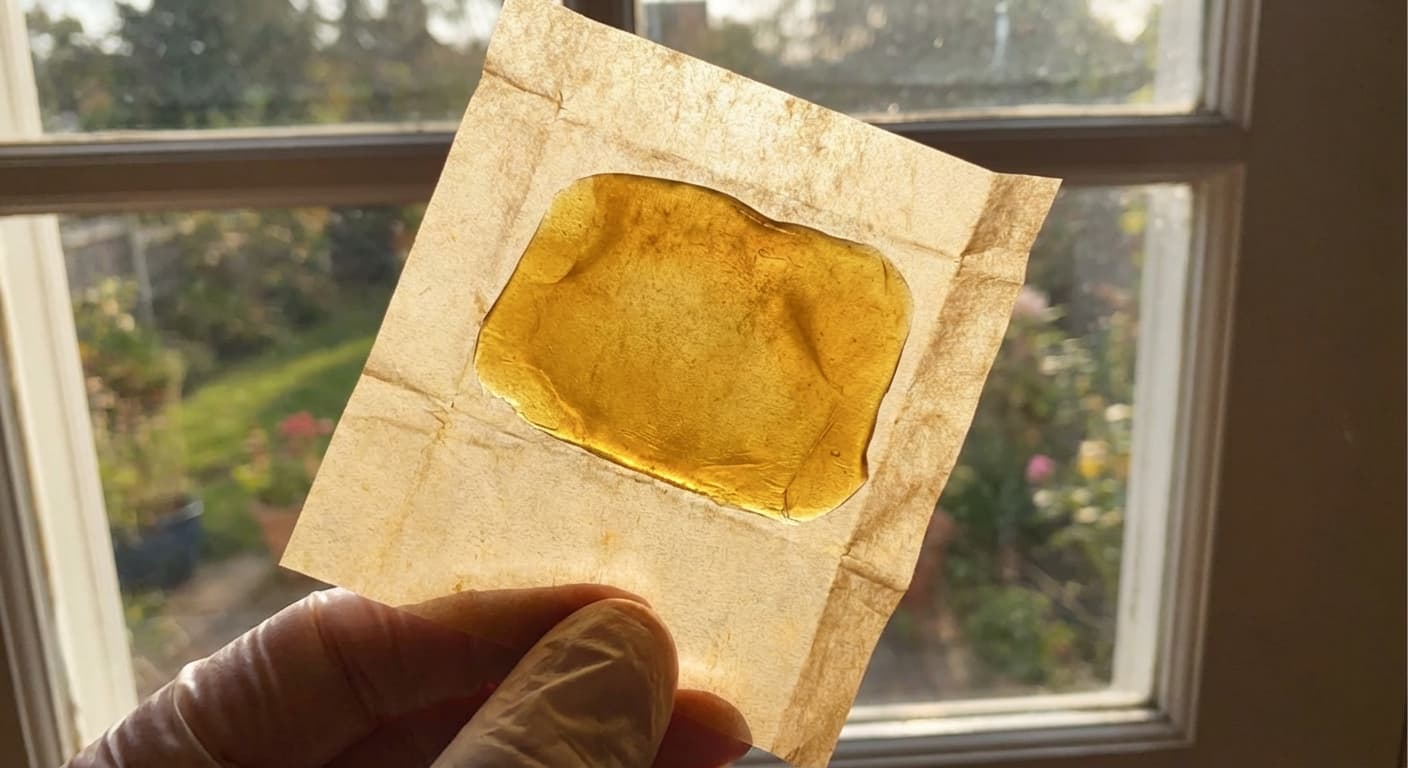
Live Rosin at a Glance
Live rosin is a solventless cannabis concentrate made by pressing fresh frozen flower or bubble hash with heat and pressure. No butane, no propane, no chemical solvents. The "live" means the plant was frozen immediately after harvest, locking in volatile terpenes that would otherwise evaporate during traditional drying and curing. The result: a concentrate with the fullest flavor expression of any extraction method, pale yellow to golden amber, typically wet or sauce-like when fresh, and priced at $50–90/g at most dispensaries.
How Live Rosin Is Made
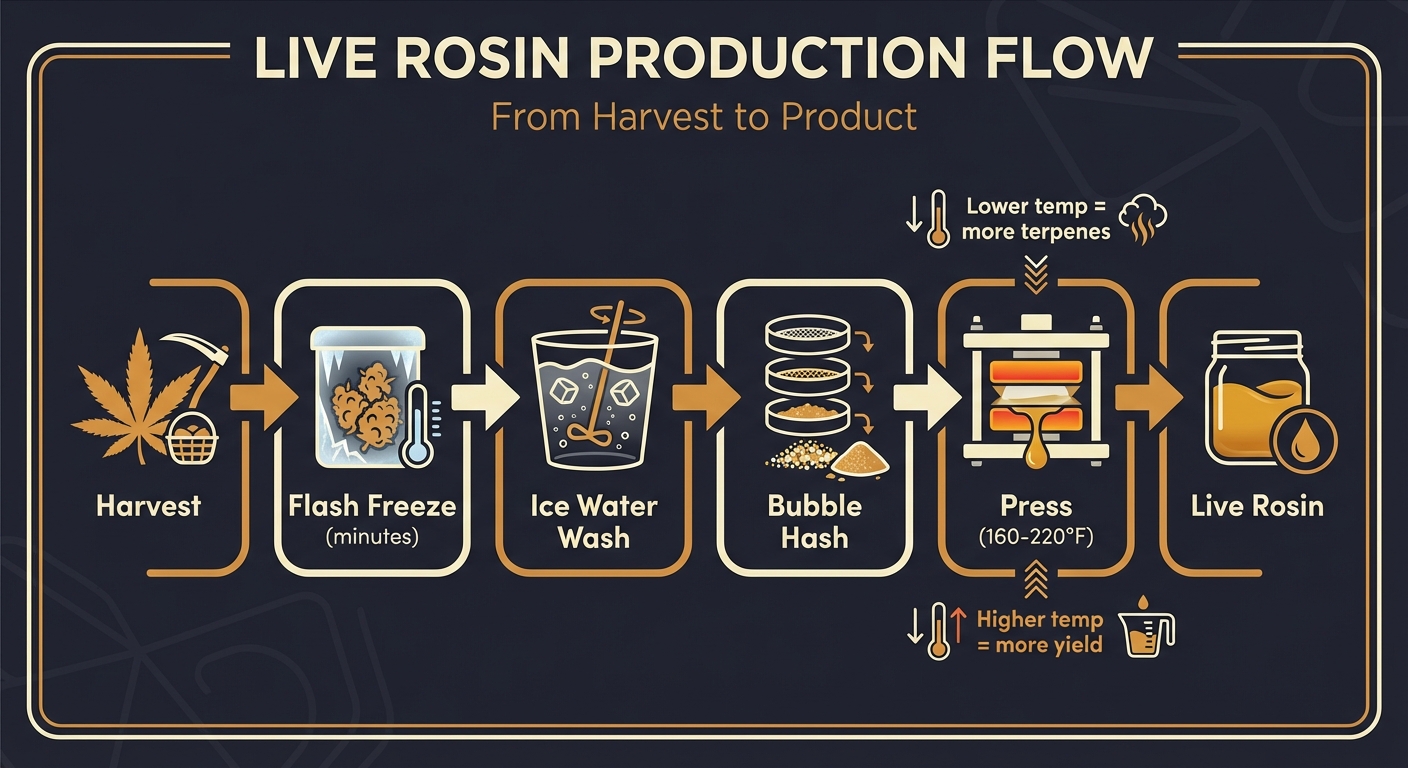
The process starts at harvest. Plants are cut and frozen within hours, sometimes minutes, of coming down. This fresh frozen material either gets pressed directly into rosin or, more commonly, washed into bubble hash first and then pressed. The hash route yields a cleaner, more potent product, which is why most premium live rosin on dispensary shelves is technically live hash rosin.
Pressing happens between heated plates at 160–220°F under controlled pressure. Lower temperatures preserve more terpenes but reduce yield. Higher temperatures push more oil out but cook off the lighter aromatics, the ones you actually want. The best operations run low and slow.
Fresh live rosin often has a wet, sauce-like consistency. Over time, terpenes interact with cannabinoids and the texture shifts, buddering into something creamier or separating if stored improperly. That's natural chemistry, not a defect. But it does mean live rosin needs refrigeration from production through purchase.
The "live" distinction is entirely about starting material. Press cured flower and you get rosin. Press dried bubble hash and you get hash rosin. Live rosin specifically means the source plant never dried. That one decision, to freeze instead of hang, preserves the volatile monoterpenes and sesquiterpenes that define this category.
The Frenchy Cannoli Legacy: The modern solventless movement owes a significant debt to Frenchy Cannoli, a legendary hashishin who bridged traditional artisanal methods with modern extraction. His work on temple balls and open-source education defined the standards for quality in the industry today. His apprentice, Cherry Blossom Belle of Heritage Hash Co., continues teaching his methods today.
Live Rosin vs. Similar Concentrates
The most common mixup: live rosin vs. live resin. Both start with fresh frozen material, but live resin uses hydrocarbon solvents (butane, propane) for extraction. Different process, different product. If a label says "live resin," it's solvent-based. For a detailed breakdown, see rosin vs. resin.
Hash rosin and live rosin overlap but aren't identical. Hash rosin means rosin pressed from bubble hash rather than flower. Live hash rosin means the bubble hash came from fresh frozen material. Most premium "live rosin" on shelves is technically live hash rosin. Menus rarely make the distinction, but the quality difference is real. See live rosin vs. hash rosin for the full comparison.
Plain "rosin" usually means cured flower was pressed. Darker color, earthier terpene profile, lower price. Still solventless, still legitimate, but a different product with a different flavor character.
Why Live Rosin Matters
If you're paying $60–90 for a gram, you should know what that price buys. Live rosin commands a premium because of what it preserves: the full terpene profile of a fresh plant, with zero residual solvent. If you're deciding whether it's the right purchase, see whether live rosin is worth it for a frank breakdown.
The practical difference shows up in flavor and aroma. Live rosin from a terpy cultivar will express that strain's character more completely than any other concentrate form. The flip side: if the starting material wasn't great, live rosin won't hide it. There's nowhere for mediocre flower to hide in a solventless process.
Storage matters more with live rosin than almost any other concentrate. If it's not in a refrigerated case at the dispensary, pass. Leave it on a shelf at home and expect texture changes and terpene loss within days. Treat it like a perishable product, because it is one.
How to Spot Quality Live Rosin
- Sold from a refrigerated display case, non-negotiable for quality
- Color ranges from pale yellow to light golden amber; dark color signals oxidation or aging
- Fresh consistency is wet and sauce-like; buddered texture is normal after cold curing
- Price typically $50–90/g at retail; significantly less warrants a closer look at the label
- Label should specify "live" and ideally name the starting cultivar
- Clean melt with full flavor on a properly tempered nail or banger at 480–540°F
- Recent packaging date, fresher is better, especially without guaranteed cold chain
Further Reading
Live Rosin FAQ
How is live rosin different from regular rosin?
Starting material. Live rosin uses cannabis frozen immediately after harvest, preserving volatile terpenes that evaporate during drying. Regular (cured) rosin uses dried and cured flower. Still solventless, still quality, but with a different terpene profile, typically darker color, and earthier flavor.
Why does live rosin cost more than other concentrates?
Three factors compound. The starting material must be frozen fresh, adding logistics and cost. Bubble hash washing adds a full production step. And rosin pressing yields far less per pound than solvent-based methods. A pound of flower might produce 5–8% of its weight in finished live rosin, compared to 15–25% with BHO extraction. For a full cost breakdown, see why live rosin costs more.
How should I store live rosin after purchase?
Refrigerator, 35–40°F, in the original sealed container or an airtight glass jar. Keep it cold, sealed, and dark. Properly stored live rosin holds its quality for 3–6 months. For longer storage, the freezer works. Let it reach fridge temperature before opening to avoid condensation on the surface.
What causes live rosin to change texture over time?
Terpene content and temperature. Higher terpene concentrations keep the consistency saucier. As lighter terpenes slowly evaporate, even in cold storage, the texture shifts toward budder or crumble. Temperature fluctuations accelerate this. None of it means the product is bad, but fresher is generally better.
Is live rosin stronger than other concentrates?
Not necessarily by THC percentage. Live rosin typically tests between 70–85% total cannabinoids, comparable to or slightly lower than many BHO products. The difference is the preserved terpene profile, which affects the overall experience beyond what a potency number captures.
Can I make live rosin at home?
You can make rosin at home with a press. Making live rosin specifically requires access to freshly harvested plants and a way to freeze them immediately, which means growing your own or knowing a grower willing to hand off fresh cuts. Most home pressers work with cured flower or purchased bubble hash, which produces excellent solventless concentrate, just not technically "live."
Does darker live rosin mean lower quality?
Often, but not always. Darker color can indicate older starting material, oxidation from poor storage, or higher pressing temperatures. Some cultivars naturally press darker. When comparing two jars of the same strain, lighter generally means fresher and better preserved. See why live rosin turns dark for more.
What's the best temperature to dab live rosin?
Low. 480–540°F on a quartz banger, or a cold start where you load the concentrate first and heat gently. High temperatures destroy the terpenes you paid premium for. If it's harsh or flavorless, the nail is too hot. See proper dabbing temperatures for a full guide to heat ranges and technique.