Introduction
Live rosin requires cold storage between 32-40°F to preserve its terpene profile and prevent degradation. This solventless cannabis concentrate deteriorates rapidly at room temperature, losing potency and flavor within days if stored improperly. Proper storage techniques can maintain live rosin quality for months, preserving the full-spectrum compounds that make this concentrate prized among cannabis enthusiasts.
This guide covers essential storage methods, container selection, and handling practices based on concentrate preservation science. Resin Manual's reference data shows that temperature control is the single most critical factor in maintaining live rosin integrity over time.
Background
Live rosin is a solventless cannabis concentrate made by applying heat and pressure to fresh frozen cannabis material or ice water hash. Unlike other concentrates, live rosin contains no residual solvents, making it particularly sensitive to environmental factors like heat, light, and air exposure.
The term "live" refers to the starting material - fresh frozen cannabis plants that were frozen immediately after harvest rather than dried and cured. This process preserves volatile terpenes that would otherwise evaporate during traditional drying. Live rosin typically has a wet, sauce-like consistency due to these preserved compounds.
Many people confuse live rosin with live resin, but these are distinct products. Live resin uses solvents like butane or propane for extraction, while live rosin uses only heat and pressure. This difference affects storage requirements, as live rosin's solventless nature makes it more prone to oxidation and terpene loss.
Live rosin degrades through several processes: terpene evaporation, cannabinoid oxidation, and moisture loss, the same forces behind why rosin dries out. These chemical changes occur exponentially faster at higher temperatures, making refrigeration essential rather than optional.
Steps
Choose the Right Container
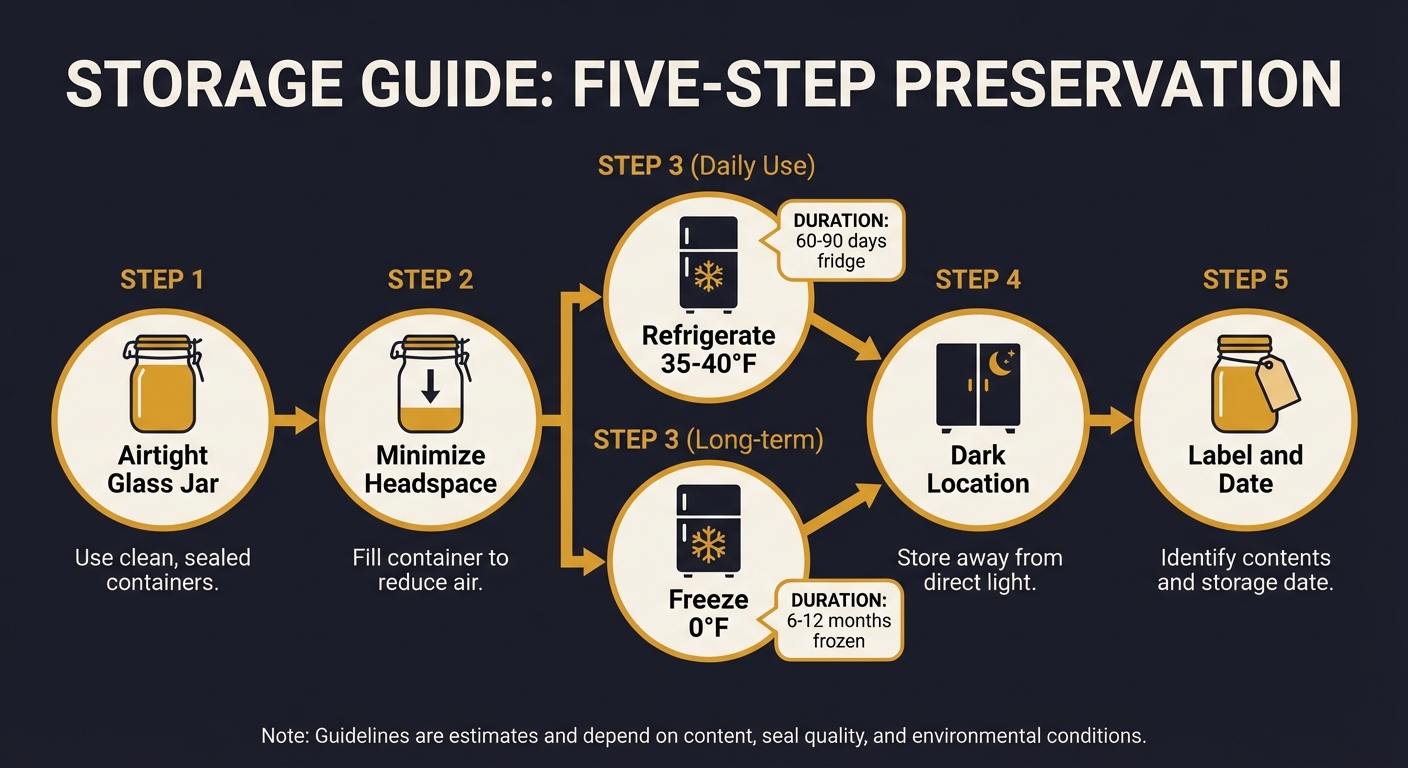
Select a small, airtight glass jar or food-grade silicone container specifically sized for your amount of live rosin. Glass jars with tight-fitting lids work best for long-term storage. Avoid plastic containers as they can absorb terpenes and allow air exchange over time. Mason jar storage works exceptionally well for live rosin due to their tight-sealing lids and available small sizes. For smaller amounts, many users prefer small glass concentrate jars that minimize headspace. The size match between container and product amount directly impacts preservation quality - oversized containers create air pockets that accelerate degradation every time you open the storage vessel.
Minimize Air Exposure
Fill containers as full as possible to reduce headspace and limit oxidation. If using a jar significantly larger than your product amount, consider transferring to a smaller container. Press parchment paper directly onto the surface before sealing to create an additional barrier.
Set Proper Temperature
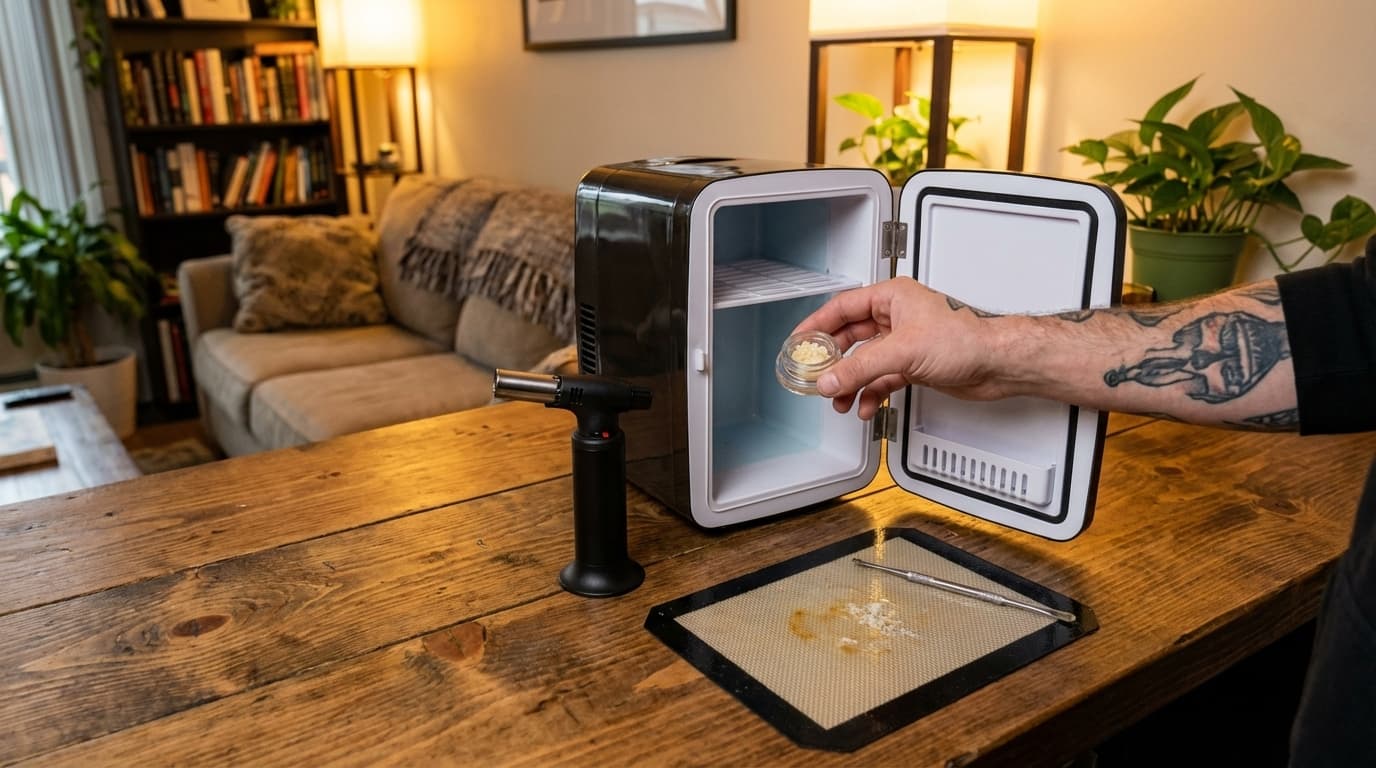
Store live rosin in a refrigerator at 35-40°F for daily use, or in a freezer at 0°F for long-term storage exceeding 30 days. Never store at room temperature for more than a few hours. Consistent temperature is crucial, see our guide on keeping rosin cold without damaging it for safe container and handling techniques. Temperature consistency matters significantly more than exact temperature. Freeze dryer enthusiasts often use dedicated mini fridges to eliminate temperature fluctuations from regular food access. The first time many users experience temperature damage, they notice their rosin becomes too hot during extraction or handling, resulting in terpene loss that changes both consistency and effects.
Control Light and Humidity
Keep containers in the darkest part of your refrigerator, away from interior lights. Wrap containers in aluminum foil if your storage area receives light exposure. Maintain storage area humidity below 60% to prevent moisture accumulation that can lead to mold growth.
Label and Date Everything
Mark containers with strain name and storage date using waterproof labels. Live rosin maintains peak quality for 2-3 months refrigerated or 6-12 months frozen. Track storage duration to monitor product freshness and plan consumption accordingly. Proper labeling becomes critical when storing multiple strains or consistencies. Temple ball style rosin stores differently than sauce-like textures, and tracking these differences helps optimize storage for each type. Date tracking also helps identify which storage methods work best in your specific setup.
Pro Tips
- Pre-portion for convenience: Divide large amounts into smaller containers to avoid repeatedly exposing your entire stash to room temperature during access.
- Use desiccant packs: Add food-grade silica gel packets to storage containers in humid environments, but avoid direct contact with the rosin.
- Allow gradual warming: Remove frozen live rosin 10-15 minutes before use to prevent condensation formation from rapid temperature changes.
- Double-wrap for freezer storage: Place primary containers inside secondary freezer bags to prevent freezer burn and odor absorption.
- Monitor consistency changes: Fresh live rosin should maintain its original texture and color. Darkening, hardening, or separation indicates degradation has begun.
- Perform jar tests regularly: Open containers periodically to check for off-odors, color changes, or texture alterations that indicate storage issues.
- Keep terp pearls and tools separate: Store dabbing accessories away from concentrate storage areas to prevent cross-contamination and maintain clean storage environments.
Common Mistakes
- Leaving containers open: Even brief air exposure accelerates terpene loss. Always reseal immediately after use.
- Storing in bathroom or kitchen: These areas have temperature and humidity fluctuations that damage live rosin quality.
- Using oversized containers: Excess air space promotes oxidation. Right-sized containers preserve quality longer.
- Ignoring condensation: Water droplets from temperature changes can introduce mold. Always allow gradual temperature adjustment.
- Handling when red hot tools are nearby: Keep live rosin storage away from heated dabbing equipment. Even indirect heat exposure from terp slurpers or recently used tools can warm storage containers enough to cause terpene evaporation. Many first time users make this mistake by storing their rosin too close to their dabbing station.
- Contamination from plant material: Ensure storage containers are completely clean before use. Residual plant material or other concentrates can introduce moisture, contaminants, or competing terpene profiles that affect quality over time.
Next Steps
Proper storage is only one aspect of live rosin handling. Consider investing in a small refrigerator dedicated to concentrate storage if you regularly keep live rosin on hand. This eliminates temperature fluctuations from frequent door opening and prevents cross-contamination with food odors.
Browse Resin Manual's concentrate storage equipment guide for specific product recommendations and detailed temperature monitoring techniques. Our solventless concentrate reference section covers additional preservation methods for different consistency types.
Document your storage results with different methods to identify what works best in your specific environment. Climate, container type, and access frequency all affect optimal storage approaches.
Further Reading
- Rosin (extraction), Wikipedia
- How to Store Rosin, PurePressure
- How to Store Rosin Properly, The Press Club
Live Rosin Storage FAQ
How long does properly stored live rosin stay fresh?
Live rosin maintains peak quality for 60-90 days when refrigerated at 35-40°F in airtight containers. Frozen storage extends this to 6-12 months with minimal quality loss. Room temperature storage degrades live rosin within 3-7 days.
Can I store live rosin in parchment paper?
Parchment paper works for temporary storage up to 48 hours, but it's not airtight enough for longer periods. Terpenes evaporate through parchment paper, and the material can absorb oils over time.
What temperature kills terpenes in live rosin?
Terpene degradation accelerates significantly above 70°F, with major losses occurring above 80°F. Some volatile terpenes like limonene begin evaporating at temperatures as low as 60°F during extended exposure.
Is it normal for live rosin to change texture during storage?
Minor consistency changes are normal as terpenes redistribute within the concentrate. However, significant hardening, separation, or color darkening indicates degradation from improper storage conditions.
Should I vacuum seal live rosin for storage?
Vacuum sealing can damage live rosin's delicate structure and may remove volatile compounds. Standard airtight containers with minimal headspace provide better preservation without risking product integrity.
How much live rosin can I store in one container?
Container size should match your storage amount to minimize headspace. For daily use, 1-2 gram portions work well in small glass jars. Larger amounts benefit from division into multiple smaller containers to prevent repeated exposure of the entire quantity to temperature changes. The key is balancing convenience with preservation - too many small containers become unwieldy, while oversized containers create preservation issues.
How much temperature variation can live rosin handle?
Live rosin tolerates minimal temperature variation. Fluctuations beyond 5-10°F can cause condensation and terpene redistribution. Consistent temperature matters more than exact temperature - a steady 40°F storage environment preserves quality better than fluctuating between 32-38°F. Temperature swings create the condensation issues that lead to mold and degradation problems.