Cold Cure vs Fresh Press — Frequently Asked Questions

This FAQ covers the key differences between cold cure rosin and fresh press rosin, two popular solventless cannabis concentrate extraction methods. These questions come from cannabis processors, retailers, and enthusiasts seeking clear distinctions between these techniques. Both methods produce rosin through heat and pressure, but their curing processes create different textures, flavors, and storage requirements.

General Questions

What is the main difference between cold cure and fresh press rosin?

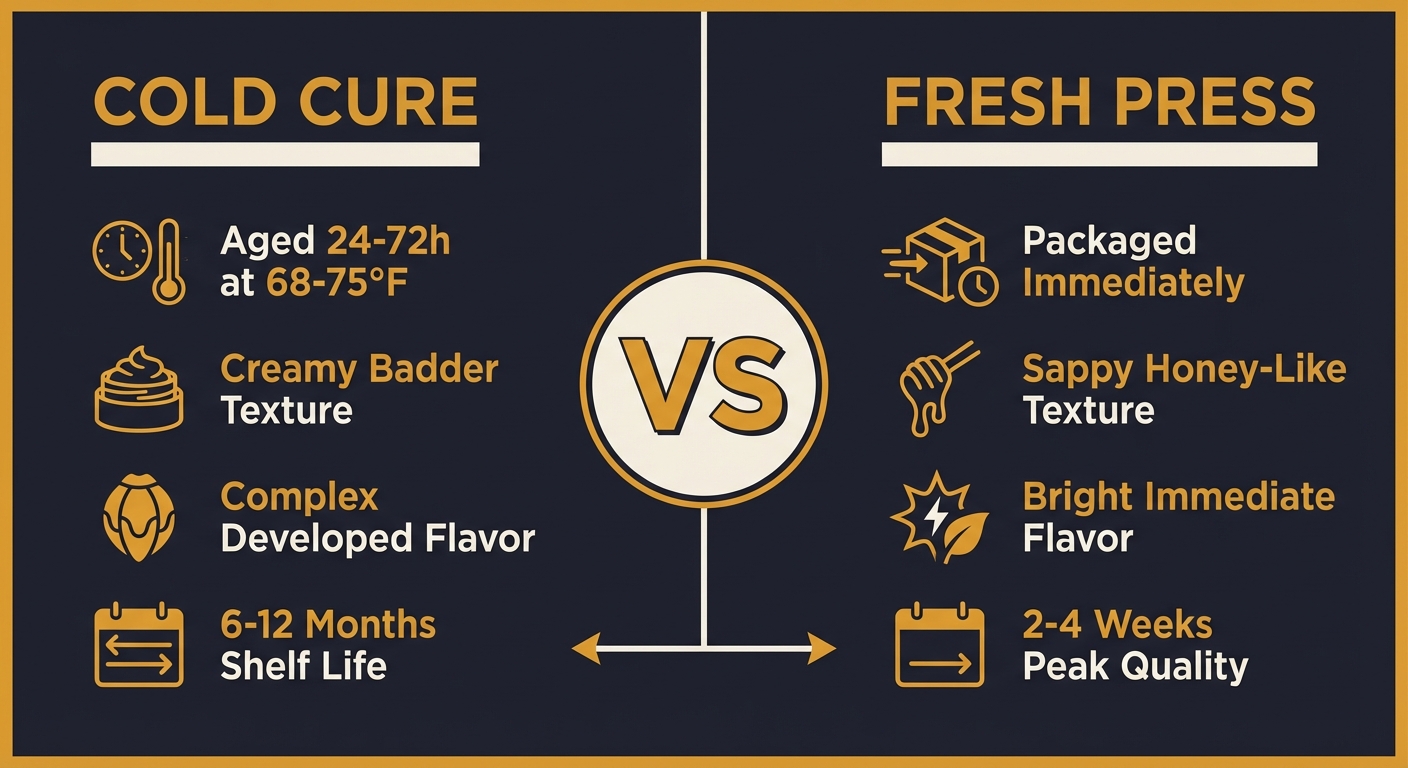
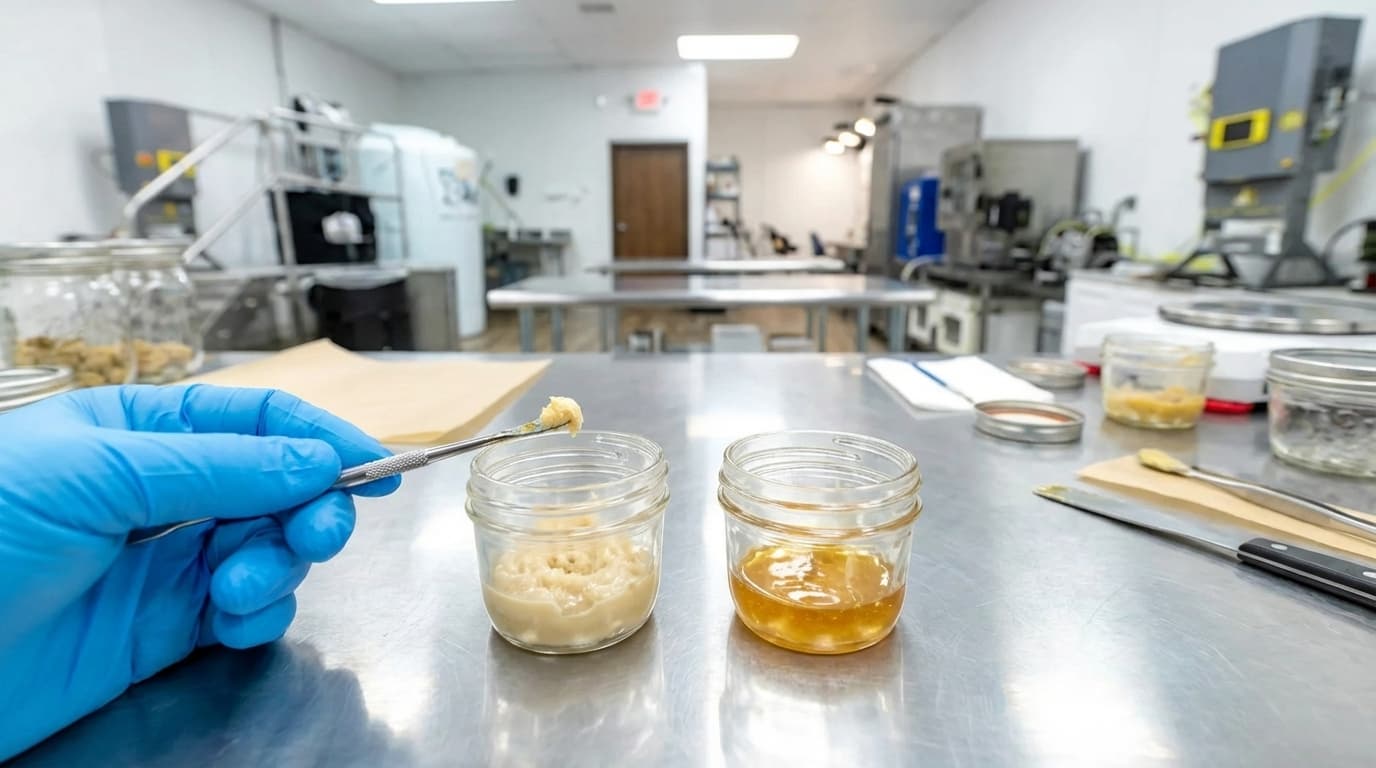
Cold cure rosin is aged at controlled low temperatures for days or weeks to develop a creamy, badder-like consistency, while fresh press rosin is the immediate product from the rosin press with a sappier, more fluid texture. Fresh press maintains the original terpene profile directly from pressing, whereas cold cure develops different flavor compounds through the controlled aging process. Both start with the same pressing technique but diverge in post-processing methods. When processors examine fresh press that looks fire straight off the press, they often face the decision of whether to package immediately or commit to the cold cure process for enhanced texture development.

Which method produces better quality concentrates?

Neither method is inherently superior in quality — they produce different products for different preferences. Fresh press preserves the immediate terpene profile and offers a more liquid consistency preferred by some consumers. Cold cure develops more complex flavors and a creamier texture through controlled aging. Quality depends more on starting material, pressing technique, and proper storage than on the curing method chosen. Single source operations often run test batches using both methods to determine which approach best showcases their specific cultivars and harvest techniques.

Can you convert fresh press rosin into cold cure rosin?

Yes, fresh press rosin can be converted to cold cure rosin through controlled low-temperature aging typically between 60-70°F for several days to weeks. This process allows the rosin to develop the characteristic creamy texture and evolved terpene profile. However, once rosin has been cold cured, it cannot be returned to its original fresh press state. Many processors will cold cure their fresh press a few times throughout a batch to create product variety, testing small amounts before committing entire yields to the aging process.

How do extraction yields compare between these methods?

Both methods produce identical initial yields since they use the same pressing process — the difference occurs only in post-processing. Fresh press rosin maintains its original weight from the press, while cold cure may experience minimal weight loss through the aging process due to slight terpene volatilization. Yield differences are negligible, typically less than 1-2% between the two methods. Commercial processors appreciate that both methods offer the same return on starting material investment.

Product and Processing Questions

What temperatures are used for cold cure processing?

Cold cure rosin is aged at temperatures between 60-70°F (15-21°C) in controlled environments for periods ranging from 72 hours to several weeks. This temperature range allows for gradual nucleation and texture development without degrading cannabinoids or losing excessive terpenes. Temperatures above 75°F can accelerate the process too quickly, while temperatures below 55°F may not achieve proper curing. Some processors use freeze dryer equipment for specialized applications, though traditional controlled-temperature aging remains the standard approach for cold cure development.

What consistency should fresh press rosin have?

Fresh press rosin typically exhibits a sappy, honey-like consistency that flows at room temperature and may contain some graininess from trichome structure. The texture ranges from translucent amber to opaque depending on the starting material and pressing parameters. Fresh press should be pliable and somewhat sticky, without being overly liquid or completely solid. Quality fresh press that looks great will maintain structural integrity when manipulated with a dab tool while remaining pliable enough for easy handling and portioning.

How long does the cold cure process take?

Cold cure rosin typically requires 3-14 days to reach optimal consistency, depending on desired texture and environmental conditions. Some processors extend cold curing to 21-30 days for maximum flavor development. The process is complete when the rosin achieves a uniform, creamy badder-like consistency throughout. Processors often check their curing rosin every few days to monitor texture development and determine optimal completion timing.

What equipment is needed for each method?

Fresh press requires only a rosin press, collection tools, and immediate packaging materials. Cold cure processing additionally requires controlled temperature storage (wine coolers or dedicated curing chambers work well), humidity monitoring equipment, and sealed containers for the aging period. Both methods benefit from proper scales, parchment paper, and temperature monitoring tools. Essential accessories include food grade silicone containers for curing, dab tool sets for handling and sampling, and precise temperature controllers to maintain consistent curing environments.

What does a typical press setup and process look like?

Most commercial press setups include a hydraulic or pneumatic rosin press with heated plates, temperature controllers, and pressure gauges. The process starts with plant material preparation - whether fresh frozen material or cured flower in rosin bags. Plates are preheated to optimal temperatures (typically 180-220°F depending on material), and pressure is applied gradually over 60-120 seconds. Many processors use a jar test method to determine optimal parameters for each batch. The first time running new material, processors typically start with lower temperatures and shorter times to avoid producing dark crystal formations that indicate too hot pressing conditions. Fresh frozen material often requires slightly different parameters than cured material. Every time material is pressed, processors monitor color and consistency to maintain quality standards. Proper bubble bags are essential for hash rosin production, where the resulting pressed material may undergo fresh press packaging or cold cure processing depending on market demands and material characteristics.

How do pressing techniques affect final product choice?

Pressing temperature and pressure directly influence whether rosin benefits more from fresh press or cold cure processing. Material pressed at lower temperatures often produces rosin that looks fire as fresh press, maintaining exceptional terpene profiles that shine without aging. Higher-temperature presses may yield rosin that benefits significantly from cold cure processing to develop optimal texture and flavor complexity. Heat retention in pressing equipment affects consistency - plates that maintain steady temperatures produce more predictable results for both processing paths. Many processors create temple ball formations during pressing when material has optimal moisture content and pressing parameters align perfectly.

Storage and Handling Questions

How should fresh press rosin be stored?

Fresh press rosin should be stored in airtight glass containers in refrigerated conditions between 36-40°F to maintain its consistency and prevent degradation. Avoid exposure to light, heat, and air which can cause terpene loss and texture changes. Fresh press has a shorter optimal storage period than cold cure, typically maintaining peak quality for 2-4 weeks when properly stored. Many processors use mason jar storage systems for both short-term and long-term storage needs. Food grade containers are essential for maintaining product purity and preventing contamination during storage periods.

What are the storage requirements for cold cure rosin?

Cold cure rosin stores well in sealed glass containers at room temperature or slightly cooler (65-75°F) due to its stable texture and reduced volatility. The curing process creates a more shelf-stable product that maintains quality for months when kept in dark, cool conditions. Refrigeration extends storage life but is not strictly necessary for cold cure products. Mason jar containers work well for cold cure storage, allowing for easy access while maintaining proper sealing. The stable consistency makes cold cure easier to handle with a dab tool even after extended storage periods.

Which method has better long-term stability?

Cold cure rosin demonstrates superior long-term stability due to the controlled aging process that reduces volatile terpene content and creates a more stable texture. Fresh press rosin is more volatile and prone to consistency changes over time, requiring more careful storage conditions. Cold cure products can maintain quality for 6-12 months, while fresh press typically peaks within the first month. This stability difference significantly impacts commercial distribution timelines and inventory management strategies.

Commercial and Market Questions

Which style commands higher market prices?

Market pricing varies by region and consumer preference, but cold cure rosin often commands premium prices due to the additional processing time and developed flavor profile. Fresh press appeals to consumers seeking immediate terpene intensity and may price similarly to cold cure. Both typically price higher than traditional solvent-based concentrates due to solventless processing methods. Single source producers often find they can command premium pricing for both styles when emphasizing their controlled cultivation and extraction processes.

What are the packaging considerations for each type?

Fresh press requires packaging that accommodates its fluid consistency, typically using shallow, wide containers to prevent difficult extraction. Cold cure's stable texture allows for various container shapes and sizes since it maintains its form. Both benefit from opaque or UV-resistant packaging to prevent light degradation, with fresh press requiring more robust sealing due to higher terpene volatility. Food grade packaging materials are essential for both products to maintain purity and meet regulatory requirements in commercial markets.

Which method is better for large-scale production?

Fresh press offers advantages for high-volume production due to immediate packaging and distribution without aging requirements. Cold cure requires additional infrastructure for controlled curing environments and longer production timelines. However, cold cure's stability may reduce losses during distribution and storage, offsetting some production complexity. Large-scale operations often run both methods simultaneously to serve different market segments. The ability to process material that looks great as fresh press while simultaneously running cold cure batches maximizes market coverage and revenue opportunities.

How do lab testing results differ between methods?

Fresh press typically shows higher total terpene percentages due to minimal processing and immediate testing after extraction. Cold cure may show slightly lower terpene totals but often demonstrates more complex terpene profiles due to the aging process. Cannabinoid percentages remain relatively consistent between methods when processed and stored properly. Testing laboratories often note textural differences in their handling procedures, with fresh press requiring more careful sampling techniques due to its fluid nature.

What consumer education is needed for each product?

Fresh press requires education about proper storage, handling of fluid consistency, and optimal consumption timing for peak terpene expression. Cold cure consumers need information about the aging process benefits, storage flexibility, and texture expectations. Both require general solventless concentrate education about quality indicators and storage best practices. Retailers often find that demonstrating proper dab tool techniques and explaining the visual differences helps consumers understand the value proposition of each processing method.

Advanced Processing and Quality Control

How do processors determine optimal pressing parameters?

Processors typically start with baseline parameters and adjust based on material characteristics. Fresh frozen material often requires lower temperatures and shorter press times compared to cured flower. The first time pressing new genetics or harvest batches, processors document temperature, pressure, and time combinations that produce the best yield and quality. Many use systematic approaches, adjusting one variable at a time while monitoring color and consistency. Successful parameters are documented and replicated for consistent results every time that material is processed. Advanced setups incorporate data logging to track which parameters produce rosin that looks fire consistently across different material batches.

What role does starting material play in final product choice?

Starting material significantly influences whether fresh press or cold cure processing is preferred. Fresh frozen plant material often produces rosin that benefits from cold cure processing to develop optimal texture and flavor complexity. Lower-grade material may perform better as fresh press to maximize immediate terpene expression before degradation occurs. High-quality cured material can excel in both processing methods, allowing processors to choose based on market demand and storage capabilities. Single source operations have the advantage of controlling cultivation specifically for their preferred processing methods, optimizing harvest timing and drying techniques accordingly.

How do processors manage quality control between methods?

Quality control protocols differ between fresh press and cold cure processing. Fresh press requires immediate evaluation and packaging to capture peak quality, while cold cure allows for quality assessment throughout the aging process. Processors monitor temperature logs, visual consistency changes, and terpene retention throughout both processes. Documentation includes pressing parameters, curing conditions, and final product characteristics to ensure consistent results across batches. Many facilities implement systematic sampling schedules, checking products a few times throughout processing to maintain consistency standards.

What consumption equipment considerations apply to each method?

Fresh press rosin's fluid consistency works well with terp slurper style dab rigs that accommodate flowing concentrates, while cold cure's stable texture suits traditional nail setups. Terp pearls can enhance vaporization of both consistencies, though fresh press may require different heating techniques due to its flow characteristics. Heat retention in consumption equipment affects flavor delivery - red hot surfaces can degrade the delicate terpene profiles that make both processing methods valuable. Quality dab tool selection becomes important for both consistencies, with different tip styles working better for each texture type.

How do seasonal factors affect processing decisions?

Ambient temperature and humidity significantly impact both processing methods. Summer heat can accelerate cold cure processing beyond optimal parameters, while winter conditions may extend curing timelines. Fresh press consistency changes more dramatically with temperature fluctuations, requiring careful climate control during processing and packaging. Processors often adjust their product mix seasonally, running more cold cure during cooler months when temperature control is easier, and focusing on fresh press during periods when immediate processing and packaging are more feasible. These seasonal considerations directly impact production planning and inventory management for commercial operations.

Have additional questions about cold cure vs fresh press rosin processing? Our reference library contains detailed processing guides, storage specifications, and market analysis for cannabis concentrate producers. Contact our team for specific technical questions or browse our comprehensive rosin production resources.