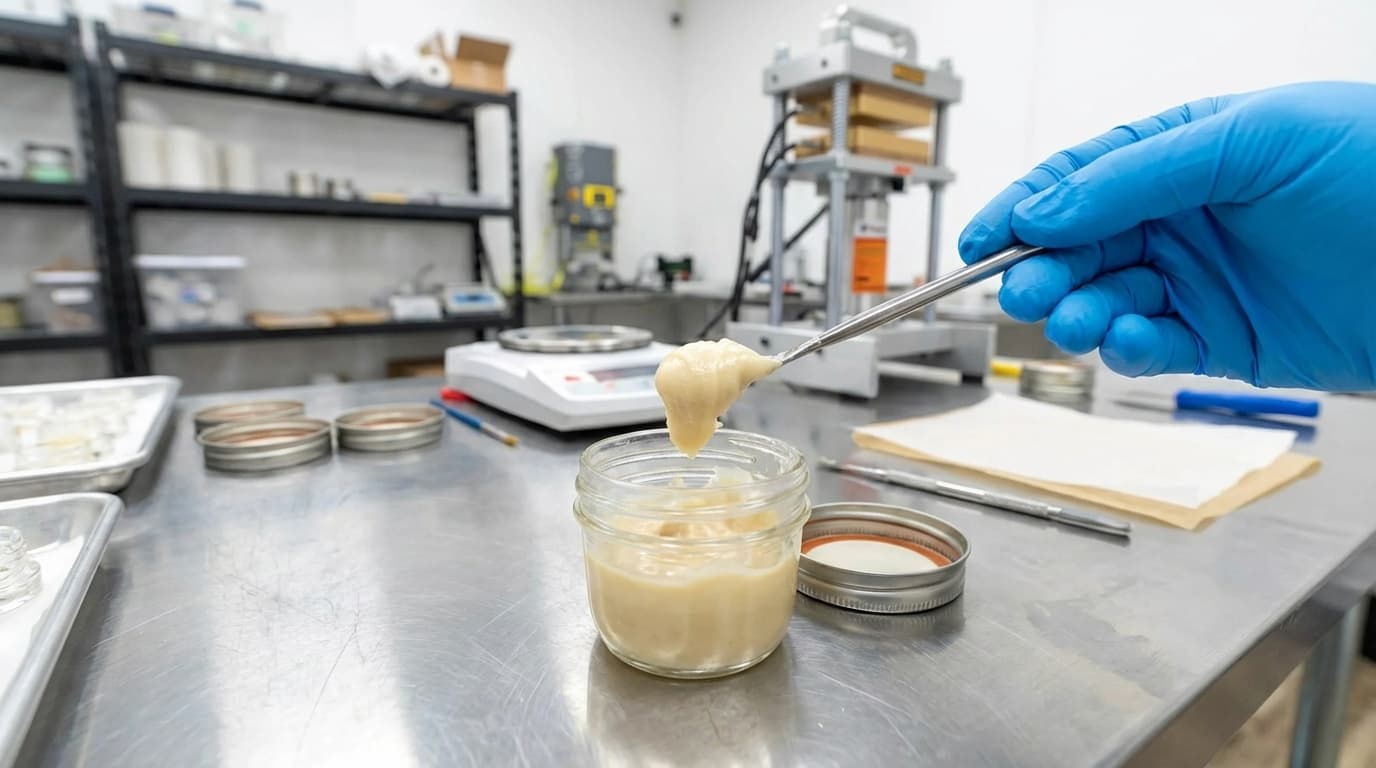
Cold cure rosin is solventless hash rosin that has been processed at room temperature for 24-72 hours to develop a creamy, badder-like consistency. Unlike fresh-pressed rosin that maintains its original texture, cold cure rosin undergoes controlled nucleation at ambient temperatures to transform from its initial state into a smoother, more workable concentrate. This process creates a product with enhanced terpene expression and altered physical properties.
How Cold Curing Works
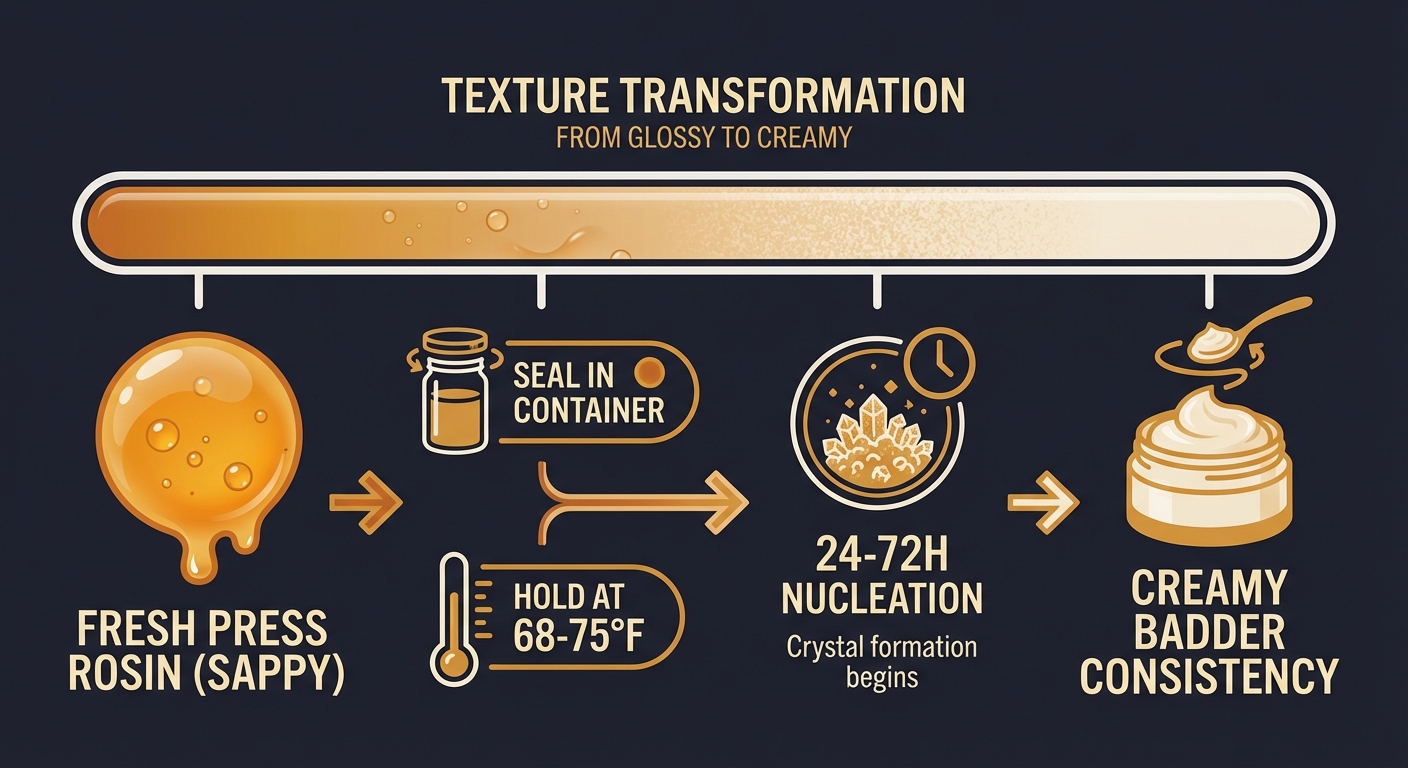
The cold cure process involves storing freshly pressed rosin in sealed containers at room temperature, typically between 68-75°F, for one to three days. During this period, the rosin's cannabinoid and terpene compounds naturally separate and reorganize through nucleation. The result is a texture change from the original pressed consistency to a creamier, more homogeneous product.
Cold cure rosin differs from heat-cured concentrates because it relies solely on time and ambient temperature rather than applied heat. This gentle process preserves volatile terpenes that might be lost during hot curing methods. The nucleation process causes the formation of small crystals within the rosin matrix, creating the characteristic smooth texture associated with cold cure products.
Producers typically start with high-grade bubble hash or fresh frozen material to create the base rosin before beginning the cold cure process. The quality of the starting material directly impacts the final cold cure product's consistency and stability.
The process requires careful monitoring of environmental conditions. If temperatures run too high during the curing period, the delicate nucleation process can be disrupted, leading to inconsistent textures or terpene loss.
Cold Cure vs. Other Rosin Textures
Cold cure rosin is frequently confused with live rosin, but these terms describe different aspects of concentrate production. Live rosin refers to the starting material (fresh frozen cannabis), while cold cure describes the post-processing technique. A product can be both live rosin and cold cure rosin if it starts with fresh frozen material and then undergoes cold curing.
Many people also confuse cold cure rosin with jam or badder made from other extraction methods. While the final textures may appear similar, cold cure rosin is exclusively solventless and processed at room temperature. BHO badder or jam involves solvent extraction and often requires heat purging, creating different chemical profiles despite similar visual appearance.
Fresh press rosin represents another common point of confusion. Fresh press maintains the original texture immediately after pressing, while cold cure specifically refers to rosin that has undergone the time-dependent nucleation process. Some dispensary menus incorrectly use these terms interchangeably, but they describe distinct processing stages, see our cold cure vs. fresh press comparison for a full breakdown.
Why Cold Curing Matters
Understanding cold cure rosin helps consumers make informed purchasing decisions based on texture preferences and terpene profiles. Cold cure typically offers enhanced flavor expression compared to fresh press rosin from the same starting material, as the nucleation process can concentrate and redistribute terpene compounds.
For retailers and budtenders, accurately identifying cold cure rosin prevents menu confusion and helps customers understand what they're purchasing. The processing method affects storage requirements, shelf life, and handling characteristics, which impacts both inventory management and customer satisfaction.
The distinction also matters for pricing transparency, as cold cure rosin often commands premium prices due to the additional processing time and labor involved. Consumers should understand they're paying for both the base rosin quality and the specialized post-processing technique.
How to Identify Quality Cold Cure
Visual Indicators
- Smooth, creamy texture similar to badder or frosting
- Uniform consistency throughout the product
- Light to medium amber coloration, depending on starting material
- No visible separation or layering
Storage Requirements
- Maintain refrigerated storage (35-45°F) for long-term preservation
- Use airtight containers to prevent terpene loss
- Avoid temperature fluctuations that can affect texture stability
- Keep away from direct light and heat sources
Quality Indicators
- Strong terpene aroma indicating proper preservation
- Consistent texture without crystallization or separation
- Easy workability at room temperature
- Clean appearance without dark spots or contamination
- Appropriate consistency that doesn't change dramatically with minor temperature variations
Further Reading
- Rosin (extraction), Wikipedia
- Cold Curing vs Warm Curing Rosin, The Press Club
- How to Cure Rosin, LowTemp Plates
Cold Cure Rosin FAQ
How long does the cold cure process take?
Cold cure rosin typically requires 24-72 hours at room temperature to achieve the desired consistency. The exact timing depends on the starting material's moisture content, terpene profile, and desired final texture. Some producers may extend the process to 5-7 days for specific consistency goals.
Can you cold cure any type of rosin?
Most high-quality rosin can undergo cold curing, but the results vary based on the starting material's composition. Hash rosin typically cold cures more predictably than flower rosin due to its higher terpene content and cleaner cannabinoid profile. Lower-grade starting material may not develop the characteristic creamy texture.
Does cold cure rosin have better flavor than fresh press?
Cold cure rosin often exhibits more pronounced terpene flavors due to the nucleation process concentrating volatile compounds. However, flavor preference is subjective, and some consumers prefer the bright, immediate flavors of fresh press rosin. The cold cure process tends to mellow and integrate flavors rather than eliminate them.
How should cold cure rosin be stored long-term?
Store cold cure rosin in airtight glass containers in the refrigerator at 35-45°F for optimal preservation. Avoid freezing, which can damage the texture, and minimize temperature fluctuations during storage. Properly stored cold cure rosin maintains quality for several months.
Why does some cold cure rosin separate or change texture over time?
Texture changes typically result from temperature fluctuations, air exposure, or starting material quality issues. High-quality cold cure rosin should maintain its consistency when stored properly, while lower-grade products may experience separation or crystallization over time.
Is cold cure rosin more potent than other rosin types?
Cold cure rosin doesn't inherently contain higher cannabinoid percentages than other rosin types from the same starting material. The potency depends primarily on the quality of the input material rather than the post-processing technique. Cold curing affects texture and terpene expression, not cannabinoid concentration.
How do I know if my cold cure rosin was processed correctly?
Properly processed cold cure rosin maintains consistent texture, strong terpene aroma, and uniform coloration throughout. Poor processing often results in separation, inconsistent texture, or diminished flavor profiles.
Cold cure rosin represents a specific post-processing technique that transforms fresh rosin into a creamy, flavorful concentrate through controlled nucleation at room temperature. Understanding this process helps distinguish it from other rosin types and extraction methods, enabling informed decisions about storage, handling, and expectations.