Bubble Hash at a Glance
Bubble hash is a solventless cannabis concentrate made by agitating cannabis material in ice water to separate trichomes, then filtering the mixture through graduated mesh screens called bubble bags. The process creates a refined product that ranges from sandy textures to full-melt consistency depending on micron size and starting material quality. This reference explains how bubble hash differs from other concentrates and what quality indicators to recognize.
How Bubble Hash Is Made
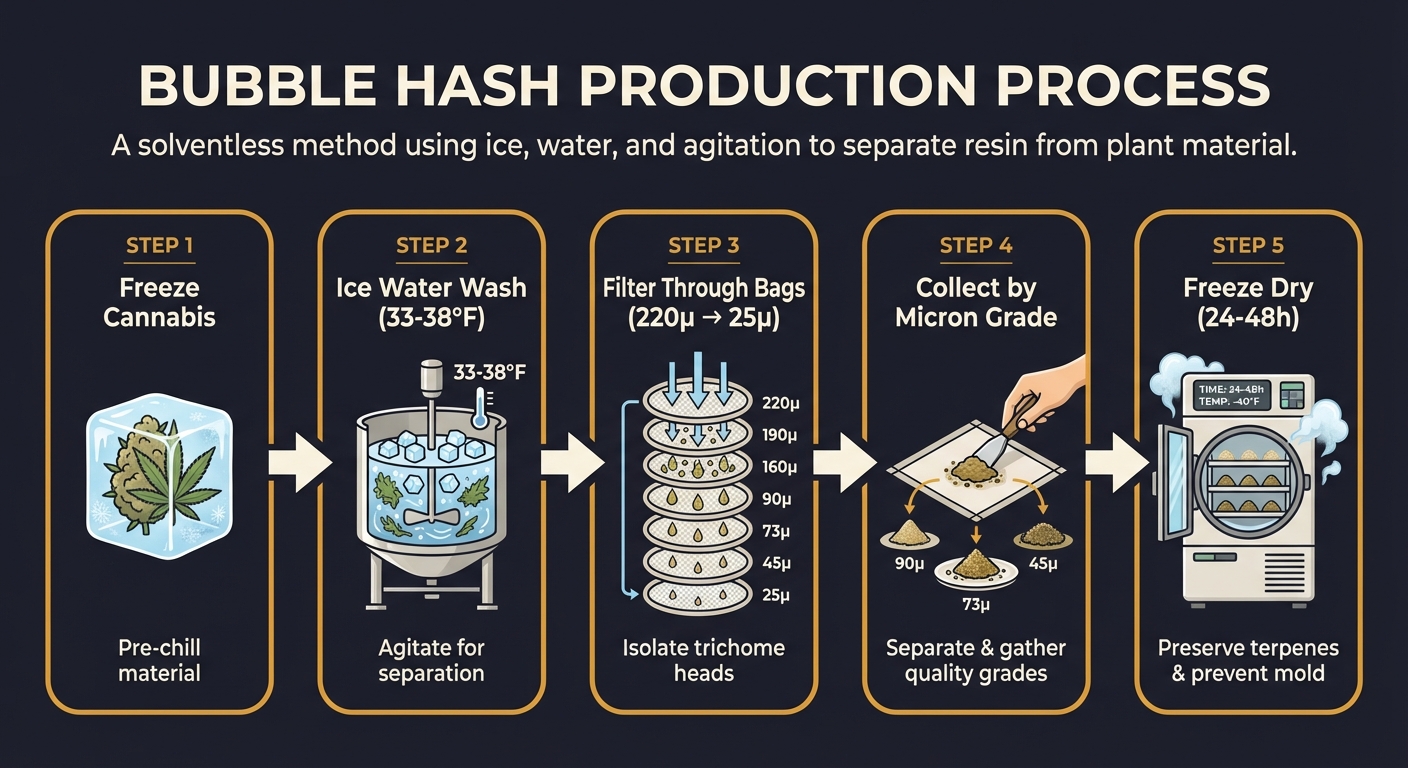
Bubble hash gets its name from the bubble bags used in production—mesh screens with micron ratings typically ranging from 220 microns down to 25 microns. The ice water extraction method relies on temperature and agitation to freeze and break trichome heads from plant material without chemical solvents.
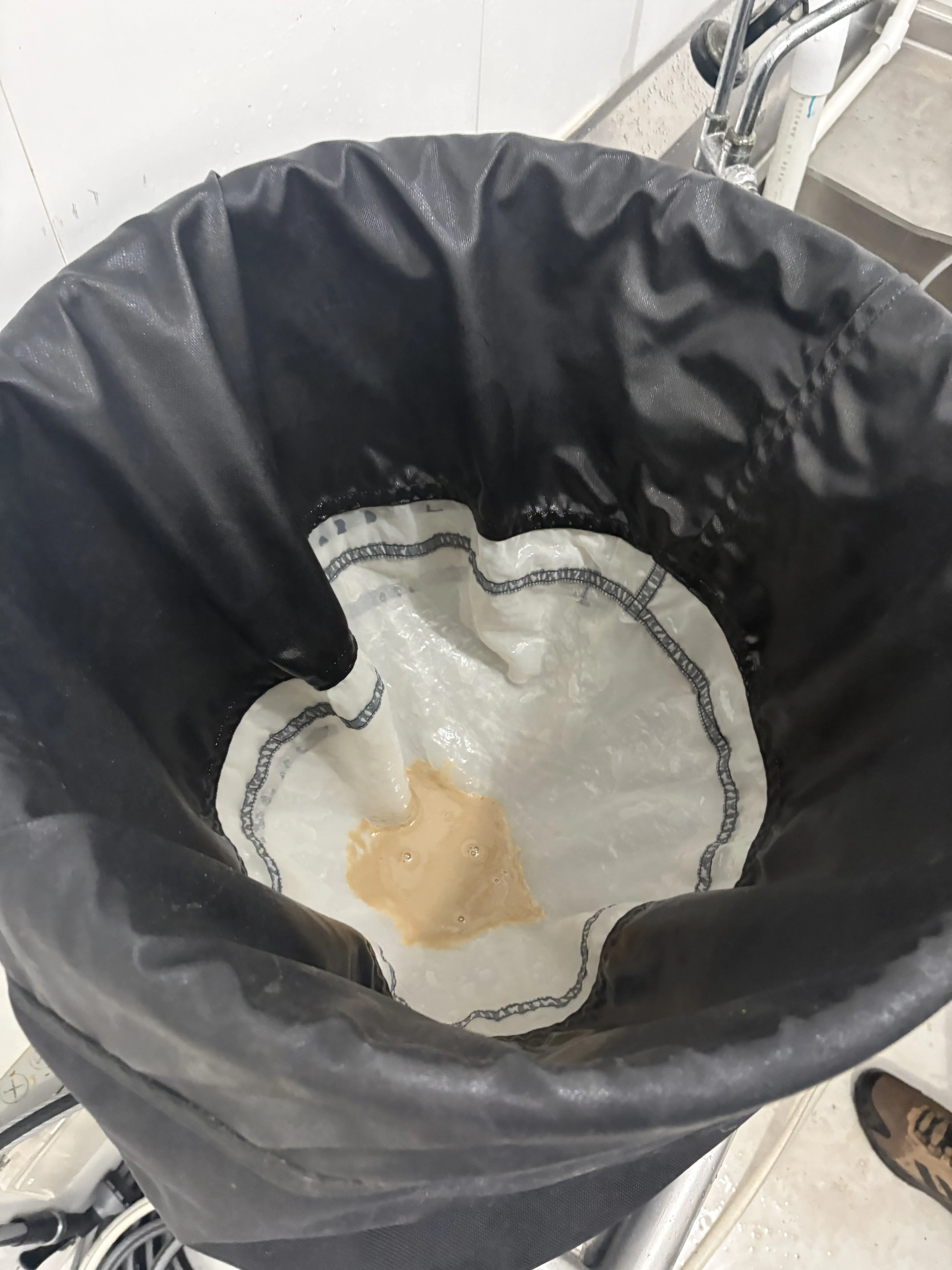
The full process—from washing to drying—is covered in detail in how to make bubble hash. In brief, the process involves submerging cannabis in ice water, agitating the mixture manually or with a washing machine, then pouring the water through progressively finer screens. Each screen captures trichomes of different sizes, with finer micron bags generally producing higher-grade material. The collected material is dried and pressed into hash.
Different micron ranges produce distinct qualities. Screens between 73-90 microns typically yield the highest grade material, while 120-160 micron ranges produce mid-grade hash suitable for pressing into rosin. Larger micron captures often contain more plant material and rate lower in quality.
Community producers often operate as single source, meaning one team handles everything from growing through washing and drying, which creates more consistent results. Many extractors perform a jar test before full production runs—placing a small sample in ice water to evaluate trichome separation quality. This preliminary test helps determine optimal agitation time and prevents overworking material that could lead to contamination.
Bubble Hash vs. Other Hash Types
Bubble hash is frequently confused with dry sift hash, another solventless concentrate. Dry sift uses screens without water, relying on mechanical separation at room temperature. Bubble hash requires ice water and produces different textures and colors due to the water extraction process.
Many dispensary menus incorrectly label pressed rosin as bubble hash or use "ice hash" and "bubble hash" interchangeably with rosin products. Bubble hash is the starting material—rosin is what results when bubble hash gets pressed with heat and pressure to extract oils.
Retail descriptions sometimes confuse bubble hash with traditional hand-rubbed hash or pressed kief. Traditional hash uses hand friction or mechanical pressing of plant material, while bubble hash specifically refers to the ice water extraction method. Kief is dry trichomes collected through screens without water processing.
Why Bubble Hash Matters
Understanding bubble hash helps buyers evaluate concentrate quality and production methods. Solventless extraction appeals to consumers avoiding chemical residues, and bubble hash represents one of the most established solventless techniques.
The micron rating indicates expected quality and intended use. Full-melt bubble hash from 73-90 micron screens commands premium pricing and can be consumed directly, while lower grades work better as rosin starting material. Knowing these distinctions helps buyers match products to their intended use and budget.
For producers and retailers, accurate bubble hash labeling ensures compliance and customer satisfaction, since texture, potency, and consumption methods vary significantly across micron grades.
Key Quality Signals
Visual Indicators
- Color ranges from light blonde to dark brown, with lighter colors generally indicating higher grade
- Texture varies from sandy/granular (lower grades) to greasy/oily (full-melt grades)
- Minimal visible plant material in higher micron grades
Melt Quality
- Full-melt: liquefies completely when heated, leaving minimal residue
- Half-melt: bubbles and melts partially but leaves some residue
- Cooking grade: suitable for edibles or pressing but doesn't melt cleanly
Storage Considerations
- For a full breakdown of storing bubble hash, see the dedicated storage guide, short version: cool, dry conditions between 32-50°F
- Use parchment paper or glass containers rather than plastic
- Avoid temperature fluctuations that cause condensation
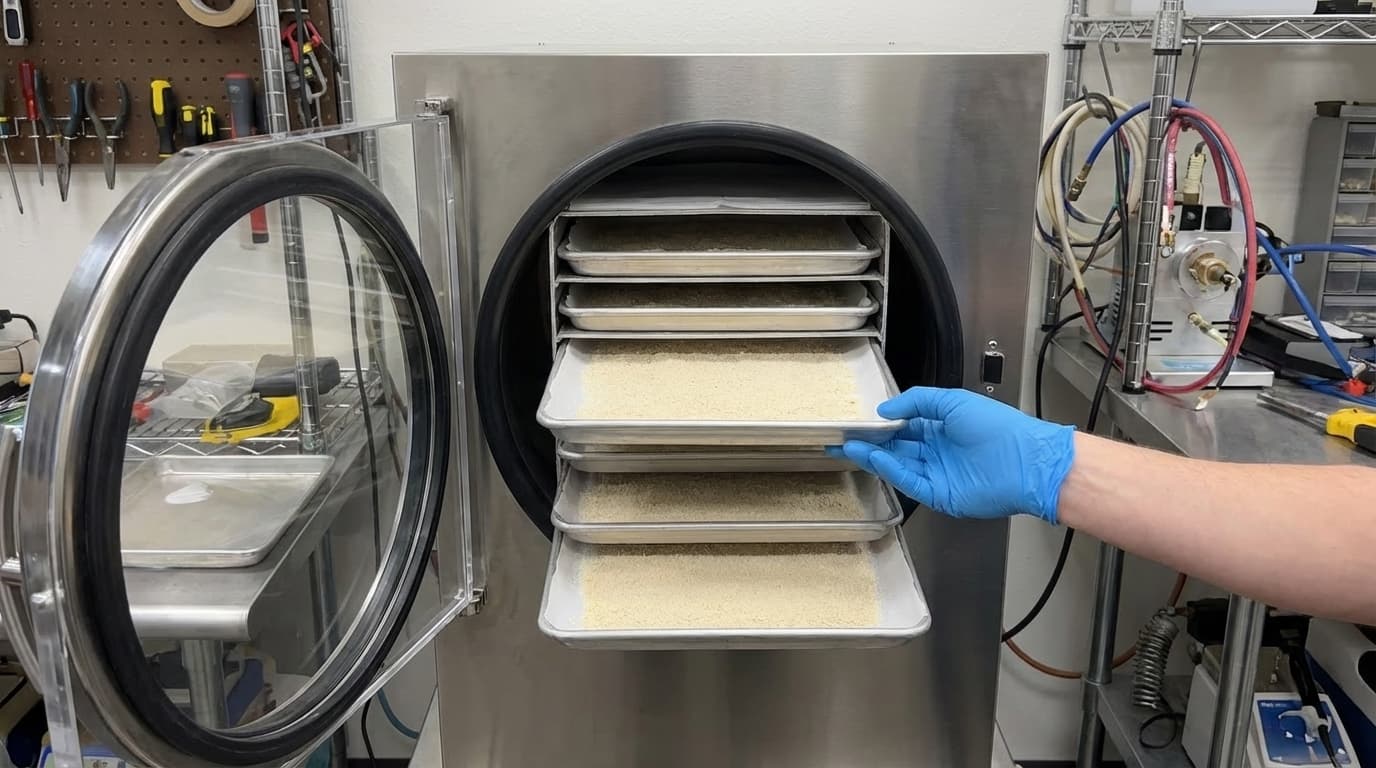
- Freeze dryer equipment produces optimal moisture removal for long-term storage
Common Production Setups
Home extractors typically start with basic bubble bag kits containing 4-8 mesh screens, a 5-gallon bucket, and a wooden paddle for agitation. This entry-level setup produces quality results but requires manual stirring and careful timing to avoid overworking the material.
Mid-level producers often upgrade to washing machine extraction, using modified top-loading machines for consistent agitation. This method reduces labor and provides more uniform results, though temperature control becomes more critical since machines can generate heat if run too long.
Commercial operations employ purpose-built extraction machines with temperature controls, automated agitation cycles, and integrated drainage systems. These setups include chillers to maintain optimal water temperature and spray bars for efficient rinsing during collection.
Regardless of setup size, successful extraction requires maintaining ice water temperature below 40°F throughout the process. Many producers add fresh ice between agitation cycles, and some use glycol chillers for precise temperature control.
Further Reading
- Hashish, Wikipedia
- Bubbleman's World, YouTube
- What Is Bubble Hash?, Leafly
- How to Make Bubble Hash, PurePressure
Bubble Hash FAQ
How long does bubble hash last in storage?
Properly stored bubble hash maintains quality for 6-12 months when kept in airtight containers at consistent cool temperatures. Higher-grade bubble hash with minimal plant material typically stores longer than lower grades. Signs of degradation include darkening color, harsh taste, or brittle texture.
What micron size produces the best bubble hash?
The 73-90 micron range typically produces the highest quality full-melt bubble hash with optimal trichome head size and minimal contamination. However, different strains may produce peak quality at slightly different micron ranges. Most producers collect multiple grades simultaneously.
Can bubble hash be pressed into rosin?
Yes, bubble hash is premium starting material for rosin pressing, often yielding higher returns than flower pressing. Mid-grade bubble hash (120-160 microns) frequently gets pressed into rosin rather than consumed directly. Pressing temperatures typically range from 160-180°F.
Why does some bubble hash not bubble when heated?
Lower-grade bubble hash contains plant material and contaminants that prevent clean melting and bubbling. Only full-melt grades bubble and liquefy completely when heated. The "bubble" name refers to the bags used in production, not necessarily the heating behavior.
Is bubble hash stronger than flower?
Bubble hash concentrates cannabinoids by removing plant material, typically testing 40-70% THC compared to flower's 15-30% range. However, potency varies significantly based on starting material quality and extraction grade.
What causes bubble hash to turn dark?
Dark coloration usually indicates exposure to heat, light, oxygen, or extended storage time. Starting material quality also affects color—older trim produces darker hash than fresh frozen material. Some darkening occurs naturally during the drying and curing process.
What equipment do I need to start making bubble hash?
Basic bubble hash production requires bubble bags in various micron sizes (typically 220, 160, 120, 90, 73, 45, and 25 microns), a work bucket, stirring paddle, and plenty of ice. A thermometer helps monitor water temperature.
What's the difference between using fresh frozen versus dried material?
Fresh frozen material, stored immediately after harvest without drying, typically produces lighter colored bubble hash with better terpene preservation. Dried and cured material works effectively but may yield darker results. Both approaches can produce quality bubble hash when processed correctly, though fresh frozen often commands higher prices.
Summary
Bubble hash is a solventless concentrate created through ice water extraction and mesh screen filtration, producing different grades based on micron size. Quality ranges from cooking-grade material suitable for pressing to full-melt concentrates that liquefy cleanly when heated. Understanding micron ratings and melt quality helps buyers select appropriate products for their intended use. Production setups range from basic bucket and bag systems for home extractors to commercial washing machines and automated systems.