Fresh Press Rosin at a Glance
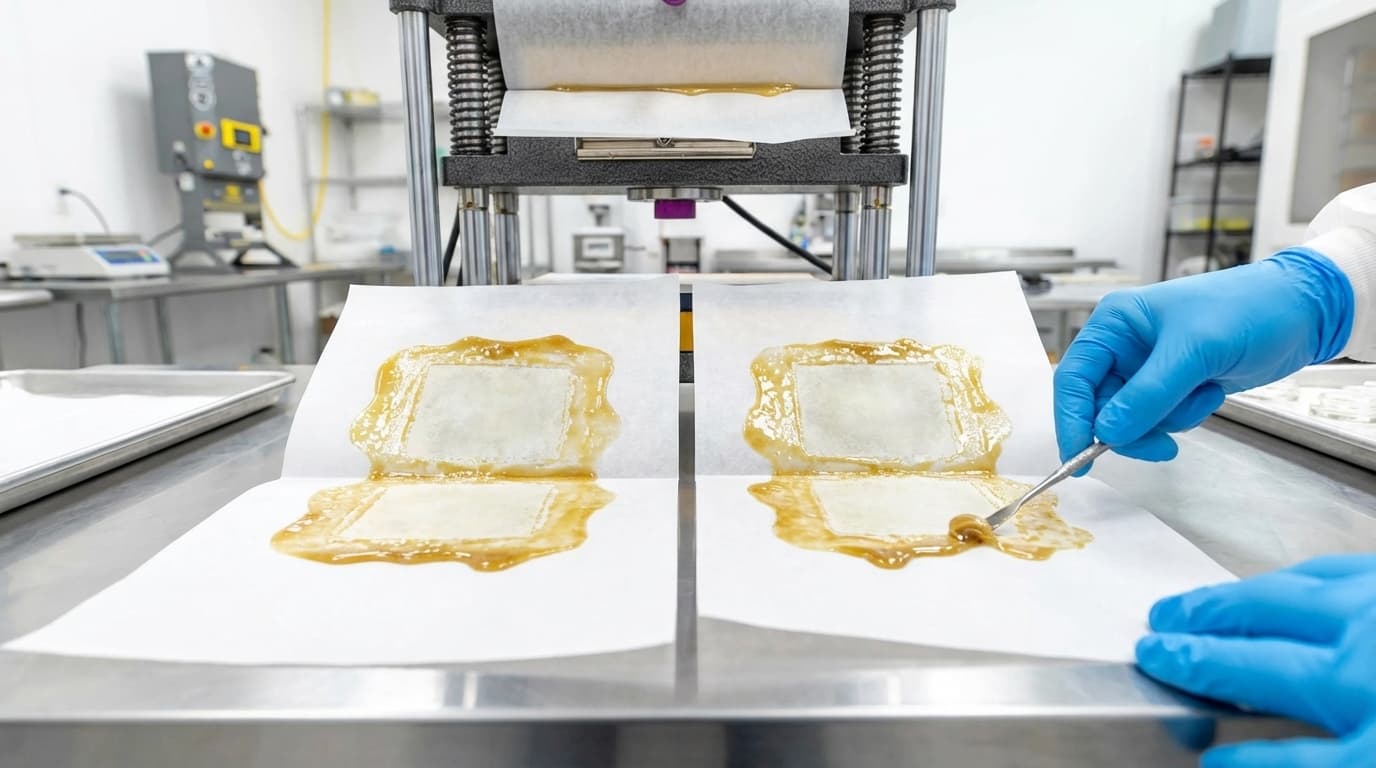
Fresh press rosin is solventless cannabis concentrate made by applying heat and pressure to recently cured cannabis flower or hash, then pressed and packaged immediately without further processing. Unlike other rosin textures that undergo additional manipulation, fresh press maintains its original consistency straight from the press—typically a glossy, amber-colored concentrate with a slightly tacky texture.
How Fresh Press Gets Its Texture
Fresh press rosin represents the most direct form of rosin extraction available. The process involves placing cannabis material between heated plates under controlled pressure, causing the resinous trichomes to melt and separate from plant matter. The resulting concentrate is collected and packaged immediately without cold curing, whipping, or other post-processing techniques.
The term "fresh press" specifically refers to the timing and handling after extraction. While the starting material may be cured flower or aged hash, the rosin itself is considered "fresh" because it hasn't undergone the weeks-long cold curing process that creates badder, jam, or other manipulated textures. Fresh press typically exhibits a translucent to amber appearance with a consistency ranging from sappy to slightly brittle, depending on the starting material's terpene and cannabinoid profile.
Temperature and pressure settings during extraction directly influence the final texture, with lower temperatures generally producing lighter colors and more pronounced terpene retention. When extractors work with fresh frozen plant material that has been processed into bubble hash first, the resulting fresh press often displays enhanced terpene preservation compared to material that underwent traditional drying and curing.
Fresh Press vs. Other Rosin Forms
Fresh press rosin is frequently confused with live rosin, though they represent different categories entirely. Live rosin refers to the starting material—fresh-frozen cannabis processed into bubble hash before pressing. Fresh press describes the post-extraction handling, regardless of whether the source was live material or cured flower.
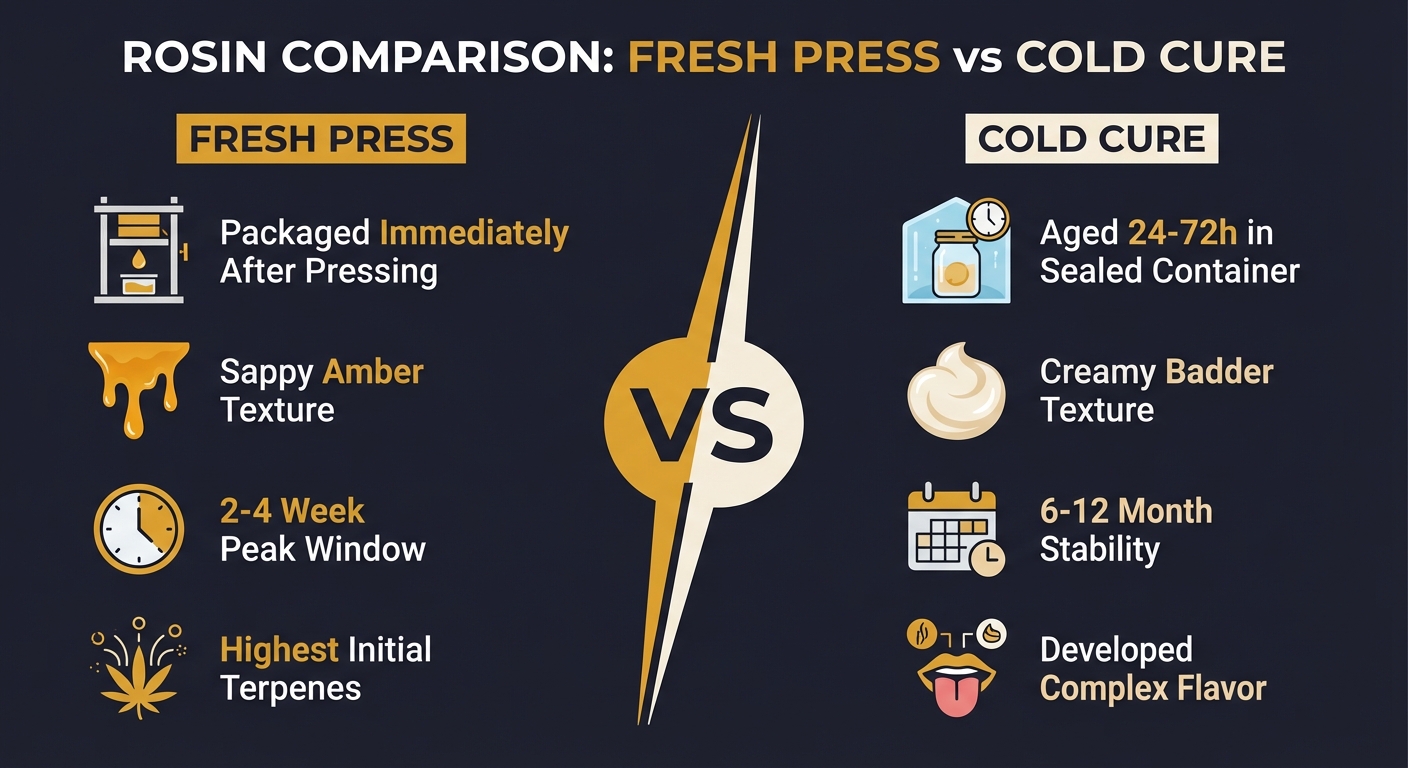
Cold cure rosin represents another common point of confusion. Cold cure starts as fresh press but undergoes weeks of controlled temperature storage to develop a creamy, badder-like consistency. Menu descriptions sometimes use "fresh pressed" and "cold cure" interchangeably, but they indicate opposite approaches to post-extraction processing, the cold cure vs fresh press guide covers the full difference.
Hash rosin also creates confusion in retail settings. Hash rosin indicates the starting material was bubble hash rather than flower, but that hash rosin could be packaged as fresh press or processed into cold cure. The terms describe different aspects of production rather than competing categories.
Some dispensaries incorrectly label any recently made concentrate as "fresh press," but the term specifically applies to rosin's immediate post-press consistency, not the production date.
Why Fresh Press Matters
Understanding fresh press rosin matters because texture directly impacts handling, storage, and user experience. Fresh press typically offers the most immediate representation of the extracted material's natural terpene and cannabinoid profile, since no additional processing has occurred to alter the concentrate's chemical composition.
For buyers, recognizing fresh press helps set proper expectations for consistency and appearance. Fresh press may appear less uniform than cold-cured products, with natural variation in color and texture throughout the container. This variation is normal and doesn't indicate quality issues.
Storage requirements also differ between fresh press and other rosin textures. Fresh press generally maintains its consistency longer when stored in cool, dark conditions, while other textures may continue evolving even under proper storage.
How to Evaluate Fresh Press Rosin
Visual Identification
Authentic fresh press rosin exhibits a glossy, translucent to amber appearance with minimal air incorporation. The surface should appear smooth rather than whipped or deliberately textured. Color ranges from light golden to deep amber, depending on starting material and extraction temperature.
Consistency Markers
Fresh press typically feels slightly tacky or sappy at room temperature. Higher-quality fresh press may show some flexibility when manipulated, while lower-grade material might appear more brittle or crumbly.
Storage Considerations
Store fresh press rosin between 35-45°F in airtight, light-proof containers. Exposure to temperature fluctuations can cause texture changes that alter the original fresh press characteristics. Avoid refrigerator storage in areas with high humidity or frequent temperature changes.
Quality Assessment
High-quality fresh press shows minimal plant matter contamination and maintains consistent color throughout. Avoid products with excessive dark spots, visible plant particles, or dramatic color variations that suggest uneven extraction parameters.
Further Reading
- Rosin (extraction), Wikipedia
- Cold Curing vs Warm Curing Rosin, The Press Club
- What Is Fresh Press Rosin?, PurePressure
FAQ
How long does fresh press rosin maintain its original texture?
Fresh press rosin typically maintains its original consistency for 2-4 weeks when stored properly at 35-45°F. Temperature fluctuations and exposure to air gradually alter the texture, potentially developing into a more badder-like consistency over time.
Can fresh press rosin be made from any cannabis material?
Yes, fresh press rosin can be produced from cured flower, fresh-frozen material, or bubble hash. The "fresh press" designation refers to the immediate packaging after extraction, regardless of the starting material type.
Why does some fresh press rosin look darker than others?
Color variation in fresh press rosin results from extraction temperature, starting material quality, and plant genetics. Higher pressing temperatures generally produce darker colors, while lower temperatures yield lighter, more translucent concentrates.
Is fresh press rosin more potent than other rosin textures?
Fresh press rosin isn't inherently more potent than other textures from the same starting material. Potency depends on the source material's cannabinoid content rather than post-extraction processing methods.
How do I know if fresh press rosin has gone bad?
Degraded fresh press rosin may develop off-odors, dramatic color changes toward brown or black, or excessive dryness and crumbling. Properly stored fresh press maintains its original aroma and flexibility for several weeks.
Can I turn fresh press rosin into other textures at home?
Fresh press can be cold-cured into badder consistency through controlled temperature storage, but this process requires precise temperature control and patience. Most texture transformations are better achieved through professional processing methods.
What's the difference between fresh press from flower versus bubble hash?
Fresh press from bubble hash typically yields higher quality concentrates with better terpene preservation and fewer plant contaminants. Flower rosin fresh press often contains more plant material and may have a slightly different consistency.
Fresh Press Rosin: Final Thoughts
Fresh press rosin provides the most direct access to cannabis concentrate straight from the extraction process, without additional manipulation or curing. Understanding this distinction helps buyers identify authentic fresh press products and set appropriate storage and handling expectations. The key lies in recognizing that fresh press describes timing and processing approach rather than starting material or potency levels.