This FAQ addresses common questions about the differences between live rosin and hash rosin, two distinct cannabis concentrate categories. Both are solventless extracts, but they use different starting materials and production methods. These answers are based on extraction science and real questions from cannabis processors, retailers, and reference users seeking clear technical distinctions.
General Questions
What is the main difference between live rosin and hash rosin?
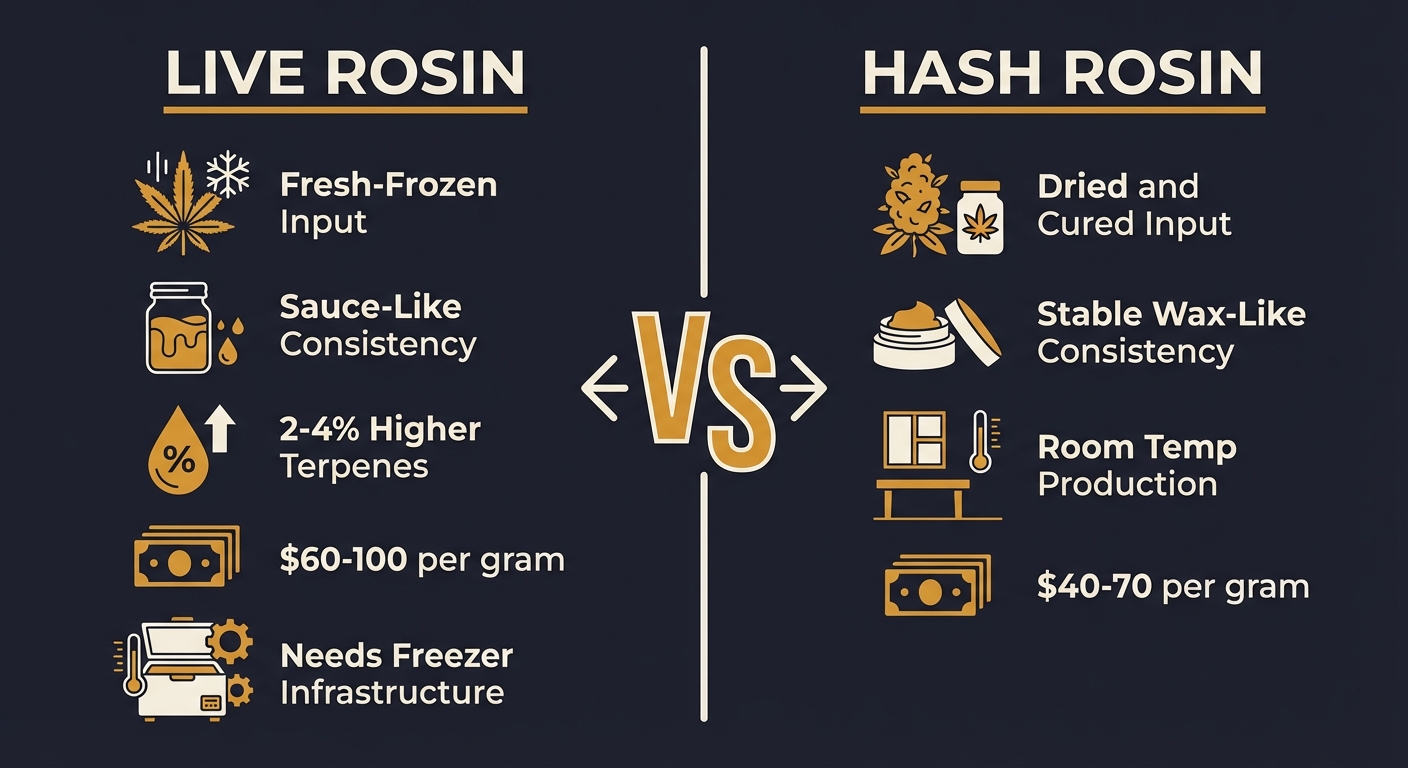
Live rosin is made from fresh-frozen cannabis plants, while hash rosin is made from dried cannabis flower or trim. Live rosin uses plant material that was frozen immediately after harvest without drying or curing. Hash rosin starts with traditionally dried and cured cannabis that may be processed into bubble hash first, then pressed into rosin.
Which type of rosin is considered higher quality?
Live rosin is generally considered premium grade due to the fresh-frozen starting material preserving more terpenes and cannabinoids. The fresh-frozen process prevents degradation that occurs during drying and curing. Hash rosin quality varies significantly based on the starting material grade, with high-grade hash rosin matching live rosin quality in some cases.
Are both live rosin and hash rosin solventless extracts?
Yes, both live rosin and hash rosin are solventless cannabis concentrates produced without chemical solvents like butane or CO2. Both use only ice, water, heat, and pressure during extraction and pressing. This solventless classification distinguishes them from BHO, distillate, and other solvent-based concentrates.
Why do live rosin and hash rosin have different consistencies?
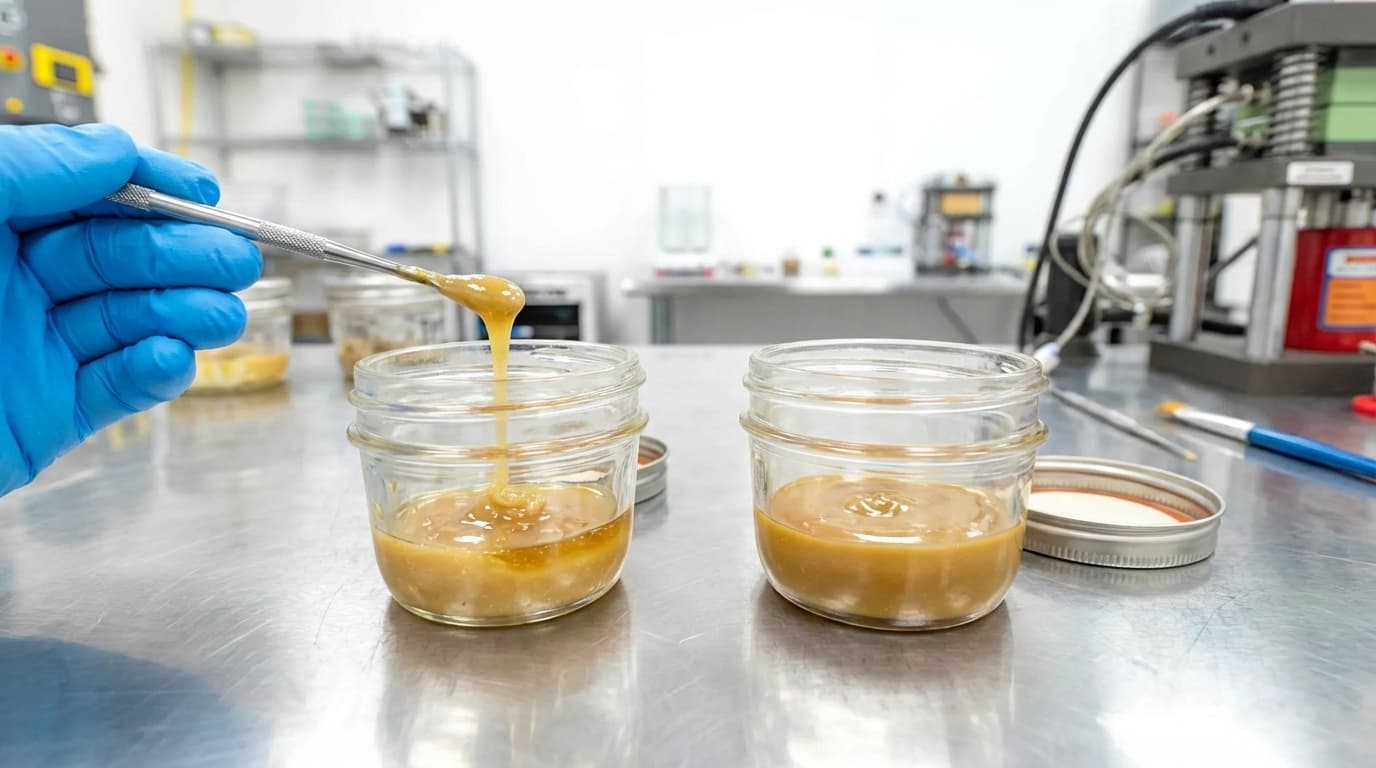
The different starting materials create varying lipid and moisture content that affects final texture. Live rosin often has a more sauce-like or budder consistency due to retained moisture and terpenes from fresh material. Hash rosin typically produces a more stable, wax-like consistency because the dried starting material has lower moisture content.
Product and Processing Questions
Does live rosin require different storage than hash rosin?
Live rosin requires more careful storage due to higher terpene content and moisture levels that make it more volatile. Store live rosin at 36-40°F in airtight containers away from light. Hash rosin is more stable and can be stored at standard refrigeration temperatures of 38-42°F with less risk of terpene loss or texture changes.
Which production method yields more concentrate per pound of material?
Hash rosin typically yields 15-25% more concentrate per pound of starting material compared to live rosin. Fresh-frozen material contains more water weight, reducing the concentration of extractable compounds. Dried material for hash rosin has concentrated cannabinoids and terpenes, leading to higher percentage yields during pressing.
Can you make live rosin and hash rosin using the same equipment?
Yes, both types use the same basic equipment: washing machines for bubble hash, pressing plates, and collection tools. The main difference is temperature control requirements, as live rosin processing needs consistent sub-freezing conditions during washing. Hash rosin can be processed at room temperature, making it less equipment-intensive.
How long does the production process take for each type?
Live rosin production takes 24-48 hours from fresh material to final product, including freeze time and careful low-temperature processing. Hash rosin production varies from 12-24 hours depending on starting material, but doesn't require the extended freezing and temperature-controlled processing that live rosin demands.
Buying and Selection Questions
How can you identify authentic live rosin vs hash rosin in retail products?
Check the product label for "fresh frozen" or "live" terminology, which indicates live rosin made from fresh material. Hash rosin products will specify "hash rosin" or "bubble hash rosin" without fresh-frozen claims. Authentic live rosin typically costs 20-40% more than hash rosin due to processing complexity and material requirements.
What should beginners know before purchasing either concentrate type?
Beginners should understand that both are potent concentrates requiring proper storage and handling equipment. Live rosin offers more complex terpene profiles but requires immediate refrigeration after purchase. Hash rosin provides a more approachable introduction to rosin with greater stability and lower price points while maintaining solventless quality.
Are there price differences between live rosin and hash rosin?
Live rosin typically costs $60-100 per gram wholesale, while hash rosin ranges from $40-70 per gram. The price difference reflects the specialized equipment, energy costs for freezing, and lower yields associated with fresh-frozen processing. Premium hash rosin made from high-grade starting material can approach live rosin pricing.
Technical and Specialized Questions
How do terpene profiles differ between live rosin and hash rosin?
Live rosin preserves more volatile terpenes like limonene and pinene that are lost during traditional drying processes. Hash rosin retains primarily stable terpenes that survive the curing process, creating different aromatic and flavor profiles. Live rosin typically tests 2-4% higher in total terpene content compared to hash rosin from the same cultivar.
Can hash rosin be made from material that was intended for live rosin?
Yes, fresh-frozen material can be used to make hash rosin, but this represents a downgrade in potential product value. Once plant material is frozen for live rosin production, it should be processed as live rosin to maximize the investment in fresh-freezing infrastructure. Converting intended live rosin material to hash rosin wastes the premium processing preparation and the preserved compounds that justify higher pricing.
Which rosin type is better suited for large-scale commercial production?
Hash rosin is better suited for large-scale commercial production due to lower infrastructure requirements and more predictable processing schedules. Live rosin requires significant freezer space, climate-controlled processing areas, and specialized handling protocols that increase operational complexity. Hash rosin can be processed year-round with standard facility requirements.
How do contamination risks differ between live rosin and hash rosin processing?
Live rosin processing carries higher contamination risks due to moisture retention that can support microbial growth if temperature control fails. Fresh-frozen material requires consistent sub-freezing storage to prevent degradation and contamination. Hash rosin processing with properly cured starting material has lower moisture-related contamination risks but requires attention to mold prevention during storage of dried materials.
What common processing mistakes should commercial producers avoid?
For live rosin, producers often underestimate the infrastructure requirements for maintaining consistent freezing temperatures throughout the entire process. Excessive pressing temperatures degrade the terpene profiles that justify premium pricing. Hash rosin production mistakes commonly involve using plant material that wasn't properly cured or stored, resulting in off-flavors or contamination issues.
Further Reading
- Rosin (extraction), Wikipedia
- Live Rosin vs Hash Rosin, PurePressure
- What Is Live Rosin?, Leafly