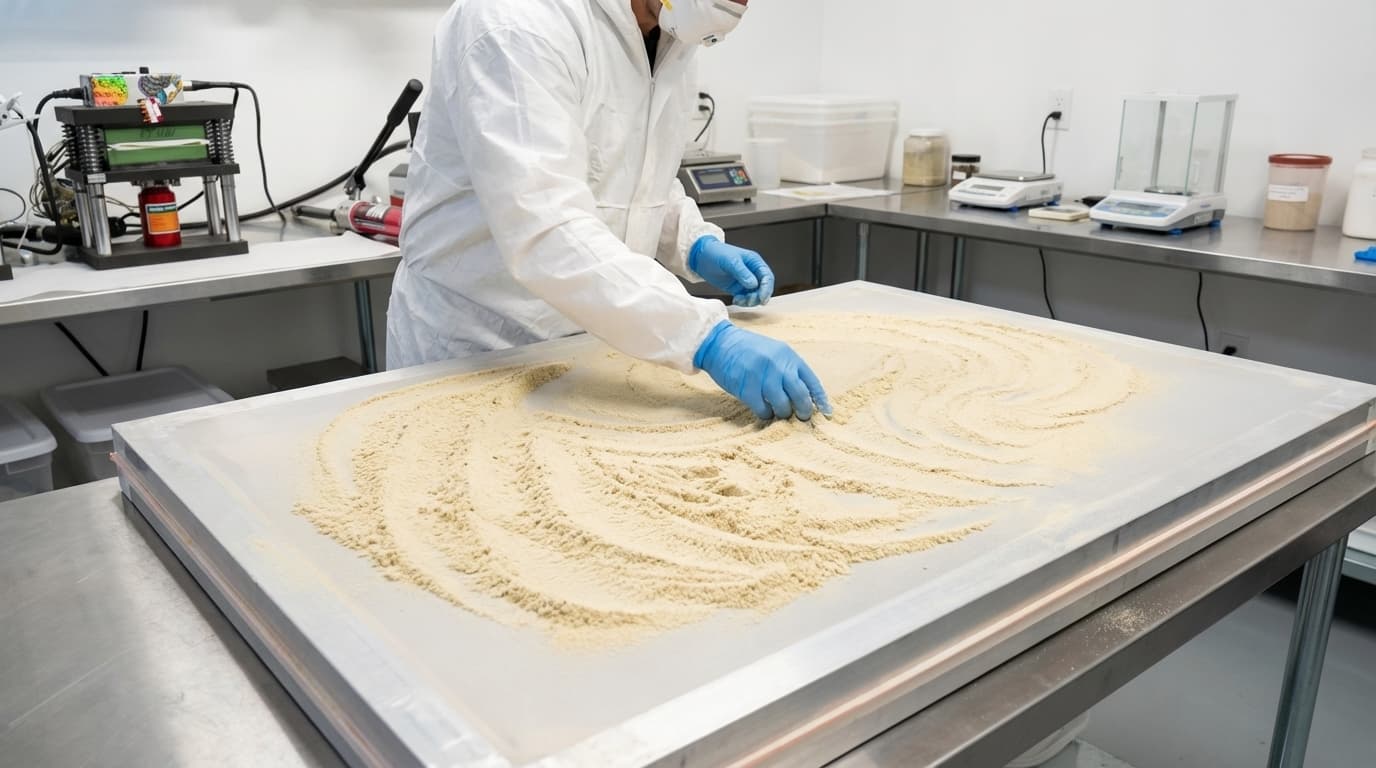
Dry Sift at a Glance
Dry sift is cannabis concentrate made by mechanically separating trichomes from dried cannabis flower using mesh screens without solvents, heat, or moisture. The process produces a sandy, powdery concentrate that ranges from light tan to golden brown depending on purity and starting material. This reference explains the dry sift process, common quality markers, and how it differs from other solventless concentrates.
How Dry Sift Is Made
Dry sift concentrate consists primarily of trichome heads that have been physically separated from cannabis plant material through agitation and screening. The process uses a series of progressively finer mesh screens, typically ranging from 120 to 220 microns, to filter out plant matter while collecting trichomes.
The technique relies on the brittle nature of trichome stalks when cannabis is properly dried and cured. Gentle agitation causes trichome heads to break away from their stalks and fall through screen openings, while larger plant particles remain above. Multiple screening passes with different mesh sizes create increasingly refined grades of dry sift.
Quality dry sift appears as a fine powder with minimal visible plant contamination. The color ranges from pale blonde to golden amber, with lighter colors generally indicating higher purity. The consistency should be dry and powdery rather than sticky or clumpy, though high-grade dry sift may become slightly tacky when warmed.
Fresh frozen material cannot be used for dry sift production since the moisture content prevents proper trichome separation. The starting cannabis must be thoroughly dried and often conditioned at room temperature for optimal results.
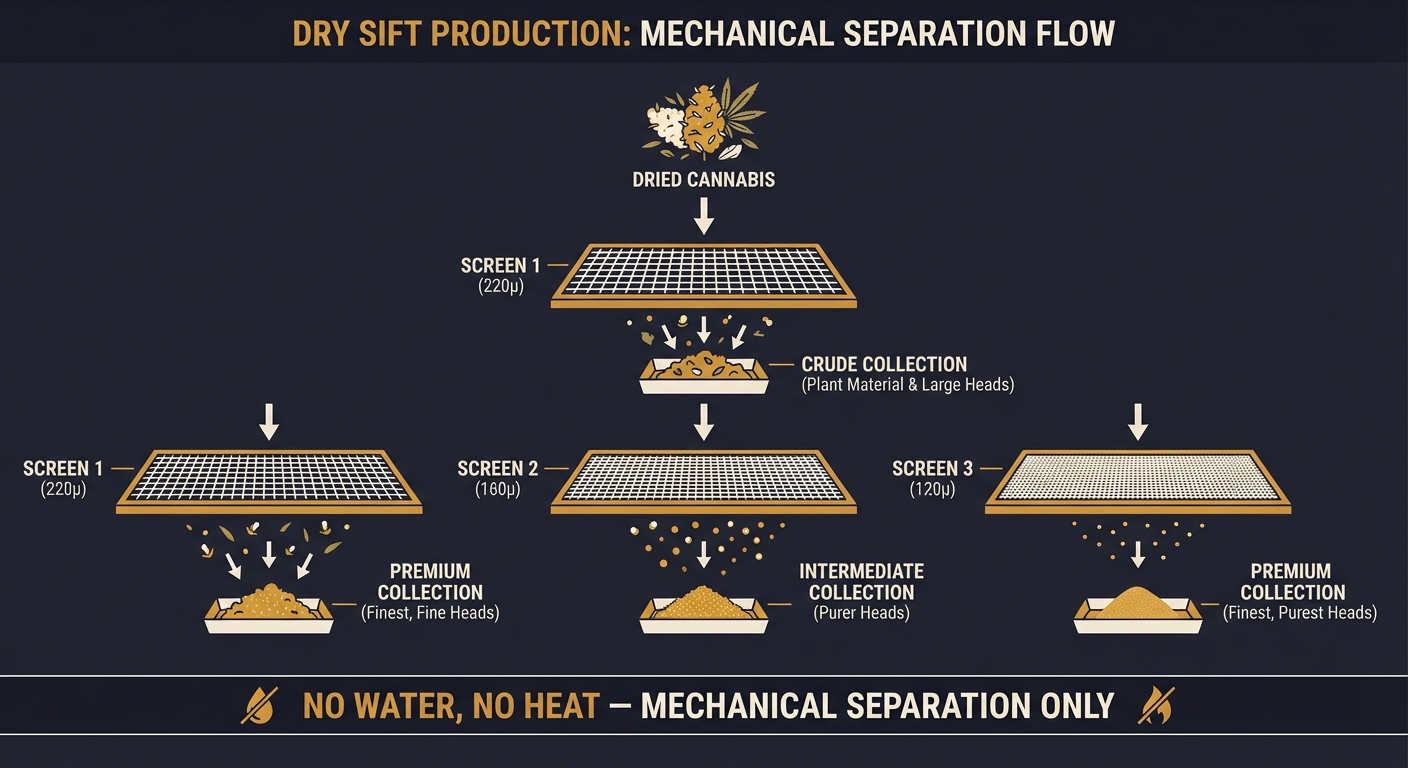
Dry Sift vs. Other Hash Methods
Dry sift is frequently confused with kief, though they represent different refinement levels of the same basic material. Kief typically refers to the crude trichome collection that accumulates in grinder chambers or basic single-screen setups, while dry sift involves multiple screening stages for higher purity.
Hash and dry sift are also conflated, but hash specifically refers to pressed or heated trichome collections that form solid blocks or pliable masses. Dry sift remains in powder form unless subsequently pressed into hash. Some retailers incorrectly label any powdered concentrate as "dry sift hash," but true dry sift maintains its loose, granular texture.
Bubble hash represents another distinct category that uses ice water extraction rather than dry screening. While both produce solventless concentrates, bubble hash requires water, ice, and wet processing, whereas dry sift uses only mechanical separation. The end products have different textures, colors, and flavor profiles despite similar potency ranges.
Why Dry Sift Matters
Understanding dry sift helps consumers recognize quality indicators and appropriate pricing for solventless concentrates. Higher-grade dry sift commands premium prices due to labor-intensive screening processes and lower yields compared to solvent-based extraction methods.
The distinction matters for storage and handling since dry sift requires different conditions than sticky concentrates like rosin or resin. Proper identification helps consumers maintain product quality through appropriate storage methods.
For retailers and brands, accurate dry sift classification prevents mislabeling issues and sets appropriate customer expectations for texture, appearance, and usage characteristics compared to other concentrate categories.
Key Quality Indicators
Visual Assessment
High-quality dry sift exhibits uniform particle size with minimal visible plant matter. The powder should appear consistent in color without dark specks or green contamination from leaf material.
Texture Properties
Premium dry sift feels fine and powdery between fingers, similar to flour or powdered sugar. Lower grades may feel gritty or contain visible plant fragments that indicate insufficient screening.
Color Gradations
Light blonde to golden colors typically indicate higher purity, while darker brown or green tints suggest plant contamination or oxidation. However, some strains naturally produce darker trichomes.
Screen Mesh Standards
Professional dry sift operations use 73-120 micron screens for collection, with 45-73 micron screens producing the highest grades. Larger mesh sizes (150+ microns) allow more plant contamination.
Production Considerations
Temperature Control
Room temperature conditions prove critical for successful dry sift production. Material that becomes too warm during processing can result in sticky trichomes that won't separate cleanly through screens.
Yield Expectations
The mechanical separation process is inherently less efficient than solvent extraction, with quality operations accepting lower yields in exchange for solventless purity.
Further Reading
- Hashish, Wikipedia
- Frenchy Cannoli, Articles
- What Is Dry Sift Hash?, PurePressure
FAQ
How pure is typical dry sift compared to other concentrates?
Quality dry sift ranges from 50-80% cannabinoid content depending on screening precision and starting material. This compares to 60-90% for rosin and 70-95% for solvent-based extracts. Multiple screening passes increase purity but reduce overall yield.
Why does some dry sift look green or dark?
Green coloration indicates plant matter contamination from insufficient screening or aggressive agitation that breaks up leaf material. Dark colors may result from oxidation, older starting material, or naturally dark trichomes from certain cultivars.
Can dry sift be made from fresh cannabis?
Fresh cannabis contains too much moisture for effective dry sift production since wet trichomes stick to plant material and screens. Cannabis must be properly dried and cured, with some processors further drying material specifically for sift extraction.
How long does dry sift stay fresh?
Properly stored dry sift maintains quality for 6-12 months when kept in sealed containers away from light, heat, and moisture. The powder form makes it more susceptible to oxidation than pressed hash or other solid concentrates.
What's the difference between static sift and traditional dry sift?
Static sift uses electrically charged surfaces to attract trichomes, while traditional dry sift relies purely on gravity and agitation through screens. Both produce similar end products, though static methods may achieve slightly higher purity levels.
Why is dry sift more expensive than some other concentrates?
Dry sift production is labor-intensive with relatively low yields compared to solvent extraction methods. High-grade dry sift requires multiple screening passes, skilled technique, and significant time investment, resulting in premium pricing for quality products.
Conclusion
Dry sift represents a traditional solventless concentrate method that produces powdery trichome collections through mechanical screening. Quality indicators include light coloration, fine texture, and minimal plant contamination, while proper identification helps distinguish it from kief, hash, and other concentrate categories. Understanding these distinctions enables informed purchasing decisions and appropriate storage practices for maintaining product quality over time.