Live Resin at a Glance
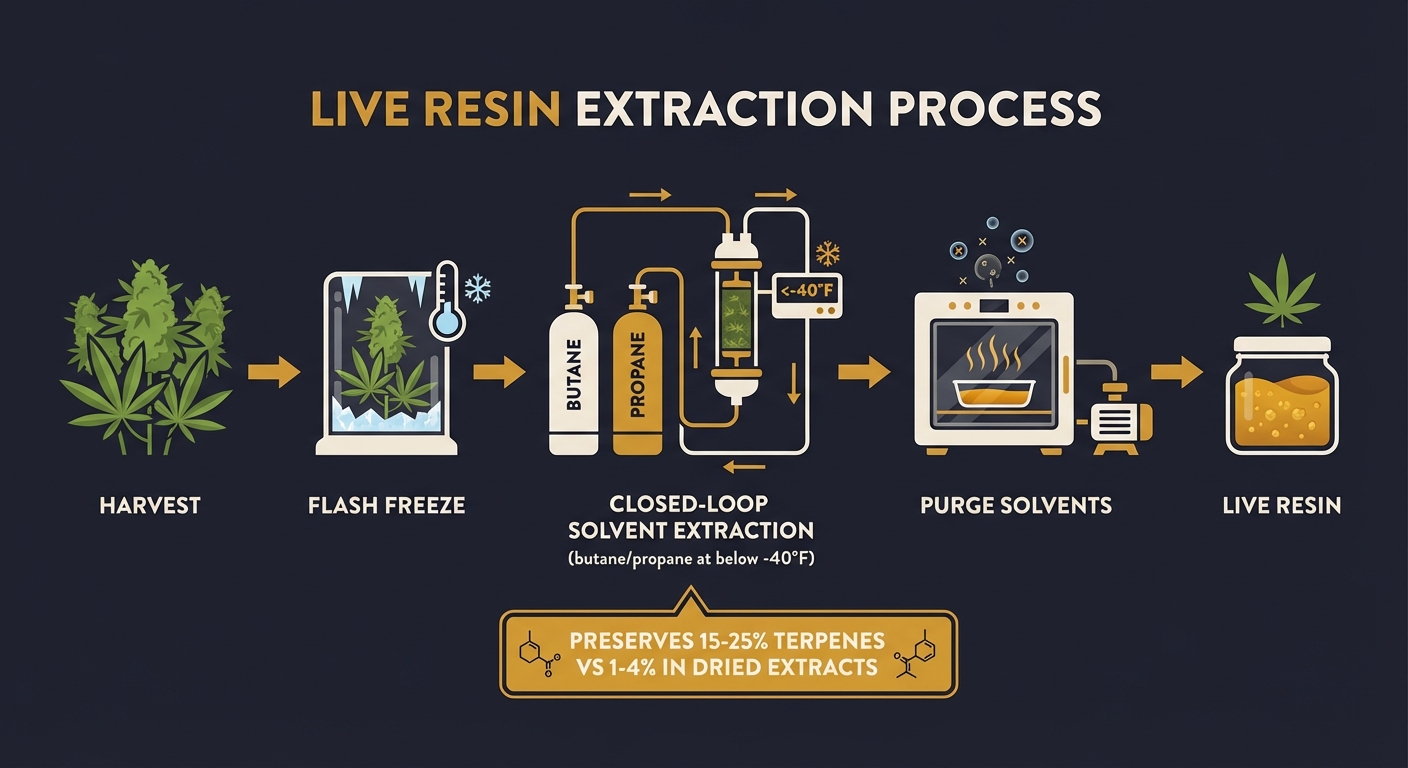
Live resin is a cannabis concentrate extracted from fresh frozen plant material that was frozen immediately after harvest, rather than dried and cured. This preservation method retains volatile terpenes that would otherwise degrade during traditional drying, resulting in a concentrate with enhanced aroma and flavor profiles. Live resin typically contains 15-25% terpenes compared to 1-4% in concentrates made from dried cannabis.
How Live Resin Is Made
The "live" in live resin refers to the plant material being processed while fresh, before cellular breakdown from drying occurs. Traditional concentrate production uses cannabis that has been dried for 7-14 days and cured for weeks or months. During this process, many volatile terpenes evaporate or convert to less aromatic compounds.
Live resin extraction requires specialized equipment to handle frozen material and typically uses butane or propane solvents in a closed-loop system. The resulting concentrate preserves the plant's original terpene profile, which manufacturers and consumers often describe as more representative of the living plant's aroma. Processing temperatures remain low throughout extraction to prevent terpene loss.
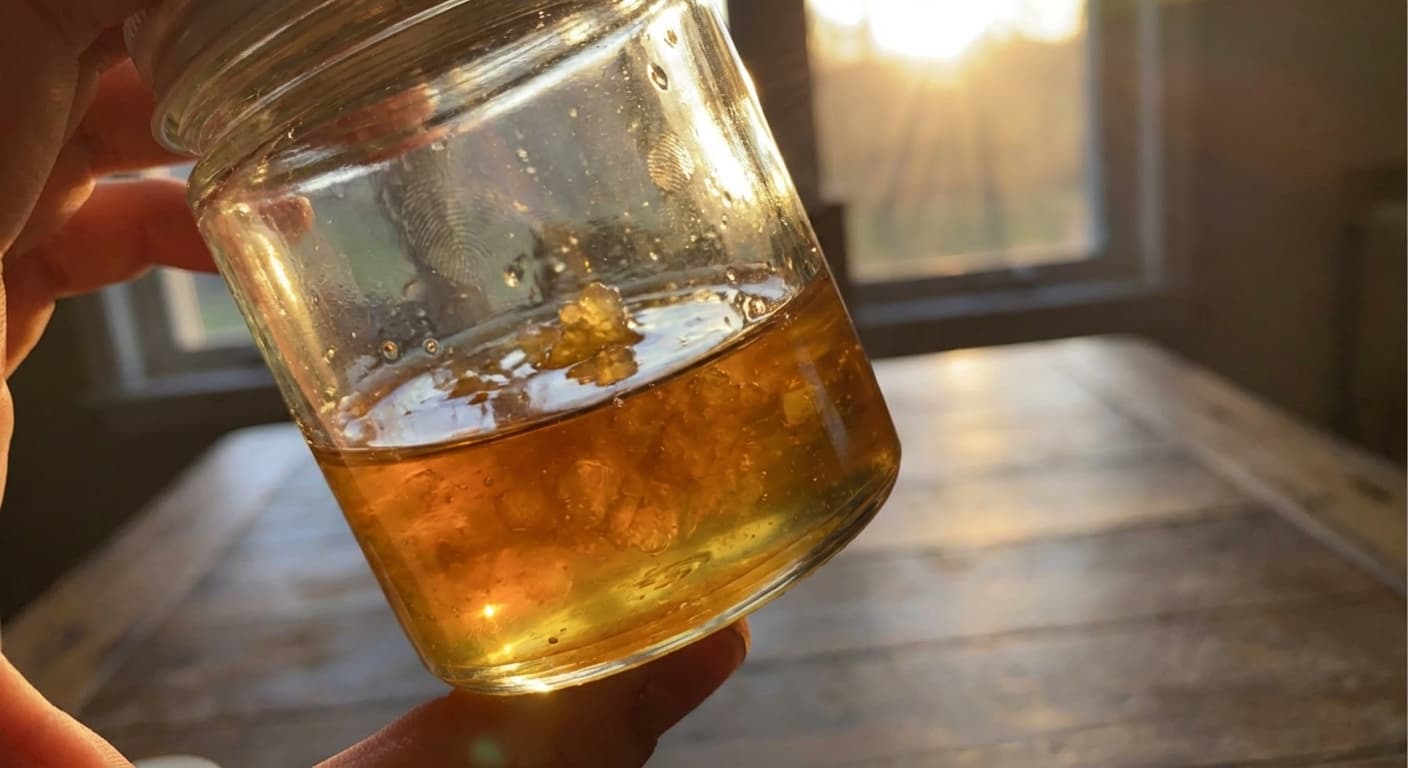
The texture of live resin varies from sauce-like consistency to crystalline formations with terpene-rich liquid, depending on specific extraction parameters and post-processing techniques. Storage requires refrigeration to maintain terpene integrity and prevent degradation.
Live Resin vs. Live Rosin
Live resin is frequently confused with live rosin, though these are distinct products. Live rosin uses the same fresh-frozen starting material but employs solventless extraction through heat and pressure instead of chemical solvents. Both preserve terpenes from fresh plant material, but live rosin commands higher prices due to solventless processing.
Another common confusion occurs with "sauce" or "terp sauce" concentrates. While live resin can have a sauce-like consistency, not all sauce products use fresh-frozen material. Some sauces are made from dried cannabis or involve adding terpenes back to other concentrate types.
Live resin also differs from standard BHO (butane hash oil) or shatter made from dried material. These concentrates may be potent in cannabinoids but lack the preserved terpene content that defines live resin. Menu descriptions sometimes incorrectly label any sticky or flavorful concentrate as "live resin" when the starting material was actually dried cannabis.
Why Live Resin Matters
The distinction matters because terpene content significantly affects the concentrate's aroma, flavor, and overall sensory experience. Consumers seeking specific flavor profiles often prefer live resin for its preserved volatile compounds that would be lost in traditional processing.
From a market perspective, live resin typically costs 20-40% more than comparable concentrates made from dried material due to specialized processing requirements and fresh-frozen input costs. Buyers should understand this price difference reflects the preservation method, not necessarily higher cannabinoid potency.
For retailers and budtenders, accurate classification helps customers make informed decisions. Mislabeling concentrates as "live resin" when they're made from dried material misrepresents both the product and its value proposition.
Key Identification Signals
Aroma intensity: Live resin typically exhibits stronger, more complex scent profiles compared to concentrates from dried material. The aroma often resembles the fresh plant more closely.
Color variations: Live resin colors range from light golden to deep amber, sometimes with visible terpene separation. The color depends on the strain and extraction parameters rather than indicating quality.
Texture characteristics: Consistency varies from wet sugar-like granules to sauce with crystalline formations. The texture changes with temperature and terpene content.
Storage requirements: Legitimate live resin requires refrigeration for optimal preservation. Products stable at room temperature for extended periods likely contain fewer volatile terpenes.
Lab testing data: Certificate of analysis should show elevated terpene percentages, typically 15-25% total terpenes for quality live resin products.
Further Reading
- Cannabis Concentrate, Wikipedia
- What Is Live Resin?, Leafly
- Rosin vs Resin, PurePressure
FAQ
Is live resin stronger than other concentrates?
Live resin is not necessarily higher in THC than other concentrates. Cannabinoid potency depends on the starting material and extraction efficiency, while live resin's advantage lies in preserved terpene content. THC levels typically range from 60-90%, similar to other solvent-based concentrates.
How long does live resin last?
Properly stored live resin maintains quality for 6-12 months when kept refrigerated in airtight containers away from light. Terpenes degrade faster than cannabinoids, so aroma and flavor diminish before potency.
Can you tell live resin from regular concentrates by appearance?
Visual identification isn't always reliable since texture and color vary widely in both live resin and conventional concentrates. The most reliable indicators are strong aroma, lab-tested terpene levels above 15%, and verification that fresh-frozen material was used in production.
Why does some live resin separate into layers?
Separation occurs when THCA crystals form distinct structures from terpene-rich liquid portions during extraction or storage. This "diamond and sauce" formation is normal and indicates high terpene content rather than product degradation. Gentle mixing can recombine the components.
Does live resin require special equipment to use?
Live resin works with standard concentrate consumption methods including dab rigs, vaporizers, and electronic devices designed for concentrates. However, lower temperature settings help preserve terpene flavors that can be destroyed by excessive heat.
Can live resin be made from any cannabis strain?
Any cannabis strain can be processed into live resin, but strains with naturally high terpene content show more dramatic differences compared to dried-material concentrates. The preservation benefit is most apparent in aromatic strains that lose significant terpenes during traditional drying.
Summary
Live resin distinguishes itself through fresh-frozen starting material that preserves volatile terpenes lost in conventional drying processes. The resulting concentrates offer enhanced aroma and flavor profiles with terpene content typically 4-6 times higher than dried-material extracts. Understanding this distinction helps consumers recognize authentic live resin products and make informed purchasing decisions.