This FAQ addresses common questions about the difference between rosin and resin, two cannabis concentrates that are often confused despite their distinct production methods and characteristics. These answers are based on cannabis processing expertise and questions from concentrate users who need clear distinctions between these products.
General Questions
What is the main difference between rosin and resin?
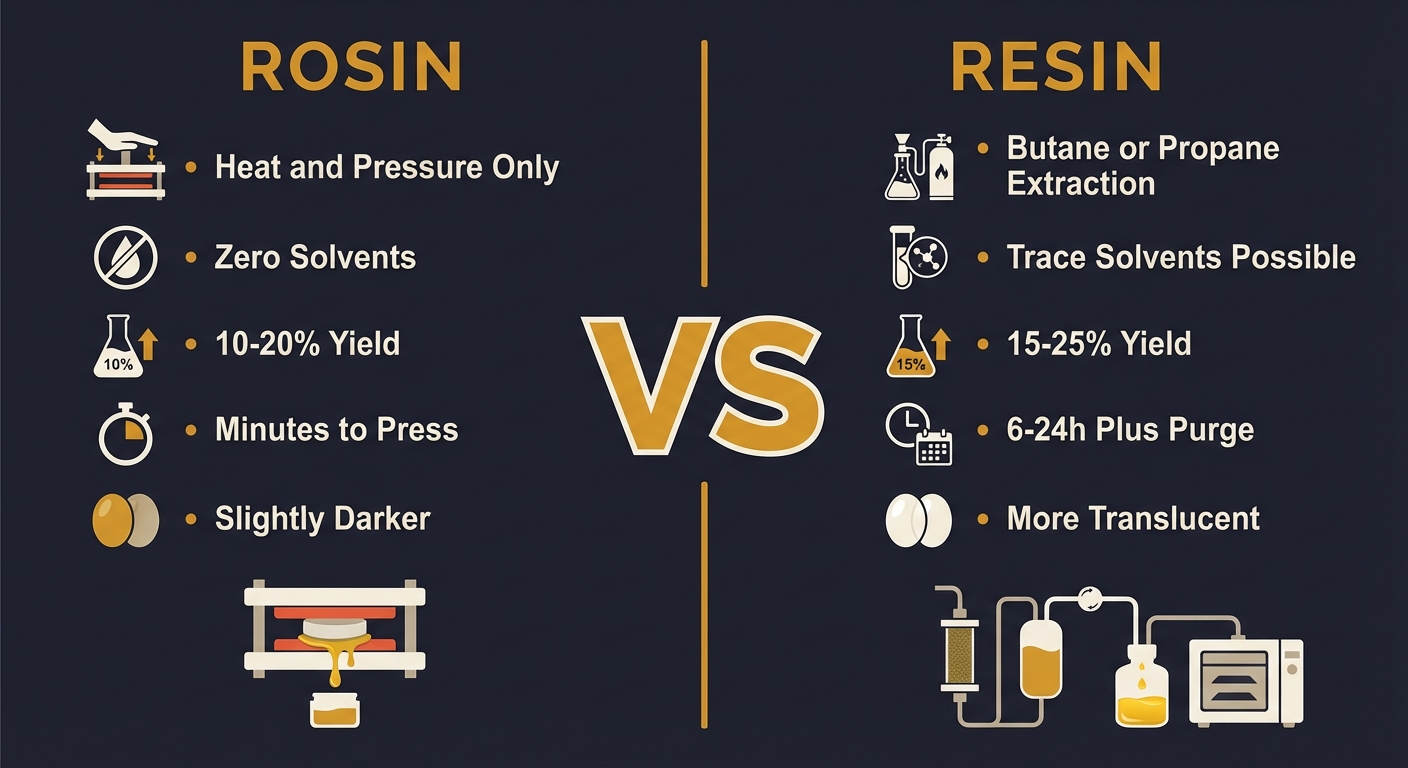
Rosin is a solventless concentrate made using only heat and pressure, while resin refers to concentrates made using chemical solvents like butane or propane. Rosin extraction involves pressing cannabis flower or hash between heated plates to squeeze out cannabinoids and terpenes. Resin extraction dissolves trichomes using solvents, then removes the solvent through purging processes. The fundamental distinction is that rosin uses mechanical extraction while resin uses chemical extraction.
Which concentrate type is considered more natural?
Rosin is considered more natural because it contains no chemical solvents or additives. The extraction process uses only controlled temperature (typically 160-220°F) and pressure (500-1500 PSI) to separate concentrate from plant material. Resin concentrates can contain trace amounts of residual solvents even after proper purging, though quality products meet safety standards.
Are rosin and resin different in appearance and texture?
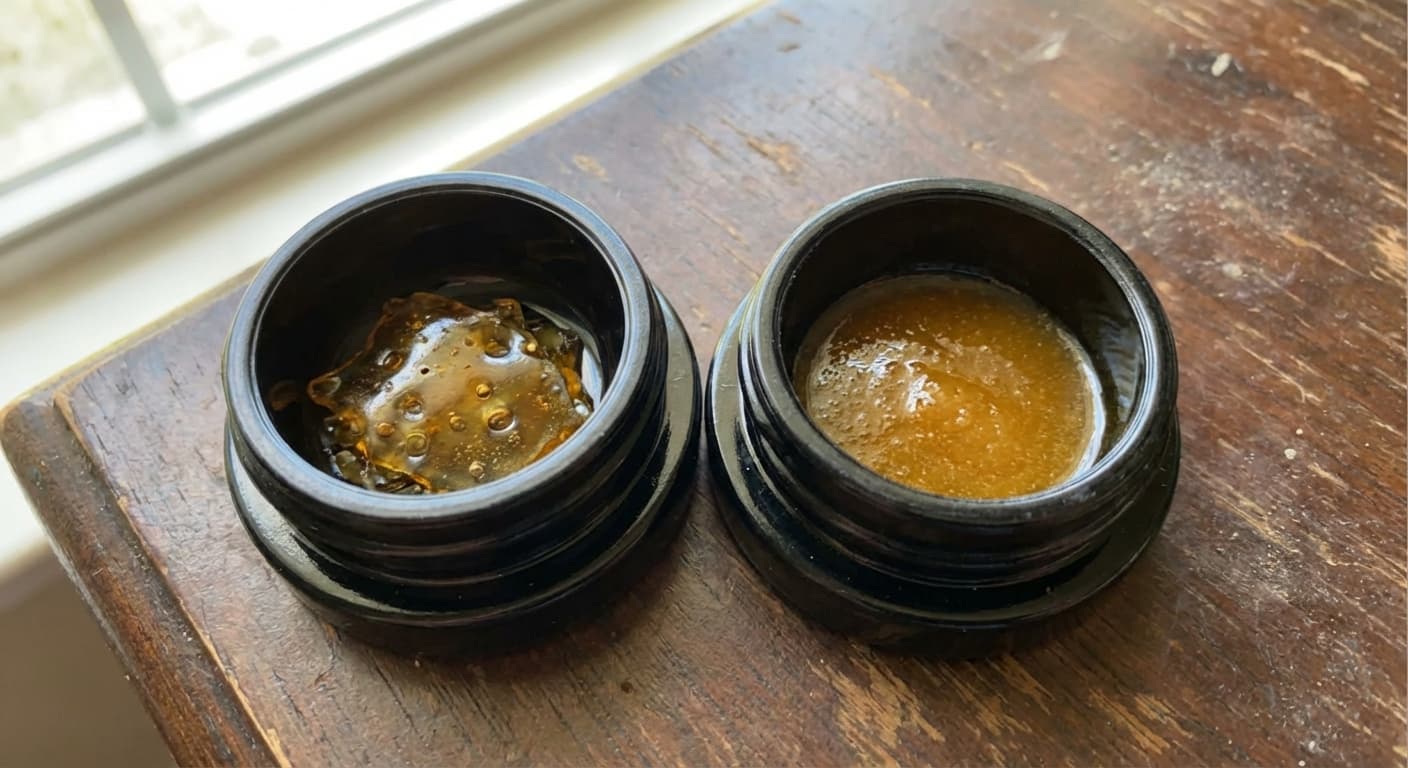
Both rosin and resin can have similar appearances ranging from glass-like shatter to butter-like consistency. Rosin typically has a slightly darker color due to heat exposure during pressing and may contain small plant particles. Live resin often appears lighter and more translucent due to solvent extraction's ability to isolate pure trichomes. Texture depends more on processing temperature and storage conditions than extraction method.
Why do some people confuse rosin with resin?
The terms sound nearly identical and both describe cannabis concentrates with similar potency ranges (60-90% cannabinoids). Both are sticky, concentrated forms of cannabis that require similar storage methods and handling precautions. marketing sometimes uses "resin" generically to describe any concentrate, creating confusion. The key identifier is always the extraction method: heat/pressure versus chemical solvents.
Production and Processing Questions
What equipment is needed to make each concentrate type?
Rosin production requires a rosin press with heated plates and pressure gauges, plus parchment paper and collection tools. Resin extraction requires closed-loop extraction systems, vacuum ovens, butane or propane solvents, and safety equipment for handling volatile chemicals. Rosin pressing can be done with smaller, less expensive equipment while resin extraction typically requires commercial-grade laboratory setups due to safety and complexity requirements.
Which extraction method produces higher yields?
Resin extraction typically produces higher yields, often 15-25% of input material weight compared to rosin's 10-20% yields. Solvent extraction can dissolve and capture more cannabinoids and terpenes than mechanical pressing alone. However, rosin yields vary significantly based on starting material quality, with high-grade bubble hash producing yields comparable to solvent extraction.
How long does each extraction process take?
Rosin can be extracted in minutes using a rosin press, with individual presses taking 30 seconds to 3 minutes depending on material and technique. Resin extraction takes 6-24 hours including extraction, initial purging, and final vacuum oven treatment to remove residual solvents. Rosin's speed advantage makes it popular for small-batch production, while resin's longer process allows for larger production runs and more precise cannabinoid isolation.
Can you make both concentrates from the same starting material?
Yes, the same cannabis flower, trim, or hash can be processed into either rosin or resin concentrates. However, fresh-frozen material is preferred for live resin to preserve terpenes, while cured flower works well for both methods. Some processors first make bubble hash, then press it into rosin, combining water extraction with heat pressing. The choice depends on desired end product characteristics and available equipment.
Quality and Storage Questions
How should rosin and resin be stored differently?
Both concentrates require cool, dark storage in airtight containers, typically at 32-68°F to maintain consistency and prevent degradation. Rosin may be slightly more temperature-sensitive due to residual moisture from pressing, requiring consistent refrigeration for long-term storage. Resin concentrates, being more thoroughly dehydrated, can tolerate slight temperature variations better. Both should be stored in glass or silicone containers away from light and air exposure.
Which concentrate type has better terpene preservation?
Live resin often preserves terpenes better because extraction occurs at very low temperatures, sometimes below -40°F. Rosin pressing involves heat that can degrade some volatile terpenes, though low-temperature pressing (160-180°F) minimizes this loss. Fresh-frozen starting material produces the most terpene-rich concentrates regardless of extraction method.
Do rosin and resin have different shelf lives?
Both concentrates have similar shelf lives of 6-12 months when properly stored in cool, dark conditions. Rosin may degrade slightly faster due to residual plant lipids and moisture that weren't removed during pressing. Resin concentrates, being more thoroughly purified, can maintain potency and flavor longer under proper storage. Both will lose terpenes over time and may change texture, but remain usable well beyond a year if stored correctly.
How can you identify quality rosin versus resin?
Quality rosin should be translucent to amber-colored without dark spots or plant matter, with a clean smell and stable consistency at room temperature. Quality resin should be free of residual solvents (no chemical smell), have consistent texture, and provide lab testing showing minimal solvent residues below 500 parts per million. Both should bubble cleanly without leaving black residue and maintain their advertised cannabinoid and terpene profiles through proper testing.
Cannabis-Specific Questions
Which extraction method better preserves the original strain characteristics?
Both methods can preserve strain characteristics effectively when properly executed, though live resin extraction often captures more complete terpene profiles. Rosin pressing from high-quality flower maintains many original strain qualities, especially when pressed at lower temperatures for shorter durations. The starting material quality affects strain preservation more than extraction method, with fresh, properly cured cannabis producing more characteristic concentrates regardless of processing technique.
Are there specific cannabis strains that work better for each method?
Resinous, trichome-heavy strains like OG Kush, Girl Scout Cookies, and Gelato work well for both methods but excel in rosin production due to higher mechanical yield. Strains with delicate terpene profiles benefit from live resin extraction's ability to preserve volatile compounds through low-temperature processing. Dense, compact flower structures may yield better with solvent extraction, while loose, trichome-covered buds often press well into rosin.
Can you tell the difference between rosin and resin by examining the concentrate?
Visual identification is difficult since both can appear similar, but rosin often has slightly darker coloration and may contain small plant particles invisible in resin. Rosin typically has a more opaque appearance due to residual plant lipids, while resin appears more translucent after solvent purification. Lab testing definitively identifies extraction method through residual solvent analysis, as rosin will show zero solvent residues while resin may show trace amounts.
Why might someone choose rosin over resin or vice versa?
Users choose rosin for its solventless nature, faster production time, and lower equipment investment for home processing. Resin appeals to those seeking higher yields, specific cannabinoid ratios, and potentially cleaner-appearing concentrates. Commercial producers often prefer resin for scalability and consistency, while craft producers may choose rosin for artisanal appeal.
Do rosin and resin require different handling precautions?
Both require similar handling precautions including avoiding contamination, maintaining proper temperatures, and using clean tools for collection and storage. Rosin production involves high-temperature equipment requiring burn prevention measures, while resin extraction involves volatile solvents requiring ventilation and explosion prevention protocols. Both finished products are sticky and potent, requiring careful handling to avoid waste and accidental contact.
What consumption methods work best for each concentrate type?
Both rosin and resin work well with standard concentrate consumption methods including dab rigs, vaporizers, and electronic devices. Rosin may leave slightly more residue due to residual plant lipids, requiring more frequent cleaning of equipment. Resin concentrates often vaporize more completely, leaving less residue on consumption surfaces. Both benefit from proper temperature control during consumption, as excessive heat destroys terpenes and creates harsh vapor while optimal temperatures preserve flavor and effects.
Further Reading
- Cannabis Concentrate, Wikipedia
- Live Resin vs Live Rosin, Leafly
- Rosin vs Resin, PurePressure