Why Live Rosin Turns Dark
Quick Answer
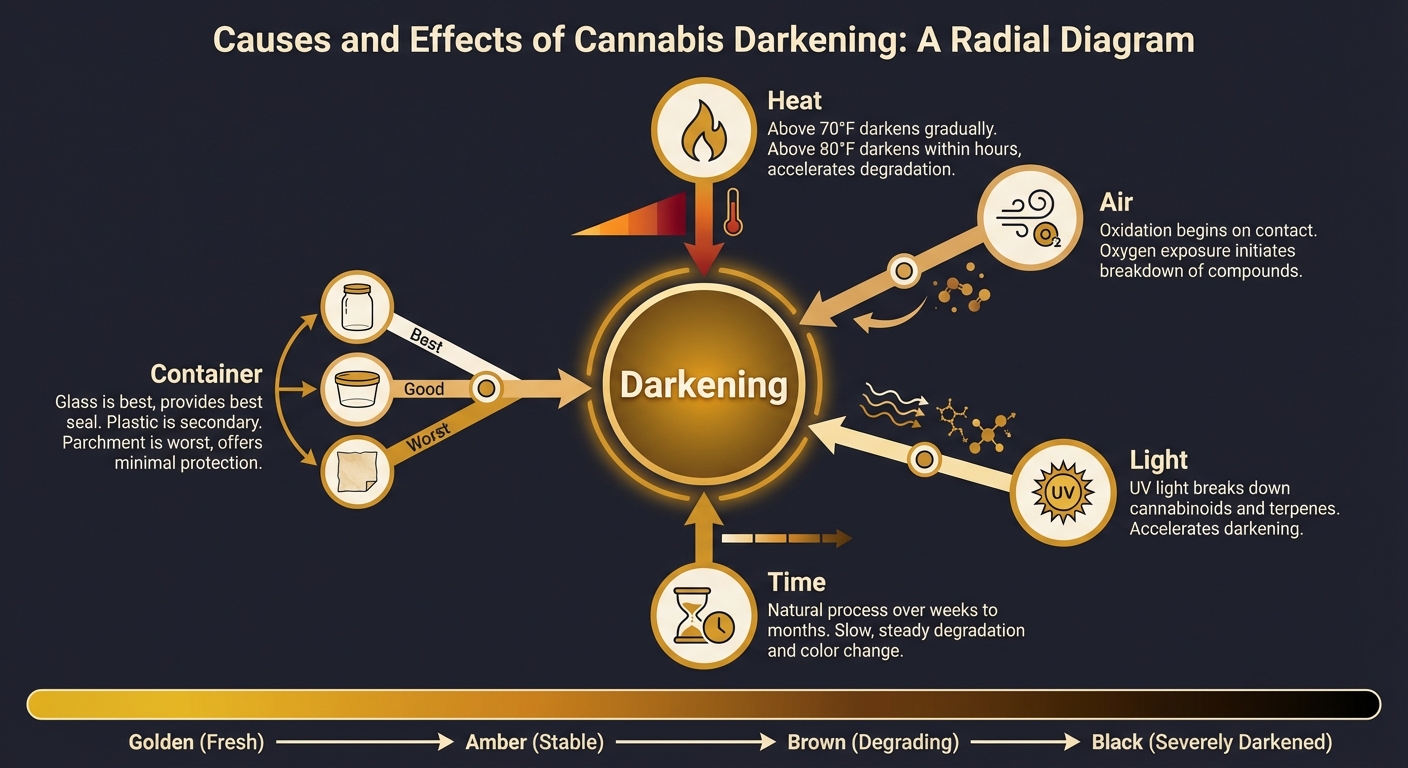
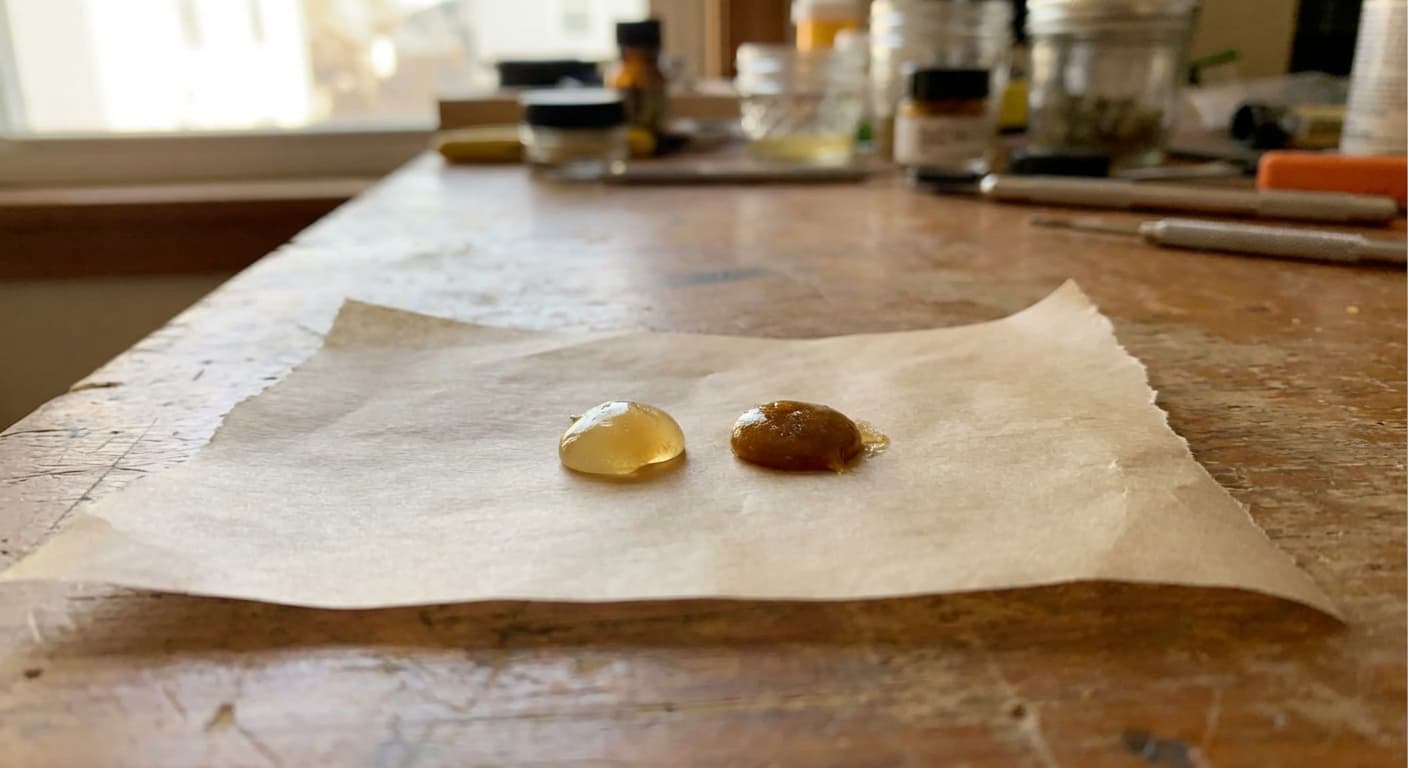
Live rosin turns dark due to oxidation, heat exposure, light degradation, and the natural breakdown of terpenes and cannabinoids over time. Fresh live rosin typically appears light amber or golden, but darkens to brown or black when exposed to air, temperatures above 70°F, or UV light. This color change indicates chemical degradation that affects both potency and flavor profile.
What This Means
Live rosin darkening is a chemical process where the concentrated cannabinoids and terpenes break down into different molecular compounds. Unlike live resin or other solvent-based extracts, live rosin contains no chemical stabilizers, making it more susceptible to environmental factors that cause color changes.
The darkening process begins immediately after extraction as the rosin contacts oxygen. Terpenes, which give live rosin its distinctive aroma and contribute to its light color, are particularly volatile compounds that degrade quickly when exposed to heat, light, or air. As these compounds break down, the rosin's color shifts from light amber toward darker brown or black hues.
This color change is different from the natural variation in starting material. Fresh-frozen cannabis with different trichome densities or plant genetics will produce live rosin in varying shades of light amber, but the darkening process represents actual molecular degradation rather than natural color variation. When extractors process fresh frozen plant material, the initial rosin typically looks great with bright, clear coloration. However, the first time that fresh product encounters improper storage conditions, the degradation process accelerates.
Many processors who work with fresh frozen material notice that even premium extracts can turn into what resembles dark crystal formations when environmental factors aren't controlled. This transformation happens every time proper storage protocols are ignored, regardless of the quality of the original plant material used in extraction.
What It Is Often Confused With
Live rosin darkening is frequently confused with contamination, poor extraction technique, or inferior starting material. However, even perfectly extracted live rosin from premium fresh-frozen cannabis will darken over time due to natural degradation processes.
Some consumers mistake the darker color of aged live rosin for the intentionally dark appearance of certain hash types like temple balls or traditional hashish, which achieve their color through different processes including heat application and aging techniques. Live rosin darkening is unintentional degradation, not a processing method.
The darkening is also confused with the natural color variation seen in rosin pressed from different cannabis strains or harvest times. Purple strains or autumn-harvested material may produce darker rosin initially, but this is different from the progressive darkening that occurs during storage. Fresh live rosin from any strain should maintain its initial color when stored properly, regardless of whether that starting color is pale gold or deeper amber.
First time consumers often assume that any color change indicates poor quality extraction, when in reality even the most skilled extractor using premium plant material will see darkening if storage conditions aren't optimal. The jar test - comparing fresh rosin stored properly versus improperly - demonstrates this natural degradation process clearly.
Why It Matters
Understanding live rosin darkening helps consumers and retailers distinguish between fresh, properly stored products and degraded concentrates. Dark live rosin typically indicates reduced terpene content, which directly affects flavor and aroma quality.
For retailers, recognizing the signs of live rosin degradation prevents the sale of compromised products and helps establish proper storage protocols. Customers who understand this process can make informed purchasing decisions and implement better home storage practices.
The darkening process also affects product value and shelf life. Live rosin commands premium prices partly due to its terpene preservation, so color changes that indicate terpene loss represent actual quality degradation, not just cosmetic changes.
Consumers who experience darkened rosin the first time often assume they received inferior product, when the issue may be storage-related. Understanding this process helps distinguish between extraction quality and storage degradation, leading to better purchasing decisions and proper home storage techniques.
Key Factors That Cause Darkening
Temperature Exposure
Live rosin stored above 70°F darkens rapidly as heat accelerates molecular breakdown. Temperatures above 80°F can cause noticeable darkening within hours. Storage that gets too hot will cause degradation every time, regardless of other storage conditions. Even brief exposure to elevated temperatures during transport or display can initiate the darkening process that continues even after cooling.
Air Contact
Oxidation begins immediately when live rosin contacts air. Containers with poor seals or frequent opening expose the product to oxygen that drives the darkening process. Many consumers store their rosin on parchment paper or in containers that don't provide airtight seals, accelerating oxidation. Proper storage in a mason jar with tight sealing prevents air exposure that causes degradation every time the product is accessed improperly.
Light Exposure
UV light breaks down cannabinoids and terpenes directly. Live rosin stored in clear containers or under retail lighting darkens faster than products kept in dark conditions. Even indoor lighting can contribute to degradation over extended exposure periods, making dark storage essential for maintaining product quality.
Time and Age
Even under ideal storage conditions, live rosin gradually darkens over weeks and months as molecular compounds naturally degrade. Fresh live rosin typically maintains optimal color for 2-4 weeks when properly stored. This natural aging process occurs regardless of storage quality, though proper conditions significantly slow the rate of change.
Storage Container Material
The type of storage container affects darkening rates significantly. Glass containers like mason jars provide better protection than plastic, which can allow air permeability over time. Parchment paper, commonly used for short-term storage, offers minimal protection against oxidation and should only be used for immediate consumption products. Silicone containers provide moderate protection but aren't ideal for long-term storage compared to glass options.
Storage Methods and Equipment Impact
Home Storage Solutions
Many consumers use basic refrigeration, but specialized equipment provides better results. A freeze dryer, while expensive, can remove moisture that contributes to degradation processes. However, standard home storage using mason jars in refrigerated conditions typically provides adequate protection for most consumers.
Professional Storage Techniques
Commercial operations often use specialized storage systems that maintain consistent temperature and humidity while preventing air exposure. These systems help maintain the light amber color that indicates fresh product quality, preventing the transition to darker degraded states that affect market value.
Frequently Asked Questions
Is dark live rosin unsafe to use?
Dark live rosin is not unsafe, but it indicates degraded quality. The darkening process reduces terpene content and may affect flavor, though the product remains consumable. Dark color suggests the rosin has been exposed to conditions that accelerate degradation.
Can you prevent live rosin from darkening?
You can slow darkening by storing live rosin in airtight containers at temperatures between 35-45°F, away from light. However, some darkening is inevitable over time due to natural molecular breakdown, even under ideal conditions. Using a mason jar in refrigerated conditions works well for most home storage needs, while avoiding parchment paper for long-term storage.
Does darker live rosin have lower potency?
Darker live rosin may have reduced potency as the darkening process often coincides with cannabinoid degradation. However, color alone doesn't determine potency - laboratory testing provides accurate cannabinoid content regardless of color.
How quickly does live rosin darken?
Live rosin can begin darkening within 24-48 hours at room temperature with air exposure. Under poor storage conditions (heat, light, air), noticeable darkening occurs within days, while proper storage can maintain color for several weeks. The first time rosin is exposed to conditions that are too hot, the degradation process accelerates and continues even after environmental conditions improve.
What's the difference between darkened live rosin and live resin?
Darkened live rosin results from degradation of a solventless extract, while live resin is a solvent-based extract that may appear dark due to different extraction methods or starting materials. Live resin typically maintains more consistent color due to processing techniques and potential stabilizers.
Should dispensaries discount dark live rosin?
Many dispensaries reduce prices on visibly darkened live rosin since the color change indicates quality degradation. This pricing reflects the reduced terpene content and compromised flavor profile compared to fresh product.
Why does my rosin darken every time I open the container?
Each time you open the container, the rosin contacts fresh oxygen that drives oxidation. Frequent access accelerates darkening compared to products that remain sealed. Minimizing exposure time and ensuring proper resealing helps reduce this cumulative effect.
Can I tell if rosin is fresh just by looking at it?
Fresh live rosin typically looks great with light amber or golden coloration and clear, glossy appearance. Dark, opaque, or crystallized textures often indicate degradation, though some natural color variation exists based on the original plant material used in extraction.
Does the terp slurper method affect rosin darkening?
The terp slurper itself doesn't cause darkening, but improper heating techniques or temperatures that are too hot during consumption can darken remaining product. Proper temperature control during consumption prevents unnecessary degradation of unused material.
Conclusion
Live rosin darkening is a natural degradation process caused by oxidation, heat, light, and time that affects both appearance and quality. Unlike contamination or poor extraction techniques, this darkening occurs even with high-quality products when storage conditions allow molecular breakdown. Understanding these factors helps consumers identify fresh live rosin and implement proper storage practices. The first time consumers encounter darkened rosin, they often assume quality issues, but proper storage using methods like mason jar refrigeration can maintain product quality for extended periods. Every time proper storage protocols are followed, the degradation process slows significantly, preserving the light coloration that indicates fresh, high-quality live rosin. For detailed storage techniques that slow this degradation process, see our guide on optimal live rosin storage methods.