Why Is Live Rosin So Expensive?
Live rosin runs $50-90 per gram because production prioritizes quality over yield at every step.
Why Live Rosin Costs More
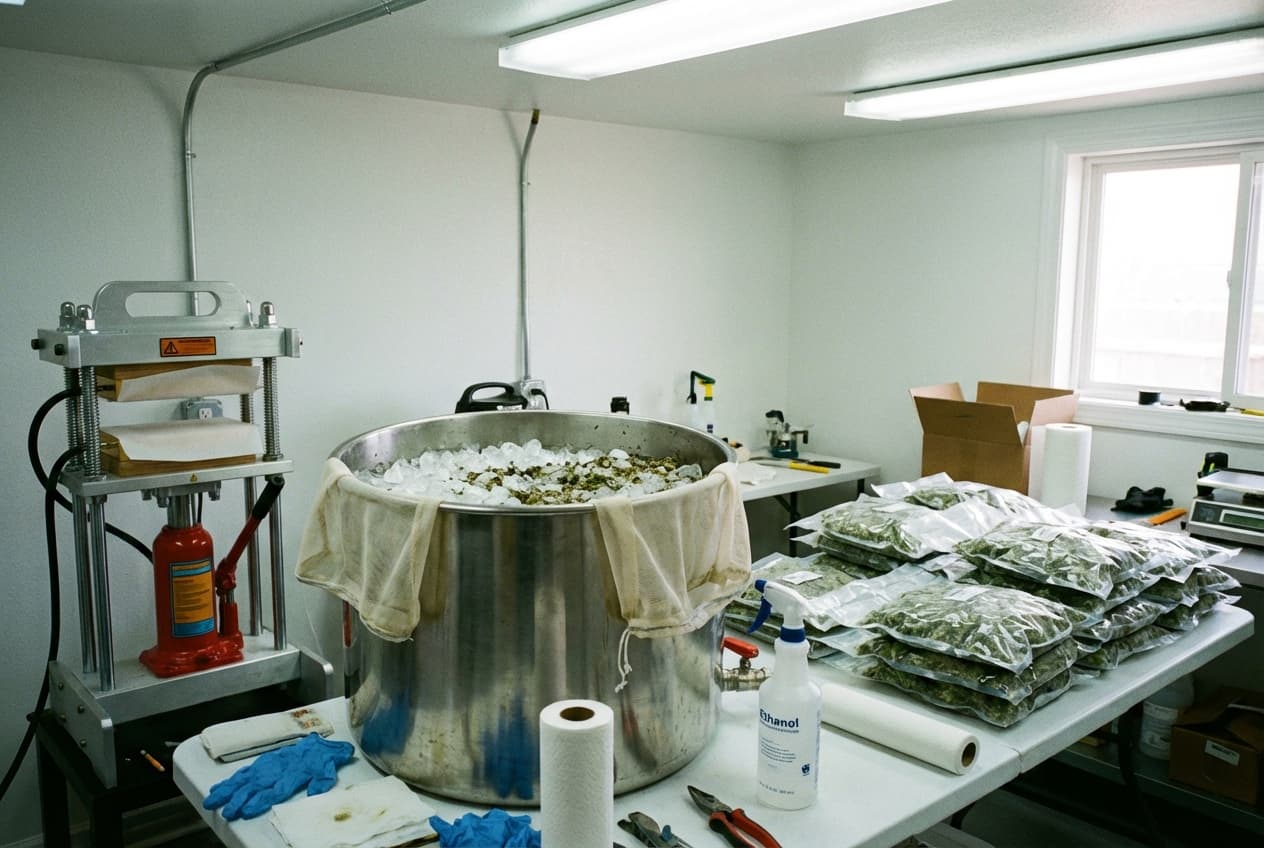
Live rosin extraction trades output for purity. Fresh plants need to be frozen right after harvest. Bubble hash washing adds hours of labor before pressing even starts. And solventless methods pull far less material than hydrocarbon alternatives. A pound of premium flower makes roughly 50-80 grams of finished live rosin. Butane processing on the same material produces 150-250 grams. Lower yields plus mandatory refrigeration equals higher prices.
What Drives the Price
Starting material: Fresh frozen cannabis has to be processed immediately after harvest. That means tight harvest windows, freezer space, and expensive logistics.
Extraction: The fresh frozen material gets washed into bubble hash using ice water, then sorted by micron size. Premium grades (73-120 micron) go to the press. The rest becomes lower-tier products. Freeze-drying preserves terpenes before pressing.
Pressing yields: Heat and pressure only, no solvents. Quality hash rosin presses return 60-80% of input hash weight. Total flower-to-product yield: 3-8%, versus BHO's 15-25%.
Cold chain: Refrigerated storage and transport from production to retail. Not optional, not cheap.
Price vs. Quality Misconceptions
Price reflects terpene preservation and solventless processing, not potency. Live rosin tests at 70-85% total cannabinoids, about the same as cheaper BHO.
Not everything expensive is live rosin. Some dispensaries charge live rosin prices for solvent-based live resin, banking on the "rosin" vs "resin" confusion.
Quality varies widely within the category. Single-source, cold-pressed rosin from one cultivar is a completely different product from high-temp, mixed-strain trim runs.
Why the Premium Matters
Knowing how production works helps separate justified pricing from markup. A $90 gram from a producer washing single-cultivar material at specific microns, pressing cold, and keeping cold chain is real quality. A $70 gram pressed hot for max yield and stored at room temp is a different product entirely.
How to Get Good Value
- Refrigerated display case (non-negotiable)
- Strain name on the label
- Pale yellow to light amber color
- Recent packaging date (1-3 months)
- Process details on the label
- Pricing that matches the production tier
If cold chain matters to you, and for live rosin it should, it's worth finding a shop that actually stores product correctly. The visual cues above only work if the product hasn't been sitting on a warm shelf for weeks before you see it.
Live Rosin Pricing FAQ
Is live rosin worth the price over live resin?
Depends on what you care about. If you prioritize terpene preservation and zero solvent residuals, you'll taste the difference. If you're buying for potency per dollar, live resin or distillate may be the better call.
Why the $60-90/gram range?
Starting material quality, production scale, and brand positioning. Bigger operations pressing mixed-strain material at higher yields cost less. Small-batch single-cultivar producers washing specific micron ranges and cold-curing charge more.
Will prices come down?
They already have. From $100+ a few years ago to $50-90 now. Scaling will continue to push prices down, but yield economics are structural. Solventless extraction will always produce less than solvent-based methods.
Is hash rosin cheaper?
Hash rosin from dried material is usually 10-20% less than live rosin. Cheaper starting materials, same solventless quality, but without the fresh-frozen terpene advantage.
How to avoid overpaying?
Check for "solventless" on the label. Look for strain names. Buy from refrigerated cases. Verify recent packaging dates. Research the producer. If the label is missing information, you're buying blind.
Further Reading
- Guide to Trichomes and Solventless Extraction, The Press Club
- What is live rosin and why does it cost more?, Leafly
- Published articles on traditional hash production and yield, Frenchy Cannoli
Further Reading
- Guide to Trichomes and Solventless Extraction, The Press Club
- What is live rosin and why does it cost more?, Leafly
- Published articles on traditional hash production and yield, Frenchy Cannoli