Why Does Rosin Dry Out?
Quick Answer
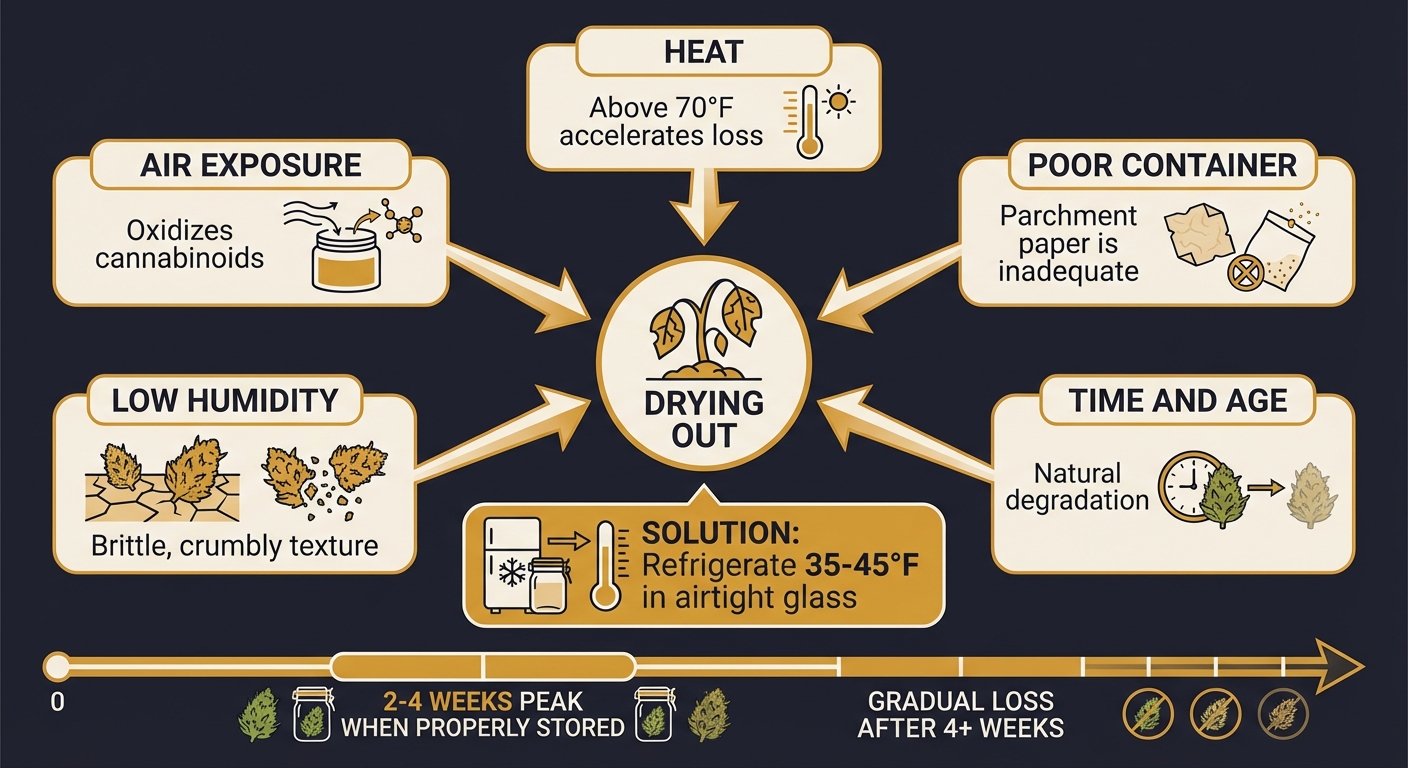
Rosin dries out when exposed to heat, air, or low humidity conditions that cause its terpenes to evaporate and its texture to become brittle or crumbly. This process happens because rosin contains volatile compounds that are sensitive to environmental factors. Heat above 70°F accelerates terpene loss, while air exposure oxidizes the cannabinoids and changes the consistency. Understanding these causes helps preserve rosin's original texture and potency through proper storage techniques.
What This Means
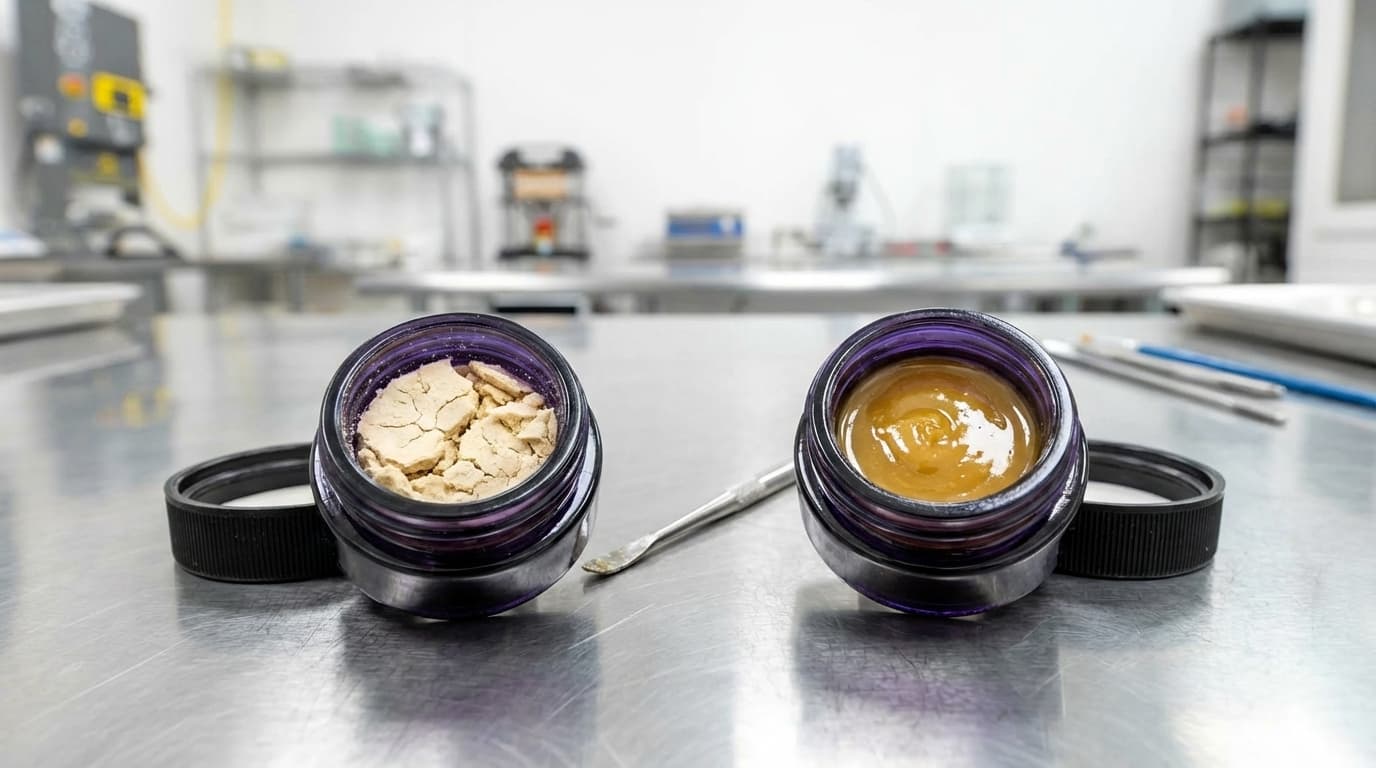
When rosin dries out, it undergoes chemical and physical changes that alter both its consistency and composition. Fresh rosin typically has a malleable, sometimes sticky texture due to its terpene content and moisture levels. As it dries, the volatile terpenes evaporate first, leaving behind a harder, more brittle concentrate. This drying process is different from controlled curing, which some producers use intentionally to achieve specific textures. Uncontrolled drying happens when storage conditions aren't optimal, causing the rosin to lose desirable characteristics faster than intended. The rate of drying depends on several factors including the rosin's initial moisture content, storage temperature, humidity levels, and how much air exposure occurs. Dried rosin isn't necessarily damaged, but it represents a change from the product's intended form. Some users actually prefer slightly dried rosin for certain applications, though most consider the fresh state optimal for preserving the full spectrum of compounds and intended texture. First time users often notice this change immediately, as fresh rosin that looks great initially can transform into a harder, darker substance when environmental conditions are too hot or storage methods are inadequate. The transformation from fresh to dried rosin happens every time storage conditions exceed optimal parameters. Room temperature storage, while convenient, often accelerates this process compared to cooler environments. Users frequently store rosin on parchment paper or in mason jar containers at room temp, not realizing these conditions contribute to faster drying than refrigerated storage would provide.
What It Is Often Confused With
Dried rosin is often confused with rosin that has been intentionally cured or aged. Curing involves controlled exposure to specific temperature and humidity conditions over time to develop desired textures like budder or jam consistency. Drying, by contrast, is typically unintentional and results in a harder, less workable product. Some people mistake the natural color darkening that occurs with drying for contamination or degradation. While dried rosin may appear darker or more amber-colored, this oxidation is a normal chemical process, not necessarily an indication of spoilage. This dark crystal appearance can alarm first time observers, but it represents natural chemical changes rather than contamination. Dried rosin is also different from rosin that has separated or "sugared up." Sugar formation involves crystallization of cannabinoids under specific conditions, creating a granular texture. Dried rosin maintains its basic structure but becomes harder and more brittle. Additionally, dried rosin shouldn't be confused with rosin that was pressed at too high temperatures initially. Overheated rosin may appear dry from the start, but this represents damage during extraction rather than storage-related drying. Fresh frozen plant material typically produces rosin with higher initial moisture content, which means it may show drying effects more noticeably than rosin pressed from cured material. Some users confuse the temple ball technique of hand-rolling hash with similar manual manipulation of dried rosin. However, temple ball formation works with different material properties and isn't effective for rehydrating dried rosin concentrates.
Why It Matters
Understanding why rosin dries out matters for maintaining product quality and getting expected results. Dried rosin can be more difficult to handle and measure accurately, especially for users who need precise amounts. The texture change can also affect how the product behaves during use. From a preservation standpoint, preventing unwanted drying helps maintain the rosin's original terpene profile and intended consistency. Terpenes contribute to both aroma and the overall experience, so their loss represents a change from the manufacturer's intended product. For retailers and storage facilities, controlling drying helps maintain inventory quality and customer satisfaction. Products that dry out prematurely may receive complaints or returns, making proper storage practices essential for business operations. The issue becomes particularly important for users with specialized equipment like terp slurper setups or freeze dryer operations, where consistent rosin texture affects performance. These applications require predictable material properties that change when rosin dries beyond intended parameters. Storage duration matters significantly - rosin that looks great initially will show drying effects every time environmental controls fail. This creates ongoing quality concerns for both personal collections and commercial inventory management. For a store that can service all your needs, see 1321 Venice storage options.