Hash Terms You Should Actually Understand — Frequently Asked Questions

Cannabis hash terminology can be confusing, with many terms used incorrectly or interchangeably across different markets and regions. This FAQ addresses the most common questions about hash-related terminology, providing clear definitions based on production methods, physical characteristics, and regional naming conventions. These answers come from extensive research and real questions from cannabis professionals, collectors, and enthusiasts seeking accurate information about hash classification and terminology.

General Hash Terminology Questions

What is the difference between hash and hashish?

Hash and hashish refer to the exact same product — concentrated cannabis resin separated from plant material. The term "hashish" is the formal name derived from Arabic, while "hash" is simply the shortened, colloquial version. Both terms describe cannabis trichomes that have been collected, compressed, and formed into blocks, balls, or other shapes. There is no quality, potency, or production method difference between products labeled as hash versus hashish.

Why do some people call pressed kief "hash" and others don't?

Pressed kief becomes hash once it undergoes sufficient compression and heat to bind the trichome heads together into a cohesive mass. Simple collection of kief (loose trichomes) without pressing does not create hash. The transformation occurs when pressure and often minimal heat cause the trichome walls to rupture slightly, releasing oils that bind the material together. This is why traditional hash has a different texture and appearance than loose, powdery kief.

What does "full melt" actually mean in hash terminology?

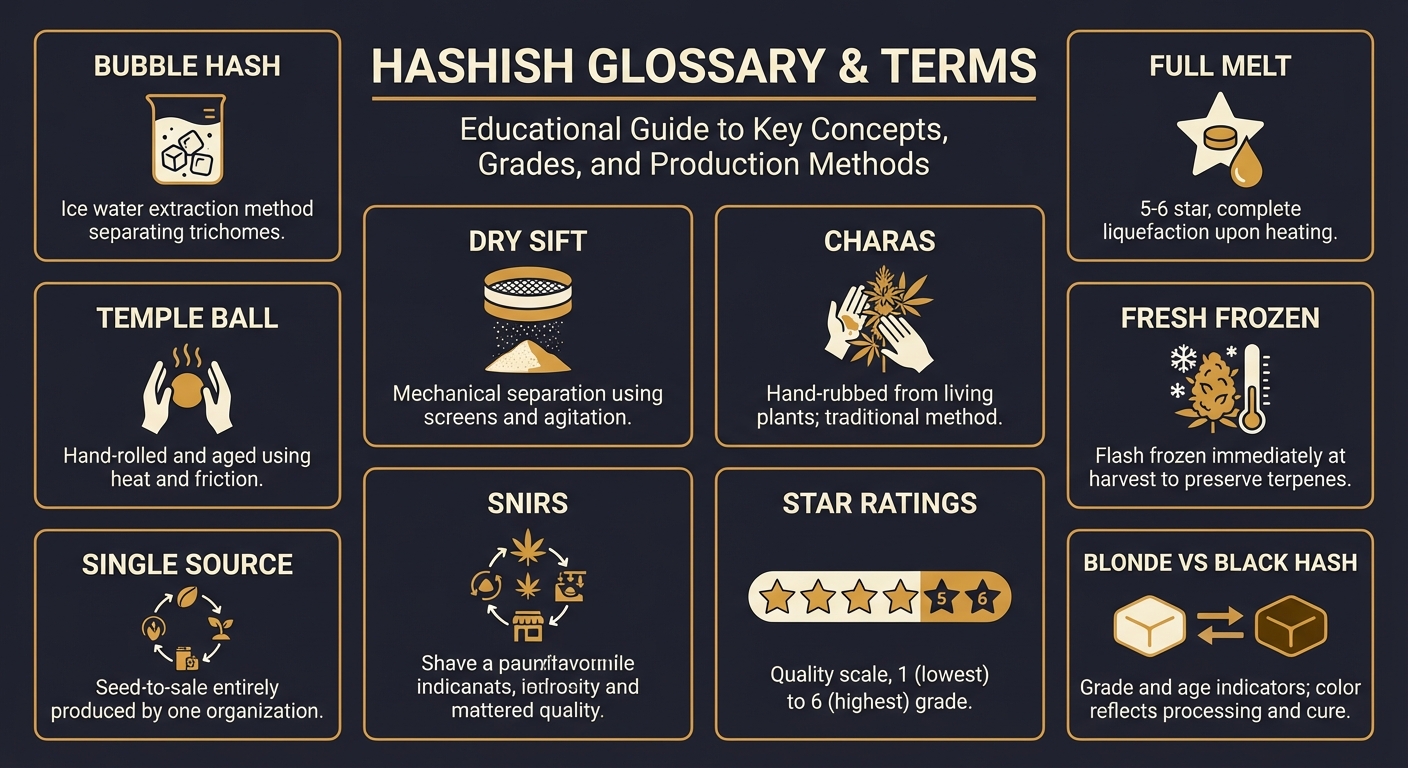
Full melt hash completely liquefies when heated, leaving minimal to no residue or ash behind. This indicates very high purity, typically 90% or higher trichome content with minimal plant material contamination. Full melt hash is usually produced through ice water extraction methods and represents the highest grade of bubble hash. The term specifically refers to the physical behavior when heated, not the production method or appearance. When you see full melt that looks fire, it should bubble cleanly on your dab tool without leaving residue.

Are rosin and hash the same thing?

Rosin is a type of solventless hash extract, but not all hash is rosin. Rosin specifically refers to cannabis concentrates made by applying heat and pressure to cannabis flower or hash, causing trichomes to release their oils. Traditional hash involves mechanical separation of trichomes followed by pressing or aging. Both are solventless extraction methods, but rosin requires the additional heat-press step that creates its characteristic translucent, sappy consistency. Flower rosin comes directly from pressed buds, while hash rosin uses bubble hash as starting material.

Production Method Questions

What is bubble hash and why is it called that?

Bubble hash is made using ice water and filtration bags with different micron sizes to separate trichomes from plant material. It's called "bubble hash" because high-quality grades will bubble and melt when heated, similar to full melt behavior. The production process involves agitating cannabis in ice water, then filtering the mixture through progressively finer mesh bags. Different micron sizes produce different grades, with 70-120 micron typically yielding the highest quality bubble hash.

How is dry sift different from bubble hash?

Dry sift uses screens and agitation without water to separate trichomes, while bubble hash uses ice water extraction. Dry sift typically produces a more powdery consistency initially, though it can be pressed into traditional hash blocks. Bubble hash often has a more granular, sand-like texture before pressing. Both methods can produce full melt quality, but bubble hash generally achieves higher purity levels due to the water separation process removing more plant contaminants.

What does "temple ball" mean in hash terminology?

Temple balls are spherical hash formations created by hand-rolling bubble hash or dry sift while applying gentle heat from friction. This technique, inspired by traditional Nepalese methods, creates a darker exterior shell while maintaining a lighter interior. The rolling process oxidizes the outer layer and further binds the material together. Temple balls are a presentation method rather than a distinct production technique, typically made from high-grade starting material.

Is charas the same as other types of hash?

Charas is hand-rubbed hash collected directly from living cannabis plants, making it distinct from other hash types that use dried material. The collection process involves rubbing fresh, resinous buds between the palms until a dark, sticky layer builds up, which is then scraped off and formed into balls or sticks. Charas has a unique terpene profile due to being collected from live plants and typically has a darker color and stickier consistency than hash made from dried cannabis.

What does "fresh frozen" mean in hash production?

Fresh frozen refers to cannabis that has been frozen immediately after harvest without drying or curing. This material is often used for ice water hash extraction because freezing preserves terpenes and makes trichomes more brittle, improving separation. Fresh frozen material typically produces lighter-colored hash with enhanced terpene profiles compared to hash made from dried cannabis. The process requires immediate freezing after harvest to prevent trichome degradation.

What does "single source" mean in hash production?

Single source hash comes from one specific cannabis plant or a single harvest batch, rather than mixing material from multiple plants or sources. This approach allows hash makers to showcase the unique characteristics of individual cultivars and provides consistency in flavor, effects, and quality. Single source production has become increasingly popular among craft hash makers who want to highlight specific genetics and terroir. This method contrasts with blended hash that combines material from multiple sources to achieve desired characteristics or increase yield.

Quality and Grading Questions

What do star ratings mean for hash quality?

Star ratings (typically 3-6 stars) indicate bubble hash quality based on melt characteristics and purity. Six-star represents full melt quality with complete liquefaction and minimal residue. Five-star is near full melt with slight residue, while four-star and below have increasing amounts of plant material and ash. These ratings specifically apply to bubble hash grading systems developed by hash makers and are not universal across all hash types.

How can you tell machine-pressed hash from hand-pressed hash?

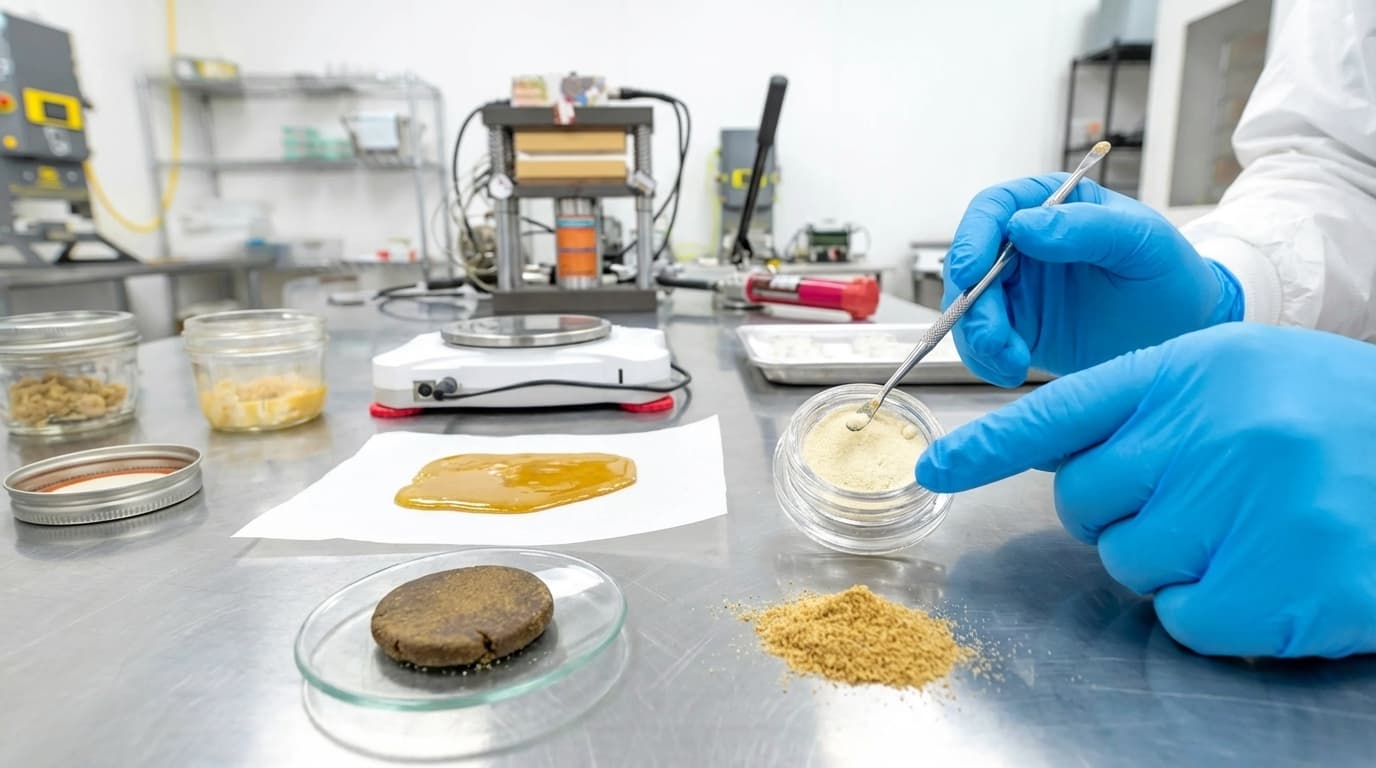
Machine-pressed hash typically has uniform density, smooth surfaces, and consistent coloring throughout. Hand-pressed hash often shows irregular shapes, varying density, and may have fingerprint impressions or uneven coloring. Machine pressing creates higher pressure than hand methods, resulting in more compact, harder textures. Hand-pressed hash may retain more of its original terpene profile since less heat is typically applied during the pressing process.

What does "blonde hash" versus "black hash" indicate?

Color generally indicates oxidation level, trichome purity, and processing methods rather than quality alone. Blonde hash typically contains less oxidized material and fewer plant contaminants, often indicating newer or higher-grade hash. Black hash may result from longer aging, higher heat during processing, or more plant material inclusion. However, some traditional high-quality hash types are naturally dark, so color alone cannot determine quality without considering the production method and source.

Why do some hashes crumble while others bend?

Texture depends on moisture content, pressing method, storage conditions, and trichome composition. Fresh, properly stored hash with adequate moisture content will be pliable and bendable. Dry, aged, or over-heated hash becomes brittle and crumbly. Very high-grade hash may also crumble due to minimal binding plant material, while lower grades stay flexible due to higher plant fiber content. Storage temperature and humidity significantly affect texture over time.

How do you identify hash that gets red hot too quickly?

Hash that gets red hot immediately upon heating usually contains excessive plant matter or has been contaminated during processing. Quality hash should melt gradually and bubble before reaching high temperatures. Hash with too much plant material will combust quickly, producing harsh smoke and dark residue. Proper hash should maintain consistent heating characteristics and melt cleanly when exposed to controlled heat from your dab tool.

Equipment and Process Questions

What does a typical home hash making setup look like?

A basic ice water extraction setup includes bubble bags (typically 8-bag sets with 220, 190, 160, 120, 90, 73, 45, and 25-micron sizes), a work bucket, wooden spoon or paddle for agitation, and a freeze dryer or drying screen. Many makers use a washing machine for agitation, though hand-stirring produces gentler extraction. Collection tools include plastic cards for scraping, parchment paper for drying, and clean towels for pressing water from bags. Temperature control is crucial — ice water should stay cold throughout the process.

What common mistakes do first time hash makers encounter?

Common first time errors include using water that's too hot, over-agitating the material, inadequate drying leading to mold, and improper storage. New makers often agitate too vigorously or too long, breaking plant material and contaminating lower micron bags. Temperature control issues — letting ice water warm up significantly — reduce yield and quality. Rushing the drying process or storing hash before it's completely dry causes degradation. Each step requires patience; experienced makers emphasize gentle handling every time.

How important is proper drying equipment like freeze dryers?

A freeze dryer produces superior hash by removing moisture without heat, preserving terpenes and preventing oxidation that occurs with air drying. Freeze drying typically takes 24-48 hours and results in hash that looks great with better color retention and enhanced terpene preservation. Air drying on screens takes several days to weeks and requires careful humidity control. While freeze dryers represent significant investment, many serious makers consider them essential for maintaining hash quality, especially for full melt grades.

What role does parchment paper play in hash making?

Parchment paper serves multiple functions: collecting hash from drying screens, temporary storage during processing, and as a non-stick surface for pressing operations. Quality parchment paper doesn't react with hash oils and allows easy collection without leaving residue. Many makers use parchment paper to form collection cards for scraping hash from bags and screens. For storage, parchment provides a clean barrier, though long-term storage requires airtight containers like mason jars to prevent moisture loss and contamination. Always use food grade parchment to avoid chemical contamination.

How important is heat retention in hash making equipment?

Heat retention affects multiple aspects of hash production, from maintaining proper ice water temperatures during extraction to consistent pressing temperatures for rosin production. Equipment with good heat retention, like thick-walled containers for ice water extraction, helps maintain stable temperatures throughout the process. For pressing operations, plates with excellent heat retention ensure even heating and prevent hot spots that can degrade hash quality. Poor heat retention leads to temperature fluctuations that can affect yield and final product characteristics.

Why do experienced makers prefer quartz banger accessories?

Quartz bangers provide clean, neutral heating surfaces that don't alter hash flavors or introduce contaminants. Quartz has excellent heat retention properties and can be heated to precise temperatures for optimal hash vaporization. Unlike other materials, quality quartz doesn't react with hash oils or break down over time with repeated heating cycles. Many hash enthusiasts prefer quartz bangers because they allow precise temperature control and provide pure flavor representation of the hash's terpene profile.

Storage and Handling Questions

How should different types of hash be stored?

Most hash should be stored in airtight containers at temperatures between 60-68°F with relative humidity around 55-62%. Bubble hash and full melt grades require more careful storage, often benefiting from refrigeration in sealed containers to prevent terpene loss. Traditional pressed hash can tolerate room temperature storage better than loose or unpressed concentrates. All hash types should be protected from light, air exposure, and temperature fluctuations to maintain quality.

Why do people use mason jars for hash storage?

Mason jars provide airtight seals that prevent moisture loss and contamination while being made from glass that doesn't interact with hash oils. The wide mouth design allows easy access, and the clear glass lets you monitor the hash condition without opening the container. Many experienced makers perform a jar test — storing small amounts to observe how hash changes over time under specific conditions. Mason jars work well for both short-term and long-term storage when kept in cool, dark places.

Does hash terminology change based on storage age?

Aged hash may be called "vintage" or "aged" but the fundamental production terminology remains the same. However, aged hash develops different characteristics — darker colors, changed textures, and modified terpene profiles. Some traditional hash types are intentionally aged as part of their production process. Storage-related changes don't create new hash categories but do affect quality descriptors and market terminology used by collectors and connoisseurs.

What does "pressed" mean when describing hash?

Pressed hash has been compressed into blocks, coins, or other solid shapes using pressure and sometimes heat. Pressing binds loose trichomes together, creates uniform density, and makes the hash easier to store and handle. The pressing process can range from light hand pressure to hydraulic pressing with significant force. Pressing level affects texture, appearance, and how the hash breaks apart, with harder pressing creating denser, more uniform products.

How do you identify properly cured versus fresh hash?

Properly cured hash has stable moisture content, consistent texture, and developed flavor profiles without harsh edges. Fresh hash may have higher moisture, lighter colors, and more volatile terpenes that can seem sharp or "green." Cured hash often has better shelf stability and more balanced effects. The curing process, similar to cannabis flower curing, allows enzymatic processes to continue and moisture to stabilize, typically taking several weeks to months depending on the hash type.

Usage and Application Questions

What are terp pearls and terp slurpers in relation to hash?

Terp pearls are small spherical objects made from materials like quartz or ceramic that help distribute heat evenly when vaporizing hash concentrates. Terp slurpers are specialized dabbing devices with a bottom dish and extended tube design that creates better airflow for full melt hash consumption. Both accessories aim to optimize vaporization temperatures and preserve terpene flavors. These tools address the challenge of consuming high-grade hash without overheating, which can degrade flavor and create harsh experiences.

How do you avoid making hash too hot during consumption?

Temperature control prevents terpene loss and harsh vapor production. Full melt hash vaporizes at lower temperatures than other concentrates, typically between 350-400°F. Signs of too hot application include dark, burnt residue, harsh vapor, and loss of flavor. Using temperature-controlled devices, waiting for appropriate cool-down times, or starting with lower heat settings helps preserve the hash's characteristics. The goal is complete vaporization without combustion — hash should melt and bubble rather than burn. Clean your dab tool between sessions to prevent residue buildup that can affect flavor.

What does "dark crystal" refer to in hash terminology?

Dark crystal typically describes aged or oxidized hash that has developed a darker, more translucent appearance while maintaining high quality. This can occur naturally through proper aging or through specific processing techniques that create crystalline-looking structures in the hash. The term may also refer to hash that appears almost glass-like in certain lighting conditions. Dark crystal hash often has complex flavor profiles developed through the oxidation and aging process.

Why is the first time experience different with various hash types?

Different hash types have varying potency levels, terpene profiles, and consumption characteristics that create distinct experiences. Full melt bubble hash provides immediate, intense effects due to high cannabinoid concentration. Traditional pressed hash may have more gradual onset due to density and plant material content. Rosin offers rapid onset with pronounced flavor profiles. Understanding these differences helps users adjust expectations and consumption methods accordingly. Each hash type interacts differently with heat and delivers cannabinoids at varying rates.

How do you handle hash that's never seen before or from new sources?

When encountering unfamiliar hash types, start by examining physical characteristics: color, texture, aroma, and how it responds to gentle pressure. Test a small amount first to understand melting behavior and potency. Research the source region or production method if known, as this provides context for expected characteristics. Document your observations — many collectors keep notes about different hash types they encounter. Unknown hash varieties may represent regional specialties or unique production techniques worth understanding through careful evaluation.

Common Community Questions

What do you think about mixing different hash types together?

Mixing different hash types can create unique flavor profiles and effects, but it also makes it difficult to appreciate individual characteristics. Some makers blend different micron grades from the same extraction to balance texture and potency. However, mixing high-grade full melt with lower-quality hash generally reduces the overall quality and melt characteristics. When blending, consider how different textures, moisture contents, and melting points will interact. Document your combinations so you can recreate successful blends.

How has hash terminology changed from years ago?

Hash terminology has expanded significantly with modern extraction techniques and equipment advances. Years ago, hash categories were simpler: pressed, unpressed, and regional varieties like Afghan or Lebanese. Today's terminology includes detailed grading systems, micron-specific classifications, and technique-specific names like "live hash rosin" or "cold cure." Social media and online communities have accelerated terminology adoption, though this sometimes creates confusion when traditional terms get redefined or misused.

Why do some hash makers get defensive about terminology?

Hash making involves significant skill, time, and investment, so makers often feel protective of proper terminology that accurately represents their work. Misused terms can misrepresent quality levels or production methods, affecting market perception and pricing. Additionally, many hash makers learned through traditional apprenticeship methods and feel responsibility for preserving accurate terminology. The craft aspect of hash making means terminology carries cultural and technical significance beyond simple product description.

What should you do when you encounter hash with excessive plant matter?

Hash with visible plant matter indicates lower quality extraction or contamination during processing. This material will not achieve full melt characteristics and may produce harsh effects when heated. You can sometimes improve such hash through re-pressing or gentle heating to bind materials together, but you cannot remove plant matter once incorporated. When evaluating hash, look for minimal green coloration and absence of visible leaf particles. A little bit of plant matter is acceptable in lower grades, but quality hash should be primarily composed of trichome heads.

How do you clean hash residue from dab tools and equipment?

Clean dab tools immediately after use while still warm — hash residue removes more easily before cooling and hardening. Isopropyl alcohol (91% or higher) effectively dissolves hash oils and residues from glass and metal surfaces. For stubborn residue, gentle heating combined with alcohol cleaning works well. Avoid using soap on hash-contact surfaces as it can leave residues that affect flavor. Regular cleaning maintains equipment performance and prevents flavor contamination between different hash types. Some makers use dedicated dab tools for different hash grades to prevent cross-contamination.

Need more specific information about hash terminology or production methods? Contact our research team for detailed explanations of specific hash types or regional terminology variations. Browse our complete concentrates reference guide for comprehensive information about all cannabis extract types and classifications.